
Red-eye to Chicago, couldn't sleep, decided to tackle the 24-hour behemoth that's been sitting in my library for months. Three hours in, I texted Jenny: "I think I finally understand why I hate targeted ads so much." She replied with a sleeping emoji. Fair.
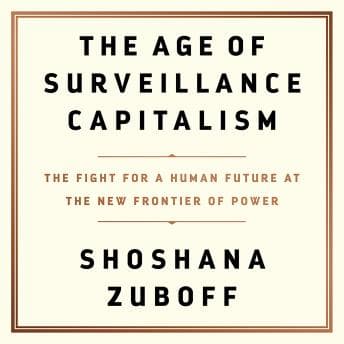
Bottom line: This is the most important business book of the last decade that nobody in business actually wants to read. Zuboff doesn't just explain how Google and Facebook make money—she explains how they've fundamentally altered the relationship between corporations and human beings. And she does it with the rigor of a Harvard professor who's genuinely angry.
The 24-Hour Elephant in the Room
Let's address this immediately: 24 hours and 20 minutes. That's not an audiobook, that's a commitment. My 2.0x speed couldn't save this one. Even at accelerated pace, you're looking at 12+ hours of dense academic prose. Zuboff writes like she's defending a dissertation to a hostile committee—every claim backed, every counterargument anticipated, every historical parallel explored.
Is it worth it? Mostly yes. But here's the thing my parents would've said: you don't need to eat the whole elephant. The first third—where Zuboff traces how Google discovered it could monetize user data as "behavioral surplus"—is essential reading for anyone running a business in 2024. The middle section on "instrumentarian power" versus totalitarian power? Genuinely brilliant conceptual work. The final third? Gets repetitive. Skip chapters 15-17 if you're pressed for time. Thank me later.
What My Dry Cleaning Parents Knew Instinctively
Here's what hit me hardest: Zuboff describes how surveillance capitalism operates outside the traditional market relationship. My parents sold dry cleaning. You paid, they cleaned, transaction complete. Simple. Transparent. Both parties knew what they were exchanging.
Google's model? You're not the customer. You're the raw material. Your behavior gets extracted, processed, and sold to actual customers—advertisers who want to modify your future behavior. Zuboff calls this the "behavioral modification" economy. I've seen this fail at three different companies I've consulted for—they thought they were building products, but they'd accidentally become surveillance operations. The negotiation framework in Getting to Yes actually offers a useful lens here—both parties need to understand what's being exchanged, or you don't have a real agreement. None of them understood why users eventually revolted.
Nicol Zanzarella: Clarity That Exhausts
Zanzarella is an Earphones Award winner, and you can hear why. Her delivery is precise, measured, and treats the material with appropriate gravity. But—and this is a significant but—her pacing matches Zuboff's academic density beat for beat. No variation. No lightness. Just relentless, careful articulation of complex ideas.
After about 90 minutes, I needed breaks. Not because she's bad (she's not), but because listening to her read sentences like "the means of behavioral modification constitute a new form of power that operates through the architecture of automated machine processes" requires genuine mental energy. This isn't a narrator problem; it's a narrator-meets-material problem. She's doing exactly what the text demands. The text demands a lot.
Who Needs This (And Who Doesn't)
If you're a founder building anything that touches user data: mandatory. If you're in marketing and want to understand why the regulatory environment is shifting: essential. If you're a policy wonk or journalist: you probably already read it.
If you're looking for a quick business insight you can implement Monday morning: wrong book. If you want something for your commute that won't require rewinding every ten minutes: definitely wrong book.
Jenny would say I'm being harsh. Jenny is right—but only partially. This book changed how I advise startups on data strategy. It gave me vocabulary for concerns I'd felt but couldn't articulate. That's rare. That's valuable.
But it's also 24 hours of your life, and Zuboff could've made her case in 12. The academic thoroughness that makes it authoritative also makes it exhausting. I finished it over three weeks, in chunks, usually late at night when I needed something that would make me think instead of doom-scroll.
The ROI Calculation
My parents understood instinctively that business relationships require trust and transparency. Zuboff spent 24 hours proving why that instinct matters more than ever—and why most of Silicon Valley forgot it.
Worth your credit if you're in tech, data, or policy. Worth your time if you can commit to the marathon. Just don't expect it to respect your schedule the way it respects your intelligence.








![Steve Jobs [unabridged audiobook] audiobook cover](/_next/image?url=https%3A%2F%2Fcovers.audiobooks.com%2Fimages%2Fcovers%2Ffull%2F9788499923406.jpg&w=1920&q=75)