
This book has no business being as gorgeous as it is.
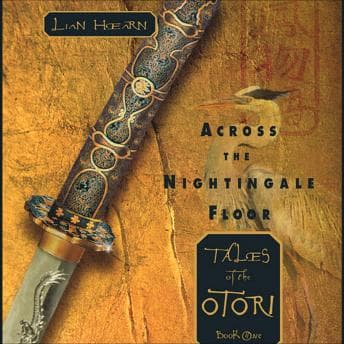
I came to Across the Nightingale Floor the way I come to most things outside my horror lane - skeptically, arms crossed, ready to be underwhelmed. Historical fantasy set in feudal Japan isn't exactly my usual territory. I spend most of my listening hours in haunted houses and cursed small towns. But I was reorganizing the library's fiction section on a quiet Tuesday afternoon, and something about the title kept snagging at me. Nightingale floors - floors designed to sing when walked upon, to betray assassins by their own footsteps. That's not a fantasy conceit. That's dread architecture. That's my language.
So I took it home. Listened through dinner, then kept going long after the dishes were done. Shirley fell asleep on my lap somewhere around hour three and I didn't move because I didn't want to break the spell.
The Floor That Sings When You Step Wrong
Lian Hearn (and yes, I know it's a pseudonym - Gillian Rubinstein writing under a name that itself feels like a piece of the fiction) builds a world that sits in that specific uncanny space between historical Japan and something slightly sideways from it. The political machinery - warlords, clan allegiances, honor codes that function like a second skeleton beneath every character's skin - feels grounded enough to carry weight. But Takeo's abilities, the Tribe's assassin network, the Hidden's forbidden faith - these elements press against that groundedness like fingers against glass.
What Hearn understands that a lot of fantasy writers don't: formal ritual IS the horror. The moment you understand what the nightingale floor actually means - that Takeo's supernatural hearing, the very gift that makes him valuable, is also the thing that will force him to walk across it - the whole book tightens like a trap. This understands that horror isn't about gore - it's about dread. The dread here is architectural, political, intimate. Kaede's storyline runs parallel and her constraints are different from Takeo's but no less suffocating. She's moving through a world that treats her as currency while she's quietly calculating the exchange rate.
The dual POV structure isn't just a narrative choice - it's thematic. Two people being shaped by forces they can't fully see, moving toward each other and toward catastrophe. The love story earns its intensity because Hearn makes you feel the cost of everything surrounding it.
Two Voices, One Rhythm Problem
Here's where I have to be honest, because the narration is genuinely split.
Kevin Gray narrating Takeo's chapters - warm, committed, emotionally present. His pacing is the issue: he moves fast, sometimes too fast, and if you're not already oriented in the world, Japanese names and place names can blur past before your brain can anchor them. I rewound more than once. But when he slows down for the emotional beats, he's genuinely good. You feel Takeo's confusion and grief without Gray ever telegraphing it.
Aiko Nakasone's Kaede chapters are the opposite problem - her pacing is slow, almost ceremonial, which actually suits the formal restraint of Kaede's world but can feel like a gear shift after Gray's chapters. Her pronunciation of Japanese names is more authentically grounded than Gray's, and honestly that matters in a book where names carry this much weight. The two narrators maintain consistent character voices throughout, which is rarer than it should be in dual-narrator productions.
The Japanese flute music bookending the audio is a small touch that lands well. It's not trying to do too much. It just sets the register and steps back.
The narrator commits. Both of them do, actually, just at different speeds. That's rare - and also occasionally maddening.
Not For Your Commute (Trust Me On This)
This is not background listening. I cannot stress this enough. The name density alone requires actual attention - there's a whole political landscape of clans and territories that you need to be tracking, and if you're half-listening while making dinner, you will surface at hour four genuinely confused about who wants to kill whom and why. I'd recommend treating this like you'd treat a subtitled film: dedicated listening, maybe 1.1x speed to smooth out Nakasone's slower sections without losing Gray's emotional delivery.
If you're a horror person who's been sleeping on this because it doesn't look like your genre - reconsider. The nightingale floor sequence alone. The way the book builds toward it. The understanding that the most terrifying thing isn't a monster, it's a situation with no good exits. Shift gave me that same trapped-in-a-system dread — different genre entirely, but the same bone-deep understanding that the walls closing in don't need teeth to be terrifying.
My podcast listeners are going to love this, and I'm a little annoyed it took me this long to get here.