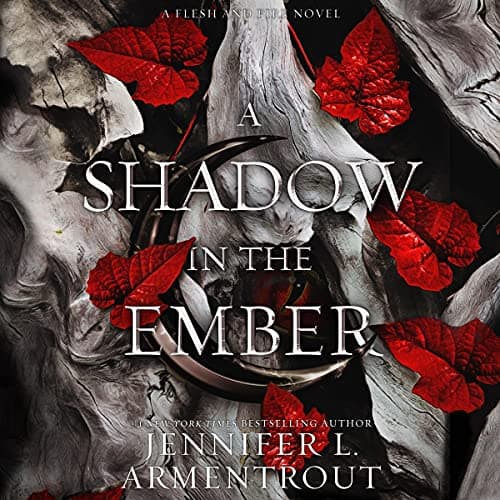

I was supposed to be debugging a procedural dungeon generator at 1 AM on a Tuesday. The code was broken, my coffee was cold, and I had 25 hours of Jennifer L. Armentrout's A Shadow in the Ember queued up because my thesis wasn't going to procrastinate on itself. By hour three, the dungeon generator was still broken, but I genuinely did not care because Sera had just been handed the most bonkers character brief I've ever encountered: Maiden, Consort, Assassin, and oh yeah, she's supposed to seduce the literal Primal of Death and then murder him. That's not a character sheet — that's a four-class multiclass build that no sane DM would approve.
The Multiclass Build That Actually Works
Here's the thing about Sera's setup that got me: it sounds like it should collapse under its own weight. She's been trained since childhood to kill a god, but the method requires making him fall in love with her first. That's an absurdly specific assassination plan. Like, what's plan B? But Armentrout actually pulls it off because Sera isn't playing the seductress archetype straight. She's angry, she's been emotionally gutted by a lifetime of being treated as a weapon, and when she finally gets to the Shadowlands and meets Nyktos — the Primal of Death — she's more feral cat than femme fatale. The tension between them works because neither of them is doing what they're supposed to do. He's a death god who keeps... not being cruel? And she's an assassin who keeps... not assassinating? The progression is satisfying because every time you think they'll settle into a predictable dynamic, one of them does something that scrambles the equation.
The world-building here is Armentrout doing her most ambitious work. The Rot — this slow, creeping decay eating through the mortal lands — functions as both a ticking clock and a metaphor for the political corruption in Sera's homeland. The Primal hierarchy, with its territorial gods and their courts, gave me strong Sanderson-level world-building vibes in terms of how the power structures create the actual plot conflicts rather than just being set dressing. The rules around the Primals' embers, how power transfers, what happens when a Primal is destroyed — it's a magic system with actual consequences, and I am here for it. That same obsessive attention to systems-with-stakes that made me lose sleep over Imagine Me Gone is doing similar damage to my thesis timeline here. If you don't like info-dumps, this isn't for you (but you're wrong).
Now, I need to talk about the Blood and Ash connection. If you've read or listened to that series, this is a prequel set in the same world but much earlier. And that's where we hit a narrator wrinkle.
Stina Nielsen's Sera-Sounds-Like-Poppy Problem
Stina Nielsen is genuinely good. Her emotional delivery during the more intimate scenes — and there are several, fair warning — carries real weight. She nails Sera's barely-contained rage in the early chapters, and she's got this low, careful register for Nyktos that works for a being who's ancient and deliberate. But here's the issue that nearly derailed my listen in the first few chapters: if you've listened to the Blood and Ash series, Sera sounds almost identical to Poppy. Same cadence, same vocal quality, similar emotional pitch. It threw me hard for the first four chapters because my brain kept insisting I was listening to the wrong book. By chapter five or six, I'd adjusted, but I know some listeners bounced entirely over this. I get it. It's like if your DM used the same voice for two different campaign NPCs — you can get past it, but it takes active effort.
Once you settle in, though, Nielsen earns her keep. The sultry scenes are where she really shines — there's a specificity to how she handles the physical tension between Sera and Nyktos that goes beyond just "reading spicy content out loud." She modulates Sera's internal conflict during those moments, the way desire and self-loathing tangle together, and it lands.
25 Hours Is a Commitment, But the Pacing Earns Most of It
Yes, it's 25 hours. Yes, it's worth it. Mostly. There are stretches in the middle where the political maneuvering in the Shadowlands slows to a crawl, and I found my attention drifting back to my broken code a couple of times around hours 12-15. But the back half ramps up hard, and the final few hours hit with real stakes. This is book one of a series, so there's setup happening — you can feel Armentrout laying groundwork for later payoffs. If you've ever read a Sanderson first book, you know the deal: trust the architecture.
My D&D group would love this, honestly. The assassin-who-must-seduce-her-target premise is basically a campaign hook, and the Primal courts with their rivalries and alliances read like faction politics from a well-run homebrew setting.
Roll Initiative or Walk Away
Who should listen: Fantasy nerds who want their romance with real world-building scaffolding, Blood and Ash fans ready for the deep lore, and anyone who gets excited when a magic system has actual rules and consequences. Who should skip: If you need a fast-paced listen under 15 hours, or if you can't handle a narrator adjustment period coming off Blood and Ash, this one might frustrate you.
This is a slow-burn fantasy romance with teeth. If you want the spice, it's here, but it makes you earn it. If you want the world-building, it's substantial and rule-driven in a way that fantasy nerds will appreciate. If you want both — and you can push through the initial narrator adjustment period — you're going to have a very good 25 hours. I listened to this instead of writing my thesis, and I regret nothing. (Dr. Patel, if you're reading this, I was "researching narrative structure in serial fantasy.")