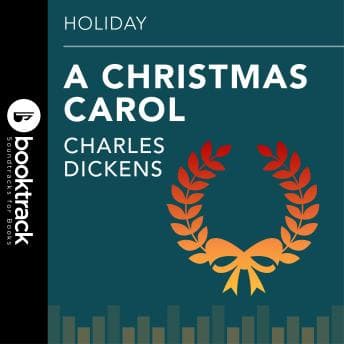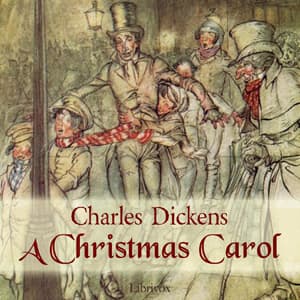

I'll confess something embarrassing. I've taught A Christmas Carol to sophomores for fifteen years, and somewhere around year eight, I started hating it. Not the book itself - Dickens is Dickens - but the ritual of it. The same passages. The same "what does Marley's chain symbolize" discussions. The same kid asking if Tiny Tim dies. (He doesn't. Spoiler alert for a 180-year-old novella.)
So when I queued up Kyle M.'s LibriVox recording last Tuesday night - grading papers, half a glass of Merlot in, Denise already asleep - I expected background noise. Comfortable literary wallpaper while I marked comma splices.
I did not expect to rediscover why I became an English teacher.
When Scrooge Sounds Like Scrooge
Here's what Kyle M. understands that most narrators don't: Dickens wrote for performance. The man toured constantly, reading his own work to packed theaters. Every "Bah! Humbug!" was designed to land with an audience. And Kyle treats this text like the theatrical script it secretly is.
His Scrooge isn't just grumpy - there's a specific pinched quality to the voice, like a man who's been clenching his jaw for forty years. But here's the trick: by the final stave, that tension releases. Same voice, different man. The transformation happens in the vocal cords before it happens in the words. That's interpretation, not just reading.
And the Ghost of Christmas Yet to Come? Silent, obviously - that's how Dickens wrote it. But Kyle's narration around that silence creates genuine dread. The pacing slows. His voice drops. You feel the cold. I actually stopped grading and just... listened. (Sorry, Jaylen, your essay on The Great Gatsby waited another hour.)
The Dickens Problem, Solved
My students complain that Dickens is "too wordy." They're not wrong - the man was paid by installment and it shows. But here's what audiobook performance does that silent reading can't: it reveals the rhythm.
Dickens wrote sentences meant to be breathed. The subordinate clauses, the parentheticals, the elaborate descriptions - they're musical phrases. On the page, modern eyes stumble. In the ear, properly delivered, they flow. Kyle M. clearly understands this. He doesn't rush through the descriptive passages to get to dialogue. He trusts that Dickens knew what he was doing.
At three hours and twelve minutes, this is a focused listening experience. Not background material. You'll want to actually pay attention - which, for a story most of us think we already know, says something.
What I Got Wrong About This Story
I've been teaching A Christmas Carol as a morality tale. Greed bad, generosity good, don't be a jerk at Christmas. Obvious stuff. But listening to it fresh - really listening, not skimming for teachable moments - I heard something different.
This is a story about memory. About how the past doesn't just explain us, it haunts us. Scrooge isn't converted by seeing poverty or death. He's converted by seeing himself as a child. By remembering who he was before he became who he is.
Dickens understood something about human psychology that we're still catching up to: we don't change because we're told to. We change when we remember what we've lost.
Kyle's narration of the Fezziwig party scene - young Scrooge, happy, dancing - carries a tenderness that made me think about my own students. The ones who come in cynical and defended. What happened to them? Who were they before?
I'm going to teach this book differently next semester.
Who Needs This in Their Ears (And Who Doesn't)
If you think you know A Christmas Carol from the Muppets version (excellent, by the way - Gonzo as Dickens was inspired casting), this recording will show you what you've been missing. If you're an English teacher burned out on the classics, this might remind you why you started. If you want something to listen to during December that isn't just holiday background noise but also won't demand twelve hours of your life - this is it.
Skip if you genuinely can't stand Victorian prose. Kyle's good, but he can't make Dickens write like Hemingway. The sentences are long. The descriptions are elaborate. That's the deal. If you want Victorian prose with a bit more gallop to it, Black Beauty moves faster while keeping that same moral earnestness.
Worth Pausing the Faculty Meeting For
This is a LibriVox recording, which means it's free. Also means no fancy production - just Kyle M. and a microphone. But honestly? That's all this story needs. The text is the special effect.
I finished it at 1 AM. Didn't grade a single paper after the first twenty minutes. Texted Denise "I love you" even though she was asleep in the next room. Thought about calling my mother.
Dickens would've approved. The old sentimentalist.