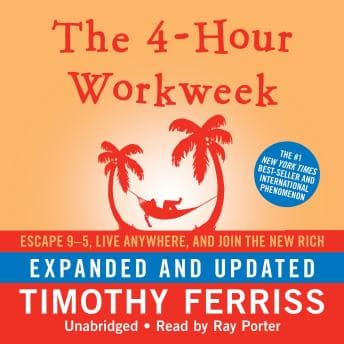

Look, I'm going to say something controversial: everyone has an opinion on Tim Ferriss, and most of those opinions miss the point entirely.
The haters call this book a scam. The superfans treat it like gospel. Both camps are wrong. The same binary thinking shows up in reactions to Codependent No More - people either dismiss it as pop psychology or treat it like therapy in a box, when the reality is more nuanced. I've now listened to this expanded edition twice - once in 2019 when I was still at McKinsey billing 80-hour weeks, and again last month while consulting for a SaaS startup whose founder literally has a 4HWW poster in his office. (He works 60 hours a week. The irony is not lost on him.)
Here's the thing. My parents ran a dry cleaning business for 30 years. They didn't have the luxury of "lifestyle design" or "muse businesses" or whatever Ferriss is selling. But - and this is the part that surprised me - some of his core principles? They did those instinctively. Ruthless prioritization. Saying no to bad customers. Automating the hell out of anything they could. They just didn't have a TED talk about it.
The 45 Minutes That Actually Matter
Bottom line: there's maybe 2-3 hours of genuinely useful content in this 13-hour audiobook. The rest is padding, case studies of varying quality, and Ferriss doing his thing where he name-drops exotic locations like they're LinkedIn credentials.
The good stuff? The 80/20 analysis of your time. The fear-setting exercise. The mini-retirement concept (which, honestly, is just sabbaticals rebranded for millennials). The outsourcing frameworks - those are legitimately useful if you run any kind of business.
But here's what drives me crazy. Ferriss built his "muse business" selling supplements in 2007. The arbitrage opportunities he exploited? Mostly gone. The specific tactics? Dated. The expanded edition tries to update things, but it still feels like advice from a different economic era. I've watched three startups try to implement his exact playbook. Two failed. One pivoted so hard they're basically a different company now.
Ray Porter: Professional, Not Passionate
Ray Porter is a pro. Clean delivery, good pacing, professional all the way through. I've heard him in other audiobooks and the guy can act when he wants to.
He doesn't want to here.
The narration is... fine. Competent. But there's zero fire. Ferriss writes with this manic energy - you can feel his enthusiasm bleeding through the page. Porter reads it like he's narrating a corporate training manual. Which, okay, maybe that's the right call for a business book. But when Ferriss is describing quitting his job and tango dancing in Argentina, I want some excitement. Instead I got the same steady tone he'd use to read a tax code.
I listened at 2.0x and honestly? It helped. Porter's measured pace at normal speed made some sections drag. Speed it up and suddenly the energy matches the content better. Skip to chapter 5 if you're impatient - the first few chapters are mostly Ferriss convincing you that your life sucks. (You already know that. That's why you bought the book.)
The ROI Calculation
Here's my honest assessment after recommending this to probably 50 clients over the years:
This book changes lives for a very specific type of person. Someone in their 20s or 30s, stuck in a corporate job they hate, who has never questioned the default path. If that's you, this might genuinely rewire how you think about work and time. The frameworks are solid even if the tactics are dated. But if you've already read a dozen business books, started companies, or understand basic productivity principles? You're going to spend 13 hours nodding along to stuff you already know, occasionally getting annoyed at Ferriss's humble-bragging. Skip it.
I fall into that second category now. Didn't when I first read it in 2012. Context matters.
My recommendation: get the audiobook, listen to the first three chapters and chapters 5-7, then skim the rest. Or just read the blog post Ferriss put out in 2024 summarizing the whole thing - it's free and takes 20 minutes.
The Billable Hours Verdict
Jenny would say I'm being harsh. Jenny is right. But also - 13 hours is a lot of my life, and I'm not going to pretend otherwise.