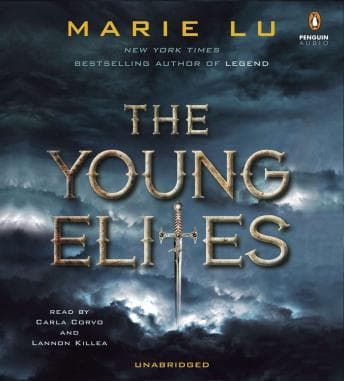

Okay, so here's my problem with The Young Elites: it made me actively root for the villain. And I don't mean in a fun, campy way. I mean Marie Lu constructed a protagonist so morally gray, so fundamentally broken, that by hour six I was genuinely unsure if I should be cheering for Adelina or preparing for her to burn everything down. My D&D group would lose their minds trying to figure out her alignment. Chaotic Neutral? Neutral Evil? She's basically a warlock who made a pact with her own trauma, and honestly? The magic system is chef's kiss.
I listened to this instead of writing my thesis (shocking, I know), and I regret nothing. Well, I regret nothing except that I now have to wait to start the sequel because Dr. Patel wants "actual progress" on my procedural generation chapter. Whatever.
The Voice in My Head (Times Two)
The dual narrator setup here is smart. Carla Corvo handles Adelina's sections, and Lannon Killea takes on Teren—the Inquisition leader who's basically if a paladin went full zealot mode. Both narrators bring this intensity that matches the dark tone perfectly. Corvo's Adelina sounds wounded and dangerous in equal measure, which is exactly right for a girl who's been abused her whole life and just discovered she can conjure literal nightmares.
Here's the thing though—Corvo occasionally blends her supporting characters together a bit too much. When Adelina's interacting with the other Daggers, sometimes I had to rewind to figure out who was speaking. Not a dealbreaker, but if you need crystal-clear character distinction, you might get frustrated. Also, there are some Italian name mispronunciations that'll bug you if you care about that stuff. (I don't, really. I'm too busy trying to figure out how Enzo's fire powers work within the established magic rules.)
Lannon Killea as Teren is genuinely unsettling. He plays the religious fanatic hunting down "abominations" with this restrained menace that makes your skin crawl. The guy believes he's righteous, and Killea sells that delusion completely.
Renaissance Italy With Secret Societies (What's Not to Love?)
Look, I need to temper expectations here. This isn't a 40-hour epic with detailed appendices and magic system flowcharts. It's YA fantasy, and it knows what it is. But within that framework? Marie Lu builds something genuinely interesting. The blood fever that killed most people but left survivors with powers—and visible marks that make them targets for persecution—is a solid premise. The political intrigue with the Inquisition versus the Dagger Society gives you factions to track. There's a whole Renaissance Italy vibe going on that I wish got explored more.
My one gripe is that the world feels a little... underused? Like, you've got this rich setting with political machinations and secret societies, but sometimes the plot rushes past opportunities to dig deeper. A few scenes feel like they exist just to move pieces around rather than building the world. The progression is satisfying, but I wanted more.
When Darkness Actually Means Something
Here's where The Young Elites surprised me. A lot of YA does the "dark and edgy" thing but pulls punches. Lu doesn't. Adelina's father is genuinely abusive—not in a vague, implied way, but in specific, stomach-turning ways that inform everything about her character. When she finally snaps, you understand it completely. And then the book keeps going, and you realize that Adelina's response to trauma isn't going to be a clean hero's journey.
She's petty. She's jealous. She makes terrible decisions because she's desperate to be loved and terrified of being abandoned. The whispers in her head (literal manifestations of her power) keep pushing her toward worse choices. It's uncomfortable in the best way. That same psychological horror—where the monster might be the protagonist—shows up in Dracula, though obviously with very different stakes and a much older vibe.
Content warning: there's violence, abuse, and some sexual content. Not gratuitous, but definitely present. If you're getting this for a younger teen, maybe preview first.
Roll for Initiative (Or Just Hit Play)
Honestly? Probably wouldn't revisit the whole thing, but I'd definitely go back to certain scenes. The execution sequence near the end—you'll know it when you hear it—is genuinely tense. The production is clean, no weird audio issues, and at just over 10 hours, it's a quick listen. I knocked it out in about three days of commuting and one very long session where I was supposed to be debugging my thesis code.
Who's this for? Fantasy fans tired of morally pure protagonists. Anyone whose D&D group could use villain backstory inspiration. People who want YA that doesn't flinch. Skip it if you need Sanderson-level world-building depth or can't handle ambiguous protagonists who might actually be the bad guy.
Lock and Key: The Gadwall Incident also plays with morally complex characters, though in a completely different genre space. Steven Pacey this is not, but Corvo and Killea do solid work. Sample the first chapter if you're on the fence about the narration style.