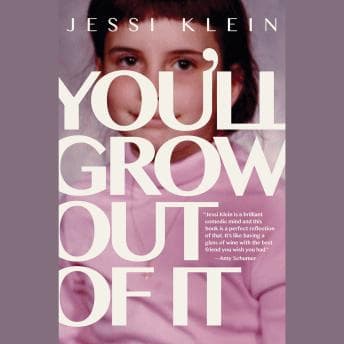

Look, I need to get something off my chest: I spent twenty years telling students that the essay is the most disciplined form of prose. That personal essays demand rigor, structure, a thesis. And then Jessi Klein waltzes in with a bit about the existential horror of being called 'ma'am' instead of 'miss' - she defines 'miss' as sounding like you weigh 99 pounds - and I laughed so hard I woke up Denise on a Saturday morning. So much for rigor.
Here's the thing. I came to this book sideways. I'd been on a Middlemarch kick (yes, again), and Denise, bless her, gently suggested I listen to something written after 1872. She'd heard Klein on some podcast and thought I'd appreciate the writing. I was skeptical. Comedy writer memoir? My inner English teacher was already grading it with a red pen before I hit play.
I was wrong. Mostly.
The Tomboy Who Never Got the Feminine Memo
Klein's central conceit - that she grew up as a tomboy who aged into what she calls a 'tom man,' perpetually baffled by the rituals of womanhood that other women seem to have absorbed by osmosis - is genuinely sharp. This isn't observational comedy dressed up as memoir. It's closer to what happens when someone with real analytical chops turns that lens on herself and refuses to flinch. Her essay on lingerie shopping isn't just "shopping is awkward, am I right?" She dissects the specific theater of it - the saleswoman's studied enthusiasm, the lighting designed to make everyone look like a Renaissance painting, the absolute absurdity of paying $80 for fabric that weighs less than a Post-it note. There's a precision there that I respect as someone who spends his life teaching kids to be specific in their writing.
The pregnancy and aging essays hit differently. Klein moves from funny to genuinely vulnerable without signaling the turn, which is harder than it looks. She doesn't do the comedian thing of deflecting every real emotion with a punchline. Sometimes she just... sits in it. And because she's narrating her own work, you hear the shift. Her voice drops half a register when she's being honest about fear. Not performative honesty. The real kind.
When the Author Is the Narrator (And That's the Whole Point)
This is where I get on my soapbox about narration, because Klein reading her own essays is the only way this book should exist in audio. I'm a purist about this - I believe great narration is performance art - but Klein isn't performing in the traditional sense. She's doing something more like a really good teacher (I would know) telling a story to a room that's actually listening. Her comedic timing is precise without being rehearsed. There's a conversational looseness that makes it feel like she's sitting across from you at a bar, except she's funnier than anyone you actually know at a bar. That same quality — a narrator who sounds like a real person rather than a performance — is what made White Ivy stick with me too, though in a much darker register.
I listened at my usual 1.0x, and at seven and a half hours, this is the kind of book you can move through in a long weekend. I caught most of it during my lakefront walks and - I'll admit it - during a particularly brutal faculty meeting about standardized testing benchmarks. (Principal Martinez, I promise I absorbed at least 40% of the testing data. Maybe 30%.)
The straightforward production works here. No music, no sound effects. Just Klein's voice. Smart choice. Anything else would've undercut the intimacy.
Where the Red Pen Comes Out
I can't pretend this is flawless, because I've been grading essays too long to let anything slide. Some of the pieces feel more like solid blog posts than fully realized essays - they make their point and exit before they've earned the emotional weight they're reaching for. And I understand the criticism that Klein's perspective can feel narrow. She's writing from a very specific slice of experience - urban, comedy-world, particular socioeconomic bracket - and there are moments where the book assumes everyone's operating from that same baseline. A few of my students, the ones from Englewood and Back of the Yards, would read this and say "cool story, not my story." And they wouldn't be wrong.
But here's what I tell those same students about personal essays: the job isn't to speak for everyone. It's to speak honestly about your own experience and trust the reader to find the universal in the specific. Klein does that more often than she doesn't. The bit about barre classes is peak specificity - she's not talking about exercise, she's talking about the weird performance of trying to become a person you're not sure you want to be. That's universal. That's Montaigne in yoga pants.
Who Gets the Most Out of This
If you want literary memoir in the Didion or Dillard vein, recalibrate your expectations. This is lighter than that. But if you want smart, self-aware comedy essays read by the person who wrote them - and you appreciate a writer who can make you laugh and then quietly gut you two paragraphs later - Klein delivers. It's perfect for commutes, walks, or any situation where you need something engaging but not demanding. My students would probably love this, actually. It's honest in the way they always claim to want their reading to be.
Worth pausing the faculty meeting for. Not worth pausing Middlemarch for. But pretty close.









