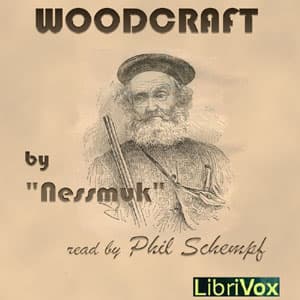

George Washington Sears weighed about 105 pounds soaking wet, had tuberculosis for most of his adult life, and spent more time in the Adirondack wilderness than men twice his size and half his age. That alone should tell you something about the man behind the pen name Nessmuk.
I picked this up on a Saturday morning while Denise and I walked the lakefront path - she was doing her thing with a true crime podcast, I was doing mine with a 130-year-old camping manual. The joggers passing us had no idea I was getting lectured by a Victorian outdoorsman about the proper way to build a bark shanty.
The Original Ultralight Backpacker Was Born in 1821
Here's what got me about this book: Nessmuk was essentially inventing minimalist camping philosophy before the word "minimalist" meant anything beyond grammar. His whole argument - that you should "smooth it" rather than rough it in the woods - is a direct rebuke of the machismo that said wilderness meant suffering. A sick man who couldn't afford to carry extra weight figured out that you didn't need to. There's something genuinely moving about that, even if his specific advice about oilcloth shelters and hardtack isn't exactly applicable to your REI shopping list.
The writing itself is pure 19th-century magazine prose. Nessmuk writes like a man who's been paid by the column inch but actually has something to say - a combination I rarely encounter anymore. He's funny in that dry, understated way that Victorian writers could be when they weren't performing for the literary establishment. He's writing for people who actually go outside, not people who read about going outside. And you can hear the difference.
At 3 hours and 30 minutes, this is a sitting. Maybe two. It doesn't overstay. Some of the equipment chapters - the endless specifications for axes and cook kits - drag by modern standards, sure. But even those have a certain archaeological charm. You're listening to a man describe gear that no longer exists for trips into wilderness that no longer exists, and somehow it still feels practical in spirit.
Phil Schempf Reads Like Your Favorite History Professor
Phil Schempf has a deep, steady baritone that treats this material with exactly the right amount of respect without tipping into reverence. He reads Nessmuk's humor with a straight delivery that lets the wit land on its own - no winking, no mugging. When Nessmuk gets sardonic about over-packers hauling ridiculous loads into the woods, Schempf's dry read makes it funnier than an exaggerated performance would.
I'll be honest: with limited listener data on this recording, I can't give you a granular breakdown of every vocal choice. What I can tell you is that Schempf sounds like a man who's actually spent time outdoors, which matters more than technical polish for a book like this. The prose is straightforward enough that it doesn't demand theatrical range - it demands warmth and clarity, and he delivers both.
One thing worth flagging: this is a LibriVox-style recording, which means the production values are clean but modest. No sound effects, no ambient forest noise, just a man reading a book. For Nessmuk, that's exactly right.
The Parts That Haven't Aged - and the Parts That Haven't Aged Well
Let's talk about what the description politely calls "mores that may be objectionable to modern readers." Nessmuk was a man of his era. His attitudes toward Indigenous peoples and wildlife reflect 1880s thinking, which is to say they can make you wince. I teach American literature - I'm used to contextualizing problematic passages without dismissing the whole work. But I'd be a lousy teacher if I didn't mention it.
What HAS aged beautifully is his core philosophy: carry less, know more, pay attention to the woods instead of your gear. My students would hate this - too slow, too old, too much about canvas and hatchets. I love it. This is the great-great-grandfather of every ultralight YouTube channel and thru-hiking blog, and he wrote it while coughing up blood in a canvas tent.
The prose deserves to be savored. Nessmuk writes sentences like "We do not go to the green woods and crystal waters to rough it, we go to smooth it" - and that line, written over a century ago, is still the most concise camping philosophy I've ever heard.
Who Gets the Assignment, Who Gets Excused
If you're an outdoor enthusiast with any interest in where modern camping philosophy came from, this is a short, pleasant listen. If you loved Thoreau's "Walden" but wished it had more practical advice and less navel-gazing, this is its spiritual successor - the pragmatist's version of retreating into nature. Cheryl Strayed's Wild: From Lost to Found on the Pacific Crest Trail sits at the opposite end of that same tradition - 140 years later, same impulse to walk into the woods and figure something out. Hikers, canoe people, history buffs, anyone who's ever argued about pack weight on a trail forum.
If you're looking for a modern survival guide or step-by-step instructions, skip it. The specific advice is 140 years out of date. You're here for the voice, the philosophy, and the strange pleasure of hearing a Victorian explain why your camping setup is too heavy.
Worth pausing the faculty meeting for - though at 3.5 hours, you might actually finish it during one of Principal Martinez's budget presentations.