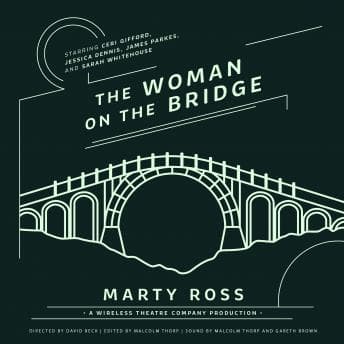
"There's a woman on the bridge. She screams."
That's all Ceri and Gwyneth need to hear. And honestly? That's all I needed too. I was up at 1 AM, couldn't sleep, scrolling through short listens when this popped up. An hour-long audio drama set in Chatsworth House during WWII? With a ghost story woven through wartime displacement? Shirley (my cat) was already judging me from the foot of the bed. I hit play anyway.
When the Setting Does Half the Work
Here's the thing about ghost stories—location matters. And Marty Ross understands this. Chatsworth House isn't just backdrop here. It's a grand estate suddenly filled with schoolgirls who don't belong there, sleeping in rooms meant for aristocrats, walking halls that remember different footsteps. The Devonshire family has cleared out. A girls' school has moved in. And something about that displacement—that wrongness of ordinary children in extraordinary spaces—creates exactly the kind of tension good horror needs.
The audio drama format works brilliantly for this. Ceri Gifford and Jessica Dennis as the two schoolgirls exploring "above and below stairs" have this conspiratorial energy that feels authentic to girlhood friendships. When they're whispering about the screaming woman, you're whispering with them. James Parkes and Sarah Whitehouse round out the ensemble, and the character differentiation is clean—no confusion about who's speaking, which is harder than it sounds with four narrators.
The Parallel That Actually Lands
What elevates this beyond standard ghost fare is the layering. The screaming woman on the bridge isn't just a spooky legend for the girls to investigate. It's a mirror. Miss Cairns—their charismatic teacher—is involved in a secret love affair, and the parallels between past and present start pressing against each other in ways that feel genuinely unsettling.
This is what I mean when I say good horror isn't about gore. It's about dread. Into the Drowning Deep gets this too—building terror through inevitability rather than jump scares. It's about watching patterns repeat. It's about understanding that the screaming woman was someone once, someone with secrets, someone whose story ended on that bridge. And then looking at Miss Cairns and wondering.
Ross is a BBC radio drama veteran, and it shows. The pacing for a 65-minute piece is tight—no wasted moments, no scenes that exist just to fill time. Every conversation builds something. The Wireless Theatre Company production (directed by David Beck) keeps things atmospheric without drowning the dialogue in effects.
Where It Haunts, Where It Doesn't
I'll be honest—at just over an hour, this is more of a ghost story appetizer than a full meal. If you're coming in expecting the slow-burn dread of a Hill House situation, you might feel rushed. The secret affair revelation happens quickly, the ghostly connections are drawn efficiently. It's effective, but I found myself wanting to linger longer in those Chatsworth corridors.
The WWII setting is present but not deeply explored. It's more of a mechanism to get the school into the house than a thematic element in itself. Which is fine—not every wartime story needs to be about the war. But there's something there, something about displacement and loss and women's lives interrupted, that could have been pushed harder.
Still. When the woman on the bridge screams—and she does—the ensemble commits. That's rare. You feel the girls' fear. You feel Miss Cairns' recognition. You feel the weight of history pressing down on present tense.
Who This Is For (And Who Should Keep Walking)
If you love atmospheric audio drama and classic ghost story structure, this is your next late-night listen. Perfect for fans of gothic settings and ensemble casts who want something complete in an hour. Skip it if you need deep character development or want your WWII fiction to actually grapple with the war—this uses the era as staging, not substance.
My 2 AM Verdict
Shirley was unimpressed. I was... unsettled. In the good way.
This understands that horror isn't about gore—it's about dread. About echoes. About the terrible possibility that the past isn't past at all, just waiting on a bridge for someone to walk by.
For a short, focused listen, it delivers exactly what it promises. Gothic atmosphere, a classic ghost story structure, and that particular unease of wartime England where normal life has been suspended and anything might slip through the cracks.
I listened in the dark. Mistake? Maybe. Worth it? Absolutely.
Just... maybe don't listen right before you need to walk past any bridges.