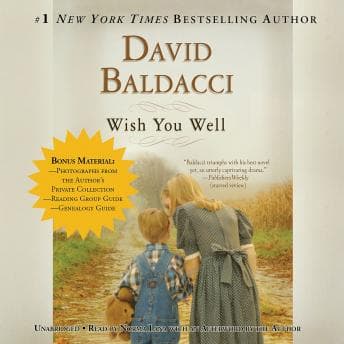

Look, I need to talk about something that's been bugging me. David Baldacci writes thrillers. That's his thing. So when I queued up Wish You Well expecting some kind of legal suspense or government conspiracy, I was genuinely confused for the first twenty minutes. Where's the assassin? The corrupt senator? The ticking clock?
Turns out, none of that. And honestly? Thank God.
The Night Shift Needed This One
I listened to most of this during my 3 AM charting sessions when the trauma bay was mercifully quiet (knocked on wood the entire time, obviously). And there's something about Norma Lana's voice—warm, unhurried, with this mountain dialect that sounds like someone's grandmother telling you stories on a porch—that just... settled me. After twelve hours of beeping monitors and controlled chaos, Lou and Oz's Virginia mountain felt like a reset button for my nervous system.
The setup is heartbreaking. Twelve-year-old Lou and her little brother Oz lose their father in a car accident. Their mother survives but is basically catatonic—and as someone who's worked with trauma patients, Baldacci gets the medical reality of that kind of withdrawal right. The kids get shipped off to their great-grandmother's farm in 1940s Appalachia, and suddenly we're watching these city kids learn to haul water and plant crops and survive without electricity.
It's a coming-of-age story wrapped in a family drama wrapped in a love letter to a disappearing way of life. Pretty far from The Camel Club, but I'm not complaining. Edge is more his speed if you want that pulse-pounding government intrigue, but this gentler side of Baldacci surprised me in the best way.
Norma Lana Nailed the Mountain Tongue
Here's where I get specific, because narration can make or break an audiobook for me. Lana speaks in that Virginia mountain dialect so naturally that I forgot I was listening to a performance. There's no hint of someone "doing an accent"—it just sounds like she grew up there. Lou's precociousness comes through without being annoying (a real risk with kid characters). Oz's vulnerability hits different when you can hear the tremor in his voice.
And the great-grandmother, Louisa? That woman could've been any of the tough old ladies I've cared for over the years—the ones who've buried husbands and children and still get up at dawn to make biscuits. Lana captures that particular brand of Appalachian resilience without making it a caricature.
I'll admit—Carlos asked why I was crying in the car on Tuesday morning. I blamed allergies. It was not allergies. There's a scene near the end, in the courtroom, that just... yeah. Reached for a tissue. Night shift dehydration, obviously.
When the Story Shifts to Survival Mode
The book takes a turn when a coal company comes sniffing around the mountain. Suddenly we've got a David vs. Goliath situation, and Lou—this twelve-year-old girl who's already lost so much—has to fight for her new home in a Virginia courtroom. It's not a thriller, but there's genuine tension. Stakes that feel real because we've spent hours falling in love with this place and these people.
Baldacci's writing here is accessible without being simple. He doesn't romanticize poverty or pretend mountain life was some pastoral dream—there's prejudice, there's hardship, there's the very real possibility of losing everything. But there's also community and stubbornness and love that doesn't need to be spoken to be felt.
My mom would love this. She's always saying I should read "nicer" books instead of all the crime stuff. (She still thinks I should've been a doctor, but that's a different conversation.) This is the kind of story she'd approve of—family, faith, fighting for what matters. I might actually recommend it to her.
Who's This For (And Who Should Skip)
Perfect for post-shift decompression when you need something that'll make you feel things without spiking your cortisol. If you're looking for Baldacci's usual thriller pace, this isn't it—the pacing is slower, a slow burn that earns its emotional payoff. Skip if you can't handle kid protagonists or need action beats to stay engaged. But if you want warmth and heart and a story about people fighting for home? Queue it up.
Clocking Out
Is this Baldacci's usual lane? Absolutely not. Is it worth ten hours of your time? If you're in the right headspace, absolutely yes. Norma Lana's narration won an Earphones Award, and I get why. She brings so much warmth to this story that you forget you're listening alone in your car at 7 AM after a brutal shift.
Night shift approved. Just maybe keep tissues in your center console.