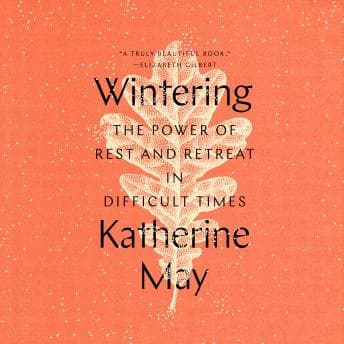

I finished this one at 6:47 AM, sitting in my car in the hospital parking lot after a brutal night shift. Three codes, a combative patient, and a new grad who needed a lot of hand-holding. I should've been exhausted. Instead I sat there for an extra twenty minutes, engine off, just... breathing.
That's what this book does.
When Life Hands You a Night Shift That Never Ends
Katherine May gets it. She really, really gets it. Not in that inspirational-poster way where someone tells you everything happens for a reason. (If one more person tells me that after a patient codes, I will scream.) She gets it in the way that acknowledges: sometimes life just... stops working. Your husband gets sick. Your kid won't go to school. Your own body betrays you. And the world keeps spinning like nothing happened.
I've worked nights for eight years. I know about wintering. I know about that 3 AM feeling when the unit is quiet and you're charting and everything feels suspended. May writes about embracing the fallow times, the dormant seasons, and honestly? It hit different than I expected. I went in thinking this would be another self-help book telling me to practice gratitude and take bubble baths. (Carlos asked why I was crying in the car. I blamed allergies.)
Instead, May weaves together her own story with mythology, literature, dormice hibernation—yes, dormice, just go with it—and cold water swimming. She quotes Sylvia Plath and C.S. Lewis in the same breath and somehow it works. The woman sailed arctic seas to understand what it means to rest. That's commitment.
Rebecca Lee at 6 AM
Here's the thing about audiobooks during night shift: the narrator becomes your companion. Rebecca Lee's voice is calm. Gentle. The kind of voice that doesn't demand anything from you when you've already given everything to work.
Some reviewers found her pacing too slow. I get that—if you're listening during a workout or your morning commute, you might want to bump it up to 1.25x. But for me, driving home at dawn, that deliberate pace was exactly right. It matched the book's whole philosophy. Rest. Slow down. Stop trying to power through.
Lee handles May's emotional moments without getting dramatic about it. When May writes about her husband's illness or her own medical struggles, Lee doesn't oversell the pain. She trusts the words. That's harder than it sounds—a lot of narrators try to make you feel things. Lee lets you feel them on your own.
The production quality is solid. Clear audio, no weird background noise. There's apparently a bonus conversation between May and Lee that I haven't gotten to yet, but I'm saving it for my next rough shift.
Not Everyone's Medicine
Look, I'm gonna be real. This book isn't for everyone.
If you're looking for a step-by-step guide to fixing your life, this ain't it. May doesn't give you action items or morning routines or productivity hacks. She gives you permission. Permission to be dormant. Permission to retreat. Permission to acknowledge that sometimes the best thing you can do is stop trying so hard. That idea of surrendering to what life brings instead of forcing outcomes reminded me of Surrender Experiment, though May's approach feels gentler, less about spiritual seeking and more about simple survival.
My mom would absolutely hate this book. She's the kind of Filipina mother who believes in pushing through everything. Sick? Go to work. Tired? Sleep when you're dead. (She still thinks I should've been a doctor, so.) But for those of us who've been running on empty for too long, who've been told our whole lives that rest is laziness? This book is a quiet revolution.
It reminded me of Joan Didion's "The Year of Magical Thinking"—that same unflinching honesty about grief and loss. But warmer. More hopeful. May believes in spring. She just thinks we need to stop rushing through winter to get there.
Who Needs This, Who Doesn't
Perfect for that post-shift decompression. Or for anyone going through their own winter right now—divorce, illness, job loss, whatever dark season you're navigating. Skip it if you want actionable steps or a quick fix. This is permission, not a prescription. At just under seven hours, it's the right length. Long enough to sink into, short enough to finish during a rough week.
I'm going to listen to it again in December. When the nights are longest and the ER is chaos and I need someone to remind me that fallow seasons aren't failures.
Night shift approved.