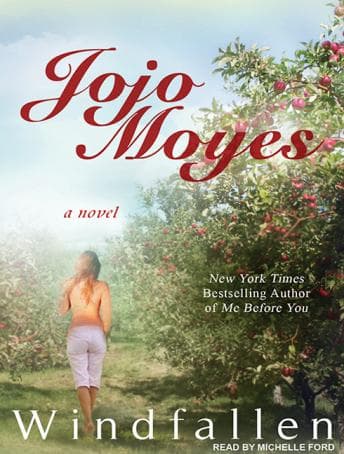

There's this moment early on where Lottie stands in front of Arcadia for the first time, and Michelle Ford's voice drops into something almost reverent. I was grading sophomore essays on The Great Gatsby—yes, the irony of listening to a story about a beautiful house while marking papers about another beautiful house wasn't lost on me—and I actually stopped my red pen mid-correction. That's when I knew this was going to be one of those listens.
Jojo Moyes wrote this before Me Before You made her a household name, and honestly? You can feel her finding her voice here. It's messier than her later work. More ambitious in some ways, less polished in others. But there's something I appreciate about catching a writer before they've been fully smoothed by success.
The Architecture of Two Timelines
Look, I teach narrative structure for a living, and this book is doing something genuinely interesting with its dual timeline. 1950s Lottie and modern-day Daisy aren't just parallel stories—they're in conversation with each other. The art deco house Arcadia becomes this physical manifestation of choices made and unmade, dreams pursued and abandoned.
But here's where I'll be honest with you: the middle section gets tangled. Moyes introduces so many characters that even I—someone who regularly tracks 150 students' names—found myself rewinding to remember who was connected to whom. There's a point around hour seven where I genuinely wondered if she'd forgotten about two characters entirely. (She hadn't. But still.)
This is early Moyes, and you can feel her instinct to populate her world completely, to give every minor character their own arc. It's generous, but it's also occasionally exhausting. My wife Denise, who was walking the lakefront with me during the 1950s sections, kept asking "wait, which one is that again?" and I couldn't always answer her.
Why Michelle Ford Makes This Work
Here's the thing about a book with this many characters and these abrupt perspective shifts—it could be an absolute disaster in the wrong narrator's hands. Ford has this silvery clarity to her voice that somehow keeps you oriented even when the text is jumping between decades and viewpoints.
She's doing something subtle with the 1950s sections versus the modern ones. There's a slightly more formal cadence to Lottie's world, a looseness to Daisy's. It's not showy—Ford isn't doing theatrical voice changes—but it's effective. You know where you are before the text explicitly tells you.
I couldn't find much about Ford's background online, but based on this performance, she understands that narration is interpretation. She's making choices about emphasis and pause that feel considered. When Lottie makes her pivotal decision—the one that echoes through the rest of the novel—Ford lets the silence after that moment breathe. That's not in the text. That's craft.
The Slow Burn That (Mostly) Pays Off
My students would absolutely hate this book. It's too slow for them, too interested in interior life, too willing to let scenes unfold at their own pace. I loved it.
Well. I loved about eighty percent of it.
The ending feels... incomplete isn't quite right. Rushed, maybe? After fifteen hours of careful character development, the final hour wraps things up with a speed that felt almost apologetic. Like Moyes suddenly remembered she had a page count and needed to land this plane. The romantic resolution in particular felt like it deserved another chapter or two of earned development.
But the journey there—the slow accumulation of secrets and desires and compromises—that's what Moyes does better than almost anyone writing popular fiction. She understands that love stories are really stories about choices, and choices have weight.
Who This Is For (And Who Should Skip It)
If you loved Me Before You and want to see where Moyes came from, this is essential listening. You can feel her developing the emotional precision that would later make her famous. But if you need your plots tight and your casts manageable, maybe start with one of her later novels instead. This one requires patience and possibly a notepad.
I listened at my usual 1.0x speed—the prose deserves to be savored, even when the plot is wandering—and I'd recommend the same. There's a rhythm to Ford's narration that rewards attention. Butterfly Room has that same quality—a narrator who understands that pacing is part of the storytelling.
The Teacher's Final Grade
Would I listen again? Probably not the whole thing. But those 1950s sections, with Lottie discovering herself against the backdrop of that impossible house? Those I might revisit. There's something there that feels almost Fitzgerald-esque—the way beauty and tragedy get tangled together, the way we reach for things that will inevitably slip away.
My students would hate that comparison too. But they're wrong about a lot of things.