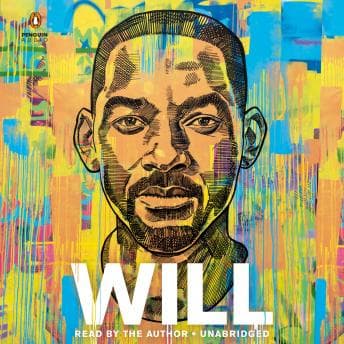

Look, I'll be honest - I came into this one skeptical. Celebrity memoirs are usually ghostwritten fluff designed to make the subject look good while saying absolutely nothing. I've assigned enough "autobiographies" to my AP Lit students to know the formula: rags to riches, lessons learned, gratitude expressed, the end.
Will Smith broke the formula. And I mean shattered it.
The Voice That Makes It Work
Here's the thing about author-narrated audiobooks - they're a gamble. Some celebrities read their own work like they're reading a teleprompter at an awards show. Flat. Rehearsed. Dead behind the eyes, except you can't see the eyes so it's just... dead.
Will Smith sounds like he's sitting across from you at a kitchen table at 2 AM, telling you things he probably shouldn't. There's a warmth to his delivery that you can't fake. When he talks about his father - the fear, the complexity, the strange gratitude - you hear the catch in his voice. When he's recounting the DJ Jazzy Jeff days, he's genuinely laughing. The man is performing his own life, and he's doing it with the same charisma that made him a movie star. Except this time, there's no script to hide behind.
I listened to most of this walking the lakefront with Denise. She kept asking why I was stopping to stare at the water. I couldn't explain that I was processing a story about a kid from West Philadelphia who built an empire on willpower alone - and then watched that same willpower nearly destroy his family.
Where the Narrative Shifts
The first half is what you'd expect. The rise. The grind. Fresh Prince. Men in Black. The box office records. It's entertaining - genuinely so - but it's familiar territory. Will Smith is good at being Will Smith, and he knows how to tell a success story.
But somewhere around the middle, the book pivots. Hard.
This is where Mark Manson's influence becomes clear. (And if you've read The Subtle Art of Not Giving a F*ck, you'll recognize the philosophical undercurrent.) Smith starts interrogating his own mythology. The relentless drive that made him successful? It was also running from something. The perfect family image? A performance. The control he needed over everything and everyone? Suffocating.
I teach The Great Gatsby every year, and there's a moment where Nick realizes that Gatsby's dream was always hollow at the center. Will Smith has that realization about himself - live, on the page, in his own voice. It's uncomfortable. It's honest. It's the kind of self-examination most people never do, let alone publish.
My students would probably find the career stuff more interesting. I found the reckoning more valuable.
The Sixteen-Hour Question
Yes, it's long. Sixteen hours is a commitment. (That's approximately 47 faculty meetings, not that I'm counting.) There are stretches where the Hollywood anecdotes feel less essential - do we need every detail of every movie set? Probably not. But Smith's delivery keeps even the slower sections listenable. He's not reading; he's remembering. There's a difference.
The production is clean, no weird audio glitches or jarring transitions. Just Will, talking. Sometimes laughing at himself. Sometimes clearly working through something painful in real time.
I should note - this was recorded before the 2022 Oscars incident. I'm not going to pretend that doesn't color how some people will receive this book now. But honestly? The themes of suppressed anger, the performance of masculinity, the gap between public image and private struggle - it all hits differently knowing what came later. The book becomes almost prophetic. He was telling us something was wrong. We just didn't know how wrong.
Would I Recommend It?
If you want a breezy celebrity tell-all with gossip and name-dropping, this isn't quite it. There's some of that, sure, but it's not the point.
If you want to hear a man genuinely wrestling with the question of what success actually means - whether the empire you build is worth anything if the people inside it are miserable - then yes. Absolutely yes.
It's not a perfect book. It's sometimes self-indulgent. The philosophical tangents occasionally feel like they're reaching for profundity. But the honesty is real. The performance is excellent. Jessica Simpson's Open Book had that same raw honesty about the gap between public image and private pain, though her journey took a different shape. And the questions it raises about ambition, family, and identity are worth sitting with.
I finished it last week and I'm still thinking about it. That's more than I can say for most of what crosses my desk.
(Don't tell my students I said a celebrity memoir was better than half the "literary" audiobooks I've assigned. They'll never let me hear the end of it.)







![Steve Jobs [unabridged audiobook] audiobook cover](/_next/image?url=https%3A%2F%2Fcovers.audiobooks.com%2Fimages%2Fcovers%2Ffull%2F9788499923406.jpg&w=1920&q=75)