
Look, I need to address something that's been bothering me for twenty years of teaching: the phrase "guilty pleasure" as applied to books. My students use it constantly. "Mr. Williams, is it okay if my book report is on something... you know... fun?" As if enjoyment were a crime requiring absolution.
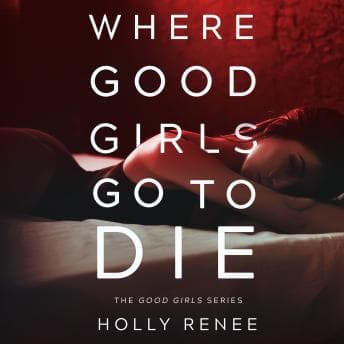
I thought about this a lot while listening to Where Good Girls Go to Die during a particularly brutal stack of sophomore essays on The Great Gatsby. Here I am, red pen in hand, correcting comma splices, while Kelly Pruner is in my earbuds delivering lines about forbidden attraction with the kind of emotional conviction that would make my drama department jealous.
The irony isn't lost on me.
The Brother's Best Friend Problem (A Literary Observation)
This trope is ancient. I mean genuinely ancient—you can trace forbidden love and social proximity back through centuries of literature. What Holly Renee does here isn't reinventing anything. She's working within a tradition. And honestly? She works it well. The setup is familiar: Liv has loved Parker forever, Parker is her brother's best friend, disaster ensues, four years pass, everyone comes back changed. The forbidden attraction dynamic here shares DNA with Fifty Shades Darker, though Renee's version feels less about power imbalance and more about genuine history between the characters.
What kept me listening past my usual 11 PM grading cutoff was the dual narration. Rex Anderson handles Parker with this low, slightly rough delivery that sells the "bad boy covered in tattoos" description without overdoing it. When he shifts into vulnerable territory—and there's more of that than the title suggests—the contrast actually works. Kelly Pruner's Liv has an edge to her that develops convincingly across the runtime. The "I'm not a good girl anymore" transformation lands because Pruner doesn't play it as a sudden switch. It's gradual. Earned.
When Narrators Disagree With Your Brain
I'll be honest: there were moments where something felt slightly off. Some listeners apparently found Parker's voice "weird"—I wouldn't go that far, but there's an adjustment period. Around the first hour, I kept getting pulled out of the story by small vocal choices that didn't match what I'd imagined. By hour three? Completely adjusted. My brain had recalibrated.
This is the thing about audiobook romance—the narrator IS the love interest in a way that doesn't apply to other genres. If you can't stand the voice, you can't fall for the character. Anderson's Parker grew on me. The emotional beats in the back half hit harder than I expected, partly because I'd stopped fighting his interpretation and started trusting it.
Pruner and Anderson work well as a pair. The expressionism—that's the word one listener used, and it's apt—feels coordinated. When scenes shift between their perspectives, there's continuity in the emotional temperature. That takes work. That takes direction. Someone knew what they were doing in the production booth.
At 5 Hours, It Knows What It Is
The 5-hour-35-minute runtime is a feature, not a bug. This isn't trying to be an epic. It's concentrated. Denise and I walked the lakefront twice this week, and I finished the whole thing before she got tired of my "just one more chapter" requests. (She's patient. Twenty-three years of marriage to an English teacher requires patience.)
The pacing moves. There's angst—plenty of it—but it doesn't wallow. The content warnings are real: violence, abuse themes, language, and explicit content. This isn't a cozy romance. It's got teeth. If you're expecting something gentle, recalibrate. But if you want something with genuine emotional stakes and a narrator duo who commit to the material? This delivers.
Who This Is Actually For (And Who Should Skip)
My students would love this. I would never, ever tell them I listened to it. That's not shame—that's professional boundaries. But if you're someone who enjoys contemporary romance with the brother's best friend trope, second chances, and a heroine who's shed her good-girl skin? Worth your time.
Skip it if you need pristine literary prose (this isn't that), you're sensitive to the content warnings listed, or you absolutely cannot adjust to a narrator voice that might not match your mental casting.
Pick it up if you want something emotionally engaging that doesn't require a 20-hour commitment, you appreciate dual narration done with actual chemistry, or you're grading papers at 11 PM and need something that keeps you awake better than your third cup of coffee.
Mr. Williams's Final Grade
Almost worth pausing a faculty meeting for. I wouldn't have started it during Principal Martinez's budget presentation—too much risk of making inappropriate facial expressions during the spicier scenes—but for a lakefront walk or late-night grading session? It earned its place in my rotation. The narration has minor quirks that might trip you up initially, but the emotional payoff is genuine. Not every book needs to be Faulkner. Sometimes you just need a story that knows exactly what it wants to be and executes it with conviction.
Holly Renee wrote a romance that doesn't apologize for itself. Pruner and Anderson performed it like they believed in it. At this price point and runtime, that's worth something.