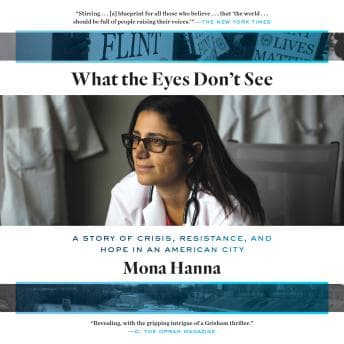

Look, I have a problem with books about government failure. They make me want to throw things. And this one? This one made me want to throw things at very specific people in very specific offices in Michigan.
But here's the thing—I couldn't stop listening.
The Psychology of Willful Blindness
What fascinated me most about Dr. Mona Hanna-Attisha's account isn't just the crisis itself. It's the cognitive architecture of denial she exposes. The state officials who dismissed her data, the bureaucrats who attacked her credibility—this is a case study in motivated reasoning at its most dangerous. When the facts threaten your worldview (or your job, or your political party), the human brain performs remarkable gymnastics to reject them. The 50th Law explores a different angle on this—how fear shapes decision-making when power is at stake.
I kept pausing the audiobook during my morning jogs to process what I was hearing. Research shows that people in positions of power are especially susceptible to this kind of self-protective thinking. They have more to lose, so they work harder to not see what's right in front of them. Dr. Mona describes officials who literally had the same data she did—the same numbers, the same evidence of lead in children's blood—and chose to interpret it as "within normal range."
She exhibits classic whistleblower psychology: the inability to un-see a truth once you've seen it. She couldn't walk away. She couldn't just treat the next patient and move on. And honestly, as someone who studies why people do what they do, I found myself asking: why does she keep pushing when the personal cost is so high? The answer, woven throughout her family history of Iraqi activism and displacement, is genuinely moving. Trauma can break people. It can also forge them.
When the Scientist Becomes the Narrator
Here's where I'll be honest—author-narrated audiobooks are a gamble. Scientists aren't trained performers. But Dr. Mona? She's got this nurturing, slightly goofy warmth that made me feel like I was getting the story over coffee rather than from a podium. There's a faintly humorous edge to her delivery that keeps the material from becoming unbearably heavy (and trust me, it could).
She reads her own outrage, her own fear, her own exhaustion. When she describes the backlash—being called an "unfortunate researcher" by state officials, having her data dismissed as "splicing and dicing"—you hear the wound still there. That's not something a voice actor could replicate. The personal stakes are in every syllable.
My one observation: she's a pediatrician, not a thriller narrator. The pacing is steady rather than propulsive. I listened at 1.25x during some of the more technical public health sections and it worked well. But the emotional moments? Those need regular speed. You want to sit with them.
More Than a Crisis Book
I've listened to a lot of investigative nonfiction. Most of it follows a predictable arc: problem discovered, hero fights system, hero wins or doesn't, the end. Dr. Mona does something different. She doesn't just tell you what happened in Flint. She shows you the invisible forces that made it possible—the emergency manager laws that stripped democratic power from majority-Black cities, the austerity mindset that treated children's health as a budget line item.
She understands human nature. She knows that systems fail because individuals fail. Not through malice, necessarily, but through the small daily choices to not ask questions, to not rock boats, to protect careers over communities. It's chilling because it's so recognizable.
And then there's hope. Real hope, not the manufactured kind. The community organizing, the parents who trusted their instincts even when officials told them they were wrong, the coalition of researchers and activists who refused to be silenced. My therapist would have thoughts about the collective trauma response here—how crisis can catalyze connection rather than just destruction.
Who This Is For (And Who Should Wait)
If you're interested in public health, environmental justice, or just want to understand how American democracy can fail its most vulnerable citizens—this is essential. The 11-hour runtime flew by during my commutes and cooking sessions. I made an elaborate biryani while listening to the chapter about Dr. Mona's Iraqi immigrant family, and somehow both experiences felt connected. Stories of displacement and resilience, you know?
But if you're in a fragile headspace about government dysfunction or can't handle descriptions of children being poisoned by their own tap water—maybe wait. This isn't trauma porn, but it doesn't flinch either.
The Imperfect Messenger
I came away from this audiobook genuinely moved. And also furious. Both things can be true. Dr. Mona's voice—literally and figuratively—is exactly what this story needed. She's not a polished narrator, but she's the right one. Sometimes the imperfect messenger carries the most important message.









![Steve Jobs [unabridged audiobook] audiobook cover](/_next/image?url=https%3A%2F%2Fcovers.audiobooks.com%2Fimages%2Fcovers%2Ffull%2F9788499923406.jpg&w=1920&q=75)