
I was sitting in a client's lobby waiting for a pitch meeting that was running 20 minutes late—classic startup chaos—and figured I'd knock out something short from my queue. Forty-seven minutes later, I had notes on my phone and the meeting still hadn't started. That's either proof of how packed this thing is, or how disorganized my client is. Probably both.
The 47-Minute Miracle (Or: Finally, Someone Who Gets It)
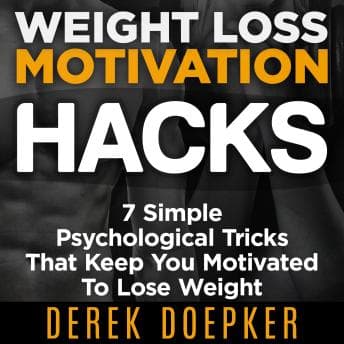
Here's what I tell every founder I work with: if you can't explain your value prop in 30 seconds, you don't understand it. Derek Doepker apparently got that memo. This audiobook is 47 minutes. That's it. No padding, no "let me tell you about my grandmother's struggle with weight" stories that eat up three chapters. Just... the information.
I almost wept.
Doepker narrates his own work, and honestly? It works. His delivery is clear, motivational without being that guy who screams at you about crushing it, and he moves through material like someone who respects that you have other things to do today. The NLP trainer background shows—he structures ideas in a way that actually sticks.
The Stuff That's Actually Useful
The "six human needs" framework is the meat here. It's not revolutionary if you've read Tony Robbins, but Doepker applies it specifically to weight loss behavior in a way that clicked for me. The idea that you're not fighting willpower but rather competing needs? That's what my parents did instinctively when they'd walk past the donut shop to their dry cleaning business every morning. They weren't resisting donuts—they had something they wanted more. That same principle of competing priorities drives a lot of the decision-making frameworks in Real Book of Real Estate, where every investment choice is really about what you're willing to sacrifice for what you want more.
The craving-interruption technique he mentions—the one borrowed from smoking cessation research—is the kind of specific, actionable tool I wish more business books included. No vague "be more mindful" nonsense. An actual technique you can use tomorrow.
He also tackles the 90% regain statistic head-on instead of pretending it doesn't exist. Most weight loss content ignores this elephant in the room. Doepker actually addresses why motivation-based approaches fail long-term and pivots to habit architecture instead. That's intellectually honest, and it's rare.
Where It Falls Short (Because Nothing's Perfect)
Look, this is a 47-minute audiobook. You're not getting deep psychological case studies or peer-reviewed citations. It's more framework than proof. If you're the type who needs to see the research papers, you'll find this frustrating.
Also—and Jenny would say I'm being harsh, Jenny is right—some of the "mind-hack" language feels a bit infomercial-y. "Reprogram your brain" and "unstoppable motivation on-demand" are promises that oversell what is actually solid, reasonable advice. The content is better than the marketing copy suggests.
The production is bare bones. No music, no sound effects, just Doepker talking. Which is fine for 47 minutes but wouldn't work for a longer listen.
Who This Is (and Isn't) For
This is for people who've read 15 diet books and still can't figure out why they quit every program by week three. It's for the person who intellectually knows what to eat but can't make themselves do it. If motivation is your bottleneck—not information—this addresses that gap.
Skip it if you want detailed meal plans or exercise routines. This is psychology, not nutrition science. Also skip if you're already deep into behavioral psychology literature. You'll recognize most of these concepts from other sources. Doepker's contribution is synthesis and application, not original research.
The ROI Calculation
I've seen this material fail at three different companies when delivered as all-day workshops. Doepker does it in 47 minutes. That efficiency alone is worth something.
Is this going to transform your life? Probably not. But it might give you the one insight that makes your next attempt at habit change actually stick. And at under an hour, the math is pretty simple—even if you only get one useful technique, you've spent less time than you would on a single episode of whatever podcast you're not really listening to anyway.
I listened at 1.25x because some habits die hard, but honestly? Normal speed works fine here. He's already moving efficiently.
The key takeaway is worth the listen. The other 7 hours? There aren't any. That's the whole point.