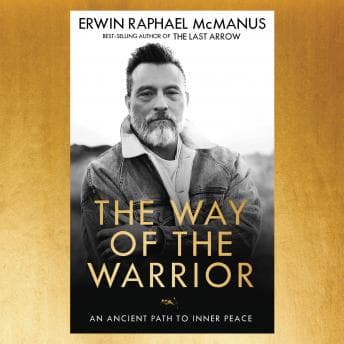

McManus gets it. Most self-help books about inner peace read like they were written by someone who's never actually been in a fight—internal or otherwise. This one doesn't.
I was on a red-eye back from a client engagement that went sideways. Startup founder who couldn't stop micromanaging, board breathing down everyone's neck, and I'd just spent three days diplomatically explaining that their burn rate was a death sentence. Couldn't sleep. Pulled this up expecting the usual spiritual platitudes. What I got instead was a framework that would've made my McKinsey partners nod approvingly.
Six Sacred Movements That Function Like a Diagnostic Checklist
Here's what McManus does that most spiritual authors don't—he gives you a system. Humility, focus, ownership, clarity, strength, vulnerability. Six "sacred movements" that work less like mystical concepts and more like a diagnostic checklist. I've sat through enough strategy sessions to recognize a good framework when I hear one.
The ownership chapter hit particularly hard. McManus talks about taking responsibility not just for your actions but for your internal state—the idea that peace isn't something that happens to you, it's something you build. This is what my parents did instinctively running that dry cleaning business. They didn't wait for circumstances to improve. They just showed up, 14 hours a day, and created stability through sheer force of will. Now it has a TED talk.
The vulnerability section surprised me. Most warrior metaphors lean hard into strength and stoicism. McManus flips it—argues that real warriors know when to drop their guard, when to admit weakness. Holes pulled off something similar, taking what could've been a straightforward survival story and turning it into something deeper about vulnerability and connection. That's counterintuitive enough to be interesting.
McManus Reading McManus
Author-narrated books are a gamble. Sometimes you get someone who wrote brilliantly but reads like they're giving a deposition. McManus lands somewhere comfortable—not theatrical, not flat. He's got this "battle-wizened teacher" thing going that works for the content. You believe he's thought about this stuff, lived it.
At 6 hours and 21 minutes, this respects your time. My 2.0x speed brought it down to just over three hours, and nothing felt rushed. That's the sign of a book that's actually edited—no padding, no repetitive examples stretched across chapters. Jenny would say I'm being generous. Jenny might be right.
Where It Gets Thin
Look, I'm not the target demographic here. I'm a lapsed Presbyterian who treats church more like a quarterly board meeting than a spiritual practice. The biblical framing is constant—if you're not coming from a faith perspective, some of this will feel like it's not written for you. That's fine. Know what you're getting.
The other issue: McManus is better at diagnosis than prescription. He'll tell you that clarity matters, that you need to examine your inner battles. But the specific how-to can feel vague. This isn't a workbook. It's more like a philosophy lecture from a professor who expects you to figure out the application yourself.
I've seen this approach fail at three different companies—leaders who understood the concept but couldn't translate it to action. McManus gives you the map but not the turn-by-turn directions.
Who This Is (and Isn't) For
If you're faith-forward and looking for spiritual development content that doesn't feel soft, this works. If you're a leader dealing with internal chaos—the kind that shows up as bad decisions, reactive management, or just general anxiety—there's practical wisdom here.
Skip it if you want tactical, step-by-step guidance. Skip it if spiritual language makes you itch. And definitely skip it if you're looking for quick fixes. McManus is playing a longer game.
The ROI Calculation
Bottom line: this is a solid 3.5-hour investment at 2.0x speed. The framework is genuinely useful, the delivery is competent, and the content doesn't insult your intelligence. It's not going to replace therapy or a good executive coach, but it's a decent supplement.
The key takeaway is worth the listen. The other 5 hours? Actually, most of them hold up too. That's rare for this category.
Would I recommend it to a client? Depends on the client. The founder I was just working with? Probably not—he needs operational discipline, not philosophy. But the COO who's clearly burning out while trying to hold everything together? Yeah. This might help her stop fighting herself long enough to fight the actual battles.