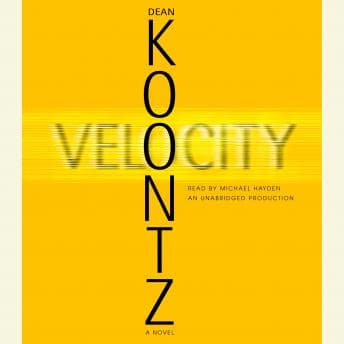

I was halfway through my morning jog along the Charles River when Bill Wile found that first note on his windshield, and I literally stopped running. Just stood there, hands on knees, breathing hard, staring at nothing while Michael Hayden read those impossible words. If you don't take this note to the police, I will kill a lovely blond schoolteacher. If you do take this note to the police, I will instead kill an elderly woman active in charity work.
This is a fascinating case study in moral philosophy disguised as a thriller. And I mean that as the highest compliment.
The Psychology of Impossible Choices
Here's the thing about Velocity that grabbed me by the throat and wouldn't let go—Dean Koontz understands something fundamental about human nature that most thriller writers miss entirely. The protagonist exhibits classic approach-avoidance conflict, but Koontz cranks it to eleven. Bill isn't choosing between good and bad options. He's choosing which innocent person dies. The research actually shows that these kinds of "trolley problem" scenarios create genuine psychological distress even in hypothetical settings. Now imagine living it. For days.
What makes this character compelling is his ordinariness. Bill's a bartender. He leads a quiet life. He visits his comatose fiancée in the hospital. He's not a cop, not a former Navy SEAL, not a brilliant detective. He's just a guy who found the wrong note on his car. That same ordinary-person-in-extraordinary-danger dynamic drives Dark Tower II: The Drawing of the Three, where Stephen King throws regular people into impossible situations and watches them break or adapt. Koontz uses that everyman quality to devastating effect—you're not watching a hero solve a puzzle, you're watching a regular person's psyche crack under impossible pressure.
My therapist would have thoughts about this character. Specifically about his coping mechanisms, which range from "surprisingly adaptive" to "oh no, Bill, what are you doing."
Michael Hayden Gets Inside Bill's Head
I found myself asking: why does Hayden's narration work so well here? I think it comes down to restraint. He doesn't oversell the horror. His delivery is understated, almost conversational, which makes the escalating nightmare feel more real. More inevitable.
The timing is where he really shines. Koontz writes these short, punchy sentences when the tension peaks—and Hayden knows exactly how long to pause. Just long enough for your stomach to drop. Not so long that it feels theatrical. It's the difference between a narrator performing fear and a narrator making you feel it.
His character voices are distinct without being cartoonish. The killer's notes have this flat, clinical quality that's genuinely unsettling. Bill sounds exhausted and desperate in all the right places. Lanny, the cop friend, has this casual dismissiveness early on that makes you want to shake him. (Don't tell my students I said that about a fictional police officer's professional judgment.)
When the Nightmare Accelerates
Psychologically, this tracks. That's what I kept thinking as the deadlines got shorter and the stakes got higher. Koontz clearly did his homework on how stress response works—the hypervigilance, the tunnel vision, the way Bill starts making decisions that seem irrational but actually make perfect sense given his cortisol-flooded brain.
The pacing is relentless. I finished this during a cooking session—was supposed to be making my grandmother's dal recipe—and ended up burning the onions because I couldn't pause during a particularly tense sequence. Circular Staircase had a similar grip on me, though its tension builds more slowly; classic mystery pacing versus Koontz's sprint. Nine hours flew by. I genuinely lost track of time, which doesn't happen to me often with thrillers. (I'm usually too busy mentally diagnosing the characters to get fully immersed.)
One hesitation: if you're not already on board with Koontz's style, this probably won't convert you. He has a particular way of writing internal monologue that some people find intrusive. I found it psychologically rich. Your mileage may vary.
Who Should Press Play (And Who Should Walk Away)
Perfect for commuters, honestly. The tension builds in waves that work well for interrupted listening—you'll hit a natural pause point, get to work, and spend your entire meeting thinking about what happens next. (Not that I would know anything about that.) Skip if you're sensitive to moral complexity without easy answers. Koontz doesn't give Bill—or you—an out. The choice really is yours, and that's deeply uncomfortable by design.
Case Closed, Onions Burned
I walked an extra two miles that first morning because I couldn't stop listening. My Fitbit was thrilled. My schedule was not. Worth it.