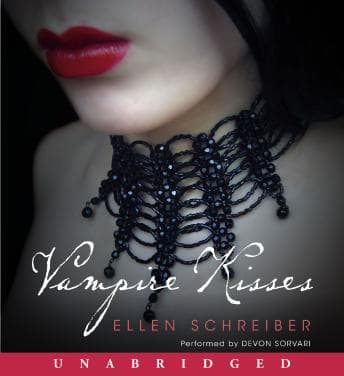

Look, I'm a 30-something psychology researcher who studies identity formation through narrative. I have no business listening to a YA vampire romance from 2003. And yet here I am, having just finished Vampire Kisses during my morning jogs, feeling the need to write about it. My therapist would have thoughts about this.
Raven Madison is a fascinating case study in adolescent identity construction through opposition. She's sixteen, goth, obsessed with vampires, and living in a town she's nicknamed "Dullsville" because—well, because she's sixteen and that's what sixteen-year-olds do. The protagonist exhibits classic reactive identity formation: she defines herself almost entirely by what she's NOT. Not preppy. Not conformist. Not like her parents or her annoying little brother. It's textbook Erik Erikson, honestly, and whether Ellen Schreiber intended that or not, she captured something real about how teenagers build a sense of self.
The Psychology of Wanting to Be Bitten
Here's what makes Raven compelling: she doesn't just like vampires aesthetically. She genuinely wants to become one. She fantasizes about being transformed, about leaving her mundane existence behind for something darker and more meaningful. And I found myself asking: why does she really want this?
The research actually shows that adolescents who feel marginalized often gravitate toward subcultures that romanticize outsider status. That same impulse toward radical self-definition shows up in Self-Reliance, though Emerson's version is less about vampires and more about intellectual independence. Raven isn't just a goth—she's a kid who's been bullied, misunderstood by her parents, and treated as a freak by her peers. Of course she wants to be a vampire. Vampires are powerful outsiders. They don't need approval. They're literally immortal, which means they've transcended the desperate need for peer acceptance that defines high school.
When Alexander Sterling shows up—mysterious, dark, living in the creepy mansion on the hill—Raven doesn't just see a cute boy. She sees validation. Someone who might understand her. Someone who exists outside the social hierarchy that's rejected her.
(Yes, I'm psychoanalyzing a YA vampire romance. This is what happens when you give academics audiobooks.)
Devon Sorvari Gets the Teenage Angst Right
Devon Sorvari's narration is pretty much exactly what this book needs. She captures Raven's voice—dramatic, sardonic, a little self-important in that way teenagers are when they're convinced nobody understands them. The pacing works for a short listen (just over four hours), and she differentiates characters well enough that I never got confused about who was speaking.
Some reviewers apparently found her voice too high-pitched, but honestly? Raven IS a bit much. She's supposed to be intense and over-the-top. That's the point. Sorvari leans into that without making it unbearable.
The production quality is clean—no weird audio glitches or background noise that I noticed. I listened at 1.25x speed during my runs through Cambridge and it held up fine.
Where the Psychology Doesn't Track
Okay, so. Some of this falls apart under scrutiny.
Raven's parents are painted as clueless normies who don't understand their daughter, but they're also... basically fine? They're not abusive. They're not neglectful. They're just regular parents who wish their kid would dress more normally. The book wants us to see Raven as this deeply misunderstood rebel, but sometimes she just comes across as a teenager being dramatic about having a pretty okay life.
And Alexander—look, I get that mysterious love interests are the whole point of paranormal romance, but the guy has approximately zero personality beyond "brooding" and "hot." We're told he's artistic and sensitive, but we don't really see it. He's more symbol than person.
The ending has a twist that I won't spoil, but I'll say this: it felt rushed. Like Schreiber realized she needed to wrap things up and just... did.
Skip If You Want Depth, Queue If You Want Nostalgia
This is a nostalgia listen for millennials who grew up on early-2000s vampire romance before Twilight took over the world. It's comfort food, not a gourmet meal.
If you're looking for genuine emotional complexity or a love interest with an actual personality, skip this one. But if you want a quick, fun listen that captures a very specific moment in YA publishing history—the pre-Twilight era when vampire romance was still a little weird and niche—it's worth the four hours.
I wouldn't recommend it for actual teenagers now. The world has moved on. But for those of us who remember what it felt like to be the weird kid who didn't fit in? There's something weirdly comforting about Raven's story. Even if she is a bit much.
Case Study Complete
My therapist would probably say I'm projecting. She'd probably be right.