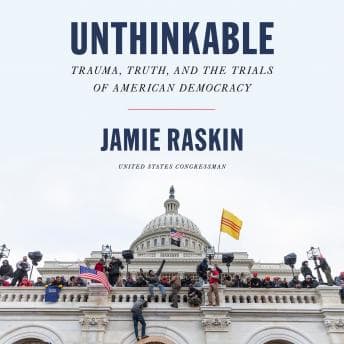

Fifteen hours. That's what I committed to while stuck in O'Hare during a three-hour delay that turned into six. And here's my complaint: Jamie Raskin made me cry in an airport terminal. Twice. In public. A management consultant, weeping into his overpriced Starbucks while businesspeople walked by pretending not to notice. This is not the brand I've cultivated.
But let me be clear about something upfront: this book earned those tears. This isn't grief porn or political grandstanding dressed up as memoir. This is a constitutional law professor and sitting congressman processing the unprocessable—losing his son Tommy to suicide on December 31, 2020, then seven days later watching insurrectionists storm the building where he works, then being asked to lead the impeachment prosecution. Forty-five days that would break most people. Raskin somehow channeled it into purpose.
When the Personal and Political Collide
My parents worked themselves raw building a dry cleaning business. They didn't have the luxury of separating personal tragedy from professional obligation. When my grandmother died, my dad was back pressing shirts the next day because the bills didn't care about his grief. I thought about that a lot listening to Raskin describe returning to the Capitol, still raw from burying his son, to certify an election while a mob hunted through the halls.
The book moves between Tommy's story—his brilliance, his activism, his depression—and the insurrection's chaos with almost surgical precision. But Raskin narrating it himself adds something you can't get from reading. When he describes Tommy's note, his voice doesn't break in the dramatic way you'd expect. It gets quieter. More careful. Like he's still protecting his son even in death. That restraint hit harder than any theatrical delivery would have.
A Constitutional Scholar Doing the Receipts
Here's where my consulting brain kicked in: the impeachment trial sections are essentially a clinic in building an airtight case. Raskin walks through the prosecution strategy like he's presenting to partners—the evidence gathering, the witness coordination, the anticipation of defense arguments. That same methodical approach to building persuasive arguments shows up in Influence, New and Expanded, though Cialdini's focused on sales floors instead of Senate chambers. For anyone who watched those trial clips wondering about the behind-the-scenes mechanics, this is your answer.
But it's not dry. (Well, okay, some constitutional history sections could use a 1.5x speed bump.) Raskin's anger at the acquittal vote is palpable. You can hear him wrestling with the gap between what the evidence proved and what political calculus allowed. As someone who's watched companies make decisions that ignore obvious data because it's inconvenient, that frustration felt painfully familiar.
Why Author-Narration Works Here
Author-narrated memoirs are hit or miss. Some writers should stay on the page. Raskin, though—the man taught law for decades. He knows how to hold a room. His delivery shifts between professorial clarity when explaining legal precedent and raw vulnerability when discussing Tommy's mental health struggles. There's a moment where he reads from Tommy's law school application essay about animal rights, and you can hear the pride underneath the grief. A hired narrator couldn't have found that balance.
The emotional weight means this isn't background listening. I tried switching to it during a workout once. Bad call. You need to be present for this one.
Who Should Commit (And Who Should Pass)
Look, I'll be direct: if you're looking for a quick business lesson or productivity hack, this isn't it. At 15 hours, this is a commitment. But if you want to understand how someone processes impossible grief while performing at the highest level of their profession—there's real insight here about compartmentalization, purpose, and what happens when you can't separate work from life because they've violently collided.
Skip if: You're exhausted by January 6 coverage and can't handle more. Or if you need political neutrality—Raskin is not pretending to be objective about Trump. He's a prosecutor making his case.
Listen if: You've ever had to show up professionally while falling apart personally. Or if you're a parent trying to understand youth mental health. Or if you just want to hear a smart, principled person work through trauma in real time.
The Dry Cleaner's Son's Verdict
My parents never got to write memoirs about their struggles. They just lived them, quietly, without book deals or congressional hearings. But watching Raskin channel his worst days into something meaningful—into fighting for something he believed in—reminded me of them. Different scale, same principle: you keep working because the work matters, even when you're broken.
Jenny texted me during that airport delay asking why I sounded weird on the phone. I told her allergies. She knew I was lying. She always does.
Bottom line: This is what grief looks like when it has a purpose. Worth every one of those fifteen hours.