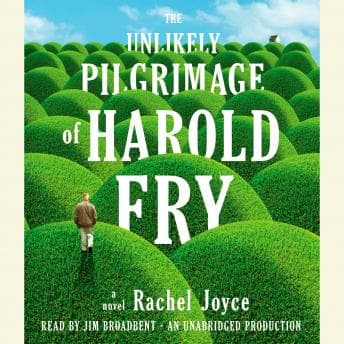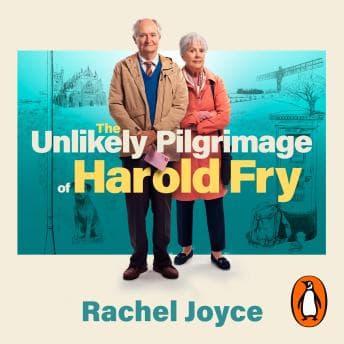

I was two hours into a rebrand project for a local coffee shop — the kind of repetitive color-swatch work where my brain needs something to hold onto — when Harold Fry walked out of his house to post a letter and just... kept going. And I stopped adjusting hex codes because something in Jim Broadbent's voice made me set down my stylus and just sit there, listening, like Frida does when she hears a bird outside the window. Completely still. Completely locked in.
A Man Who Walks Like He's Apologizing to the Road
Harold Fry is not your typical protagonist. He's not charming or witty or driven by some grand ambition. He's a retired man in his sixties who has spent his entire marriage quietly shrinking himself into the smallest version of who he could be. And Broadbent — god, Broadbent — plays him like someone who has been holding his breath for decades. There's this quality to his delivery where Harold speaks and you can hear the apology underneath every sentence, this constant low hum of I'm sorry for taking up space. It's not sad in a melodramatic way. It's sad in the way that watching your abuelo sit alone at a kitchen table is sad. It's the sadness of a life that got small without anyone noticing.
The premise sounds almost absurd when you say it out loud: man walks 600 miles across England to visit a dying woman he used to work with, because he believes his walking will somehow keep her alive. No gear. No plan. Just yachting shoes and a letter he never mailed. But Rachel Joyce earns every implausible mile because the walk isn't really about the walk. It's about Harold peeling back layers of himself — his failed relationship with his son David, his frozen marriage to Maureen, the guilt he's been dragging around like a suitcase full of rocks.
Maureen's Chapters Hit Different
Here's what I wasn't expecting: Maureen's sections broke me harder than Harold's. When the perspective shifts back to her alone in that house, hoovering the same rooms, eating meals for one, slowly confronting the fact that their marriage became two people performing the motions of a life together — my heart. MY HEART. Broadbent voices her with this tight, clipped quality that sounds like someone trying very hard not to cry in a grocery store. There's a section where Maureen finds David's old things and she's remembering him as a boy, and I had to pause the audiobook and go sit on my balcony because I was thinking about Abuela's house after she died, how my tía left her slippers by the bed for months.
The thing is, the book could've been just Harold's journey. A lot of readers probably came for that — the quirky British walking story. But Joyce makes it a dual portrait of a marriage that broke in slow motion, and the question isn't really will Harold make it to Berwick-upon-Tweed but is there anything left between these two people worth saving. That slow-motion unraveling of a marriage — two people who stopped seeing each other clearly — is something Painter's Daughter also sits with, quietly and without easy resolution.
I ugly-cried at three separate points. Added them to the spreadsheet. (Yes, that spreadsheet. Diego knocked my laptop off the desk during cry number two, which felt like commentary.)
Jim Broadbent Is Doing Something Quiet and Devastating
Let me be specific about why this narration works: Broadbent doesn't perform Harold. He inhabits him. There's a difference. A performer would give you the emotional beats with clear signposting — here's the sad part, here's the funny part. Broadbent lets Harold's confusion and determination exist in the same breath. When Harold meets strangers on the road and they start telling him their stories, Broadbent shifts just enough — a slightly higher register for the younger characters, a warmer cadence for the kind ones — without ever turning it into a character showcase. It stays Harold's story even when other people are talking.
The pacing matches the walk. It's slow. Deliberately, beautifully slow. Some people are going to find this boring and honestly? I get it. If you need plot mechanics and twists, this book will test you. There are stretches in the middle where Harold's journey gets repetitive and the encounters start to blur. But I think that's the point — the monotony of putting one foot in front of the other when you don't know why you're doing it is the whole metaphor.
This book felt like sitting in a quiet room with someone who finally decided to tell you the truth about their life. Not the dramatic version. The real one.
Who This Is For (And Who Should Walk Away)
If you need fast pacing or high-concept hooks, skip this. If the phrase "retired British man has feelings about his marriage" makes you want to scroll past — fair. But if you've ever watched someone you love get smaller and quieter and wondered when it happened, or if you've ever stayed in something too long because leaving felt like admitting failure, this book will find the tender spot and press.
Abuela would have loved this one. She would've said Harold reminded her of my grandfather — a man who never said what he meant until it was almost too late. She would've cried at the Maureen parts too. I know it.
The Kind of Book That Stays in Your Chest
Listen at 1.0x. Don't rush it. Let Broadbent's voice do the slow, careful work of breaking you open. This is a rainy Sunday book — the kind you finish and then sit with for a while, staring at nothing, feeling tender and cracked and somehow more awake than you were before you started.