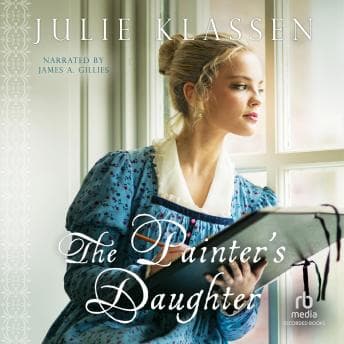

Two brothers. One pregnant artist. A marriage of convenience to the "boring" dependable brother while the charismatic one runs off to Italy to find himself. If this isn't the plot of a telenovela set in 1815, I don't know what is.
I listened to The Painter's Daughter while pulling an all-nighter on a branding project for a local coffee shop. Usually, I need something upbeat to keep me awake, but by hour three, I was staring at my monitor with misty eyes, completely ignoring my color palettes. My Abuela would have absolutely devoured this story. She lived for the "brothers at war" trope, and Julie Klassen serves it up on a silver platter here.
The "Duty Before Love" Ache
Let's talk about the vibes. This isn't a spicy, bodice-ripping romp. It's a slow, agonizing burn of repressed feelings and moral dilemmas. Sophie Dupont finds herself in the kind of trouble that ruins lives in the Regency era—pregnant and abandoned. Enter Captain Stephen Overtree. He's not the man she wants; he's the man who shows up.
The scene where Stephen proposes—not out of passion, but because he thinks he's going to die in battle and wants to give her child a name—wrecked me. I literally had to pause the audio and pet Diego (my cat, not the artist, though the irony isn't lost on me) to calm down. It's that specific flavor of noble self-sacrifice that makes your chest hurt. Promise of Fire has that same ache—a hero who sacrifices everything for a woman who doesn't even trust him yet. You know they're going to fall in love eventually, but watching them stumble through the awkwardness of a loveless marriage while keeping the baby's true parentage a secret? The tension is thick enough to cut with a palette knife.
James Gillies Goes Full Regency Theater
Having a male narrator in a genre dominated by breathy female voices changes the texture completely. Gillies doesn't do that thing where he pitches his voice up unnaturally high for Sophie, thank god. Instead, he softens his tone.
His delivery is theatrical—bordering on old-school dramatic reading rather than modern acting. At first, I wasn't sure if it fit. It felt a bit stiff. But then I realized it matched Stephen's character perfectly. Stephen is a stiff, military man bound by duty. When Gillies reads Stephen's dialogue, you hear the rigidity of his spine. It makes the moments when his voice cracks with emotion hit so much harder. And when the "bad brother" Wesley returns (because of course he does), Gillies gives him this lighter, flightier cadence that made me instantly dislike him. Which, honestly, is exactly what I wanted.
Who This Is (and Isn't) For
If you're looking for a quick dopamine hit, this ain't it. Skip it if you need spice or fast pacing. But if you want to sit with a cup of tea and angst over a man who loves a woman he thinks he can never truly have? If you live for that "noble sacrifice" trope and don't mind a clean romance where the emotional intimacy feels almost scandalous anyway? This is the one.
My Final Sketch
This is a 14-hour commitment, and at 1.0x speed, it's a long walk along the Devonshire cliffs. But it didn't feel like a drag. It felt like a rainy Sunday spent indoors.
I may have cried into my sketchbook a little. Don't tell my client.