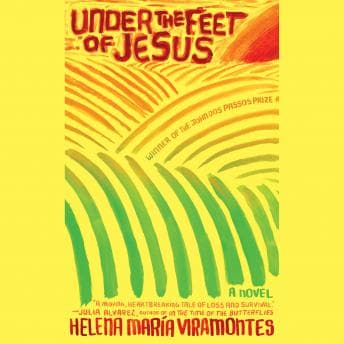

"The rain had washed away all the chalk markings on the asphalt" — I'm paraphrasing, but somewhere around the two-hour mark, Viramontes drops an image like that and you just stop walking. I literally stopped on the lakefront path, a jogger nearly clipped me, and I stood there like a man who just remembered something important he'd forgotten for twenty years.
Here's what I forgot: what Steinbeck was actually trying to do.
The Book They Should've Given Us Instead of The Grapes of Wrath
Look, I teach Steinbeck. I've taught Steinbeck for two decades. I respect the man. But Viramontes does something Steinbeck never quite managed — she writes about migrant workers without ever positioning herself above them. There's no narrative camera pulling back to show you the big picture, no interchapters explaining the socioeconomic forces at play. You're just in it. You're in Estrella's body, feeling the tar on the soles of her feet, the weight of the peach basket, the particular exhaustion of a thirteen-year-old girl who knows more about survival than most adults learn in a lifetime.
And the prose — Denise, who was walking with me, asked why I kept making this face. I told her Viramontes writes sentences the way certain jazz musicians play. She doesn't follow the expected melody. She'll give you a run-on that goes for half a page, stacking image on image — the Virgin Mary statue, the pesticide-dusted grapes, Petra's swollen ankles — and then she'll hit you with something short and devastating. The rhythm of it is physical. You feel it in your chest.
At under five hours, this thing is concentrated like espresso. Every scene carries weight. There's no filler. Estrella discovering tools in the barn and suddenly understanding that a crowbar has a name, that naming things is power — my students would hate me for saying this, but that scene does more with literacy and liberation than half the novels on the AP reading list.
Nancy Ticotin and the Question of Restraint
Here's where I have to be honest: I don't have a lot of data on Ticotin's specific performance choices, and the research didn't turn up detailed listener commentary. What I can tell you is that this novel demands a narrator who understands restraint — Viramontes' language is already doing so much emotional heavy lifting that an over-performed reading would collapse it. The prose deserves to be savored, and at 4 hours and 37 minutes, the pacing suggests Ticotin lets the sentences breathe rather than rushing through them. For a book this lyrical, that's the right instinct.
I listened at 1.0x, because of course I did. And I'd argue this is one of those rare audiobooks where speeding up would genuinely damage the experience. Viramontes is doing something with the cadence of her sentences — the way English and Spanish exist side by side, the way Estrella's interior world moves between child-logic and adult-reckoning — that requires you to hear every beat.
What Viramontes Is Really Saying About Invisibility
The thing that keeps gutting me, days later: this novel is about what it means to feed a country that refuses to see you. Estrella's family picks the food that ends up on tables across America, and they can't afford to see a nurse when Alejo gets poisoned by pesticides. The scene at the clinic — where Estrella finally breaks, finally uses force, finally refuses to be invisible — I was grading sophomore essays at 11 PM and I had to put my pen down. That scene earns its violence because Viramontes spends the entire novel showing you the slow accumulation of indignities that make it inevitable.
This reminds me of what Hemingway said about prose being an iceberg — but Viramontes inverts it. The seven-eighths above the surface is sensory detail, physical experience, the smell of kerosene and the sound of Petra's prayers. And underneath all of it is this enormous, quiet rage about systems designed to grind people into nothing. She never lectures. She never has to. Hemingway tried something similar in The Sun Also Rises — that whole iceberg theory in practice — but where Hemingway's restraint reads as cool detachment, Viramontes' restraint is a controlled burn.
The John Dos Passos Prize was exactly right. Dos Passos wrote about America's broken promises from the outside looking in. Viramontes writes about them from inside the body of a girl who will not be broken.
Who Needs to Hear This (And Who Might Struggle)
If you loved The House on Mango Street, this is its fiercer, angrier older sister. If you teach American literature and you're still building your syllabus around exclusively white voices — fix that. Start here.
Fair warning: the nonlinear structure and stream-of-consciousness passages can be disorienting in audio. There are no chapter announcements to anchor you, and Viramontes shifts perspective mid-paragraph sometimes. If you need clean plot mechanics, this will frustrate you. But if you trust the language to carry you — and it will — you'll come out the other side changed.
Content-wise: there's violence, there's the specific horror of pesticide poisoning described in unflinching physical detail, and there's the ambient brutality of poverty that never quite lets up. Not a bedtime listen unless you want to lie awake thinking about structural injustice. (Which, honestly, we probably should.)
The Annotation in the Margin
Twenty years of teaching and I'd never listened to this novel. That's on me. It's been sitting on my shelf in paperback since grad school, pages yellowed, spine uncracked. The audiobook made me finally experience it, and now I'm angry at myself for waiting. Under five hours. That's all it takes for Viramontes to rearrange your understanding of American fiction.
My 47 podcast listeners are getting an episode on this. Mom, stay awake for this one.









