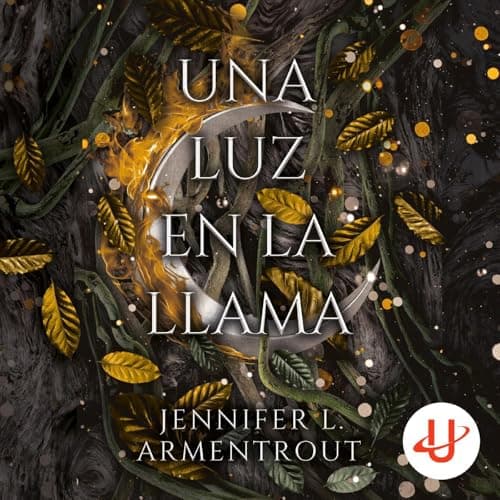

Twenty-eight and a half hours is a commitment. I want to say that upfront because this audiobook demanded something from me — not just time, but patience, attention, and a willingness to sit through Sera's internal monologue spirals like I was trapped in a confessional booth with someone who won't stop second-guessing themselves.
I started this one shelving returns at the library on a Saturday afternoon, earbuds in, moving between the stacks. By hour three, I was hooked enough to keep it going through dinner prep. By hour twelve, during a late-night session with Shirley curled on the radiator and the rain doing its Oregon thing against the windows, I was fully invested in the Kolis threat and the political machinations of the Iliseeum — but also increasingly aware that Armentrout's greatest villain might be her own tendency toward repetition.
The Dread That Isn't Monsters — It's Powerlessness
Here's what Armentrout actually gets right, and it's the thing that made me stick with nearly thirty hours of audio: the horror of Sera's situation isn't the god-politics or the Primigenial power brewing inside her. It's the slow, suffocating realization that she's a weapon that might detonate before anyone figures out how to defuse her. The Primigenial power of Life growing inside her without Nyktos's love to stabilize it — love he literally cannot feel because it was taken from him — is the kind of cruel, structural horror that I respect. It's not a monster chasing you down a hallway. It's a countdown clock built into your own body. This understands that horror isn't about gore — it's about dread. Iron Flame works a similar angle — the existential threat baked into the protagonist's own power is scarier than any enemy on the battlefield, and I spent a lot of late nights with Shirley processing that one too.
The attacks on the Tierras Umbrías escalate in ways that feel genuinely threatening, and when Kolis summons Sera and Nyktos to court, there's a scene where the false King's attention lingers on Sera with this possessive curiosity that made my skin crawl. Bárbara de Lema leans into those court scenes — she gives Kolis this measured, almost gentle tone that's way more unsettling than outright menace would be. The narrator commits. That's rare.
Sera's Brain Is a Labyrinth (and Not Always the Fun Kind)
But here's where I have to be honest, and this tracks with what other listeners have flagged: Sera's inner monologues are relentless. In print, you can skim past a paragraph where she circles back to the same anxiety about whether she deserves connection, whether her assassination mission poisoned everything, whether Nyktos could ever trust her. In audio, you can't skim. You're stuck in the spiral. Around hour fifteen, I found myself speeding up to 1.25x during these stretches — not because de Lema's delivery was bad, but because hearing the same emotional beat vocalized for the fourth time in two hours tested my patience in a way the page wouldn't.
De Lema handles the Spanish-language adaptation with solid emotional range. Her Sera is fierce without being shrill, vulnerable without being whiny (a tightrope that plenty of narrators fall off of). Her Nyktos voice drops into something low and controlled that works for the tortured-god-who-can't-feel-love thing. But I don't have enough comparison points with her other work to say she's exceptional — she's competent, steady, and occasionally lands a line delivery that genuinely surprises you. The court scenes are her best work here.
The Slow Burn That Actually Burns
The romance between Sera and Nyktos walks a line I appreciate. It's not will-they-won't-they for the sake of tension — there's a genuine structural impossibility to their connection. He can't love her. She'll die without his love. That's not a misunderstanding that a conversation can fix. That's a tragedy baked into the premise, and Armentrout earns the tension by not letting either character off the hook easily. The physical chemistry is there (this is Armentrout, so yes, there's heat), but it's always undercut by this awful knowledge that desire isn't the same thing as the specific emotion Sera needs to survive.
At nearly thirty hours, though, the pacing sags. There are stretches in the middle third where the plot essentially pauses while Sera processes feelings she's already processed. Cut four hours and this would be devastating. As it stands, it's a book that occasionally mistakes length for depth. The Blade Itself is the counterexample I keep coming back to — a fantasy with genuine political complexity and a cast of morally compromised characters that somehow never overstays its welcome, which makes the bloat here sting a little more by comparison.
Who Should Listen (And Who Should Skip)
If you loved De sangre y cenizas and want the mythology expanded into something darker and more politically complex, this delivers. If you're a fan of slow-burn romantasy where the obstacles aren't just misunderstandings but actual cosmic mechanics — the "he literally cannot feel love" device is genuinely clever — you'll find a lot to sink into here.
Skip it in audio if you struggle with repetitive internal monologue, or if twenty-eight hours feels like a lot for what is essentially a middle book in a series (it is — this is setup as much as payoff). You might want to read the print version instead. And if you need constant momentum, this will lose you somewhere around hour sixteen.
Shirley Jackson Never Wrote Romantasy, But She'd Respect the Trap
The best thing about Una luz en la llama is the architecture of its central horror: a woman who can only survive through an emotion someone else is incapable of giving her. That's elegant. That's cruel. That's the kind of premise that keeps you listening at 1 AM even when you're frustrated by the pacing. My podcast listeners are going to love this — or at least argue about it, which is better.
I listened in the dark. Mistake? Maybe. Worth it? Absolutely. Even when Sera wouldn't stop talking.