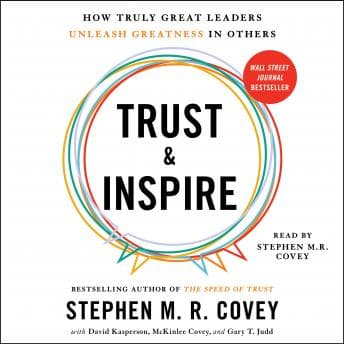

I was debugging a particularly nasty race condition at 11 PM—you know, the kind where you've been staring at logs so long they start looking like abstract art—when I decided to put this on as background noise. Figured a leadership book would either help me think or put me to sleep. Instead, I got weirdly invested in Stephen M.R. Covey telling me why my manager's micromanagement tendencies are basically a relic of the industrial revolution.
Bottom Line: Worth your commute if you're in any kind of leadership position or just want ammunition for your next 1:1 about why you don't need to be on seventeen Slack channels.
The Core Idea Isn't New—But the Framework Saves It
Let's be honest: "Trust people and they'll do better work" is not exactly a hot take in 2024. But Covey does something smart. He builds an actual framework around it. The contrast between "command and control" versus "trust and inspire" leadership styles gets broken down into specific behaviors, mental models, and—this is where it gets useful—concrete examples of what each looks like in practice.
The ROI on this audiobook is basically in the diagnostic sections. There's this whole bit where he walks through how even well-intentioned leaders default to control behaviors when stressed. I caught myself nodding along (alone in my apartment, like a normal person) because I've absolutely been that tech lead who says "I trust you" and then asks for daily standups plus written updates plus a Confluence doc.
At nearly 12 hours, it's definitely padded. Some sections repeat the same concepts with slightly different corporate examples. Classic business book disease. But unlike some books in this genre (looking at you, every startup memoir ever), there's enough substance that I didn't feel cheated.
The Captain Kirk Problem
Okay, so here's the thing about Covey narrating his own book: some people apparently think he sounds like a bad William Shatner impression. I get it. There's a certain... dramatic pause situation happening. He emphasizes words in ways that feel slightly unnatural, like he's giving a keynote to 3,000 people instead of talking to you through earbuds.
But honestly? After the first hour, I stopped noticing. His delivery is clear, authoritative, and—this matters for a 12-hour commitment—consistent. He's not going to blow your mind like a Ray Porter performance, but he's not going to make you want to return the audiobook either. Serviceable. Maybe bump up to 1.5x if the pacing feels slow.
No sound effects, no music, no full cast. Just Covey talking at you for twelve hours. Production quality is clean—no weird background noise or volume issues that plague some author-narrated books.
The Bits That Actually Stuck
The sections on managing remote and distributed teams hit different post-pandemic. Covey makes the argument that trust-based leadership isn't just nice-to-have anymore—it's the only thing that actually works when you can't physically watch people work. As someone who's been on both ends of the "are you really working from home" suspicion, this felt validating.
There's also good stuff on generational differences in the workforce that doesn't devolve into "millennials are killing leadership" nonsense. He actually engages with why younger workers expect different things from their managers and treats it as a reasonable evolution rather than a problem to solve.
The communication angle reminded me of Lost Art of Listening, which digs into why most of us are genuinely terrible at hearing what people are actually saying—a gap that makes trust-based leadership feel aspirational for a lot of teams.The weakest sections? The ones heavy on corporate success stories. Yes, I'm sure that Fortune 500 company transformed their culture. These examples start blending together after a while.
Commute-Worthy, Not Deep-Work Material
This is basically "The Speed of Trust" but for the post-COVID workplace. If you're a manager, team lead, or anyone who occasionally has to convince humans to do things, there's genuine value here. If you're looking for something to fundamentally change how you think about leadership, you might be oversold—but you'll still walk away with actionable frameworks.
I finished this in about 5 commutes plus some late-night debugging sessions. Would I listen again? Probably not. But I've already referenced the trust/control framework in two meetings this week, so clearly something stuck.
Skip if: You're allergic to business books, you need a narrator who sounds like they're having fun, or you're looking for something more tactical than philosophical.
Listen if: You manage people (or want to), you're dealing with the realities of remote/hybrid work, or you just want to understand why your command-and-control boss makes everyone miserable.