
"You can't measure heart."
That line hits different when you're the guy who always got picked last in gym class and found his people rolling dice in the back of a library. I was deep into a coding session at 1 AM - supposedly debugging my procedural terrain generator, actually just stalling because Dr. Patel's feedback email was sitting unopened in my inbox - when I threw this on expecting background noise. Seven hours later, thesis untouched, I'm sitting here genuinely moved by a middle-grade basketball book. My life is a series of unexpected detours.
The Underdog Campaign That Actually Earns Its Crit
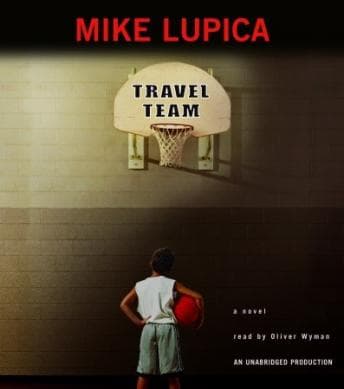
Look, I'm going to be honest with you: Travel Team is predictable. You know Danny Walker's ragtag squad of rejects is going to face the team that cut them. You know there's going to be a big game. You know the arc bends toward triumph. Mike Lupica is running the sports movie playbook beat for beat - Bad News Bears, Hoosiers, the whole deal. He literally says so in the description.
But here's the thing - predictability isn't the sin people think it is. My D&D group would love this because it's basically a campaign where the DM lets the underdog party face the arrogant rival faction, and everyone at the table knows the final boss fight is coming, and it's STILL satisfying when the dice roll right. Lupica's a sportswriter, and you can feel that in how he constructs the basketball sequences. The pick-and-rolls, the fast breaks, the way Danny sees the court like a point guard three moves ahead - it reads like someone who's actually watched thousands of hours of basketball, not someone googling "how does basketball work" between chapters.
The father-son dynamic between Danny and Richie Walker is where the real weight lives. Richie's a washed-out NBA player who washed out of fatherhood too, and Lupica doesn't let him off easy. He earns his redemption slowly, through the unglamorous work of showing up to practice and learning to coach kids instead of reliving his glory days. Danny's frustration with his dad feels genuine - that specific anger of a kid who knows his parent used to be something and can't understand why they stopped trying. It's not Sanderson-level world-building (wrong genre, obviously), but the emotional architecture holds up. Though if you want emotional architecture that gets genuinely weird and literary with its underdog mythology, Raven King is doing something in the same neighborhood—just with considerably more dead Welsh kings and existential dread.
Where the book loses me slightly is the supporting cast. Danny's teammates blur together - you've got the big kid, the quick kid, a couple others - but I couldn't tell you much about their individual personalities beyond their basketball roles. They're stat blocks without backstories. (And I say that as someone who will defend stat blocks in fiction with my dying breath - but even I want character sheets filled out.)
Oliver Wyman Runs the Fast Break
Oliver Wyman does something really smart here: he doesn't oversell it. This is a middle-grade sports book, not epic fantasy, and Wyman calibrates his performance accordingly. His Danny voice has this earnest, slightly frustrated energy that nails twelve-year-old intensity without tipping into whiny. And the game sequences - man, this is where Wyman earns his paycheck. The pacing during the basketball scenes accelerates naturally, his delivery matching the rhythm of a fast break or a tense free-throw moment. You can genuinely feel the squeaking sneakers.
He's no Steven Pacey - Steven Pacey walked so other narrators could run - but Wyman brings a clean, professional energy that elevates the material past what I think I'd get reading the print version. His Richie Walker has this tired, slightly defeated quality in early chapters that gradually warms up, which is a nice subtle touch for what could've been a flat "gruff dad" voice.
No audio issues I noticed. Clean production throughout. At seven hours, it's a quick listen - I'd say 1x speed is fine here, maybe 1.15x if you're impatient, but the game scenes benefit from normal pacing.
Who's Getting Drafted and Who Should Stay on the Bench
If you've got a kid who plays sports - or a kid who feels too small, too overlooked, too anything - this is a slam dunk. (Sorry.) It's genuinely encouraging without being preachy, and the basketball detail is real enough to respect young readers' intelligence. Adults looking for a comfort listen between heavier fare will find this works too. I switched to it from a 45-hour epic fantasy and the palate cleanse was honestly refreshing.
If you need unpredictable plots, complex moral ambiguity, or deep supporting characters, this won't scratch that itch. It's comfort food, not a seven-course meal. And that's okay.
The Buzzer-Beater Call
Travel Team isn't going to change your life. It's not trying to. It's a well-constructed underdog story with a narrator who makes the basketball sing and a father-son relationship that carries more weight than the genre typically demands. I read this instead of writing my thesis, and while Dr. Patel would not approve, I don't regret the seven hours. Sometimes you need a story where heart wins, the underdogs prove everyone wrong, and the final buzzer sounds exactly when it should.