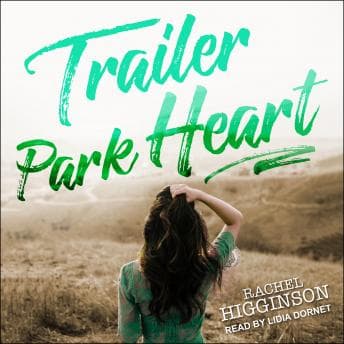

Look, I have a bone to pick with Rachel Higginson. You cannot — CANNOT — give me a heroine who's spent seven years white-knuckling her way through single motherhood in a trailer park, finally let her open up to this stubborn, gorgeous man who keeps showing up with groceries and that look on his face, and then just... end it like that. I was sitting in my car in the garage (my sacred 45 minutes, don't judge), and when the credits rolled I literally said "Wait, WHAT?" out loud. To no one. Like a person who has lost it.
But I'm getting ahead of myself.
Ruby Deserved Better Than Her Zip Code (And She Knows It)
Ruby is the kind of character that gets under your skin because you've met her. Maybe not literally, but you know that woman — the one at school pickup who's always five minutes late with a kid on each hip, who never asks for help even when she's drowning. She's got this fierce protectiveness over her life and her secrets that made me want to shake her and hug her in equal measure. Higginson writes her internal monologue with this raw, defensive edge — Ruby's constantly bracing for the next hit, the next disappointment, because that's all her world has ever delivered.
And then there's Levi Cole, rolling back into town with family money and a dead brother's legacy hanging over him. The class divide thing could've been cliché (rich boy saves poor girl, yawn), but it's actually more complicated than that. Levi isn't trying to rescue Ruby. He's trying to claim something he thinks belongs to his family, and the way that initial selfishness slowly transforms into genuine care — that's where the story earns its keep. Their arguments have this crackling energy, the kind where you're yelling "just kiss already" while also acknowledging that Ruby has every reason not to trust this man.
The slow burn here is SLOW. Like, toddler-learning-to-use-a-spoon slow. But it works because the stakes feel real. Ruby's secrets aren't manufactured drama — they're the kind of desperate choices women make when they have no safety net and no one to call. That same gutting authenticity around women surviving on nothing but grit is exactly what made My Brilliant Friend wreck me — Elena Ferrante doesn't let her women off the hook either, and neither does Higginson.
Lidia Dornet Gets Ruby Right Where It Counts
Lidia Dornet voices Ruby like she's lived in that trailer park herself. There's this slight hardness in Ruby's dialogue — not bitter exactly, but guarded — that softens so gradually you almost don't notice until suddenly Ruby's laughing at something Levi said and you realize oh, this is what she sounds like when she's not scared. That contrast is everything.
I will say the male characters blend together a bit voice-wise. Levi doesn't sound dramatically different from other men in the story, so during group scenes I occasionally lost track of who was talking. Not a dealbreaker, but I noticed it during a particularly chaotic family dinner scene. Ruby's voice, though? Crystal clear from the first chapter. Dornet captured that mix of tough and tender that makes Ruby feel like a real person rather than a character type.
At 11 hours, this is a solid week-long listen at my pace. I spread it across four days of nap times and car sits, and the pacing held up well through the middle — which is where these small-town romances usually lose me to a nap of my own. The story survived being paused approximately 47 times (conservative estimate, Sophie was teething) and I never once came back confused about where I was. The pacing consistency reminded me of Paris Apartment, another one I kept picking back up in stolen fifteen-minute windows without ever losing the thread.
The Ending Thing (We Need to Talk About It)
Okay so here's my honest issue. The last hour feels rushed in a way the rest of the book doesn't. Higginson spent nine hours carefully building this world, layering Ruby's secrets, developing this complicated push-pull between her and Levi — and then wraps everything up like she had a hard deadline. The big reveal lands, but the emotional fallout gets shortchanged. I wanted to sit in the aftermath with these characters. I wanted to see Ruby process, see Levi process. Instead it's like the author hit a word count and tied a bow on it.
Does it ruin the book? No. Did it ruin my car time? A little. I sat there for an extra ten minutes processing what I'd just heard, and not in the satisfying "let me savor this" way. More in the "wait, that's IT?" way.
But here's the thing — the first 90% of this book is so good, so emotionally honest about poverty and pride and the stories we tell ourselves about what we deserve, that I'm still recommending it. The spice level is solid (not gonna lie, I blushed during one particular scene and then had to go inside and act normal while making dinosaur chicken nuggets). And Ruby's journey from "I don't need anyone" to "maybe needing someone isn't the same as being weak" hit me right in my former-marketing-manager-turned-stay-at-home-mom feelings.
Who Gets the Aux Cord
If you love small-town romance with actual class commentary, heroines who are prickly for legitimate reasons, and slow burns that earn the payoff — this is your book. If you need a perfect, neatly wrapped ending or you can't handle an abrupt final act, maybe borrow it first. Not groundbreaking, but sometimes you don't need groundbreaking. Sometimes you need a book that reminds you that messy lives can still get happy endings, even if the author rushes the last chapter.
Made me almost cry at school pickup. Almost. I held it together because Emma's teacher was watching.