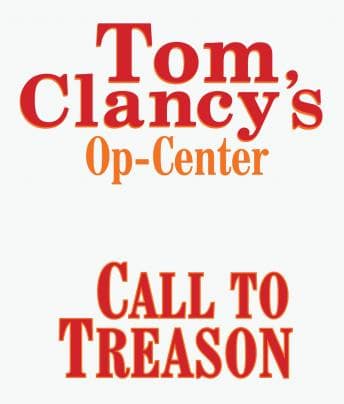

"He said she said they said they didn't say."
That's not me being clever — that's an actual reader complaint about Jeff Rovin's writing in this eleventh Op-Center installment, and honestly? After eleven hours and twenty minutes of listening while chopping onions for a chana masala I was stress-cooking at 10 PM on a Tuesday, I kind of get it.
The McCaskey Problem (And Why I Kept Listening Anyway)
Let me be fair. Call to Treason isn't a bad book. It's a tired one. By book eleven in any series, you're either deepening characters in ways that feel earned or you're running on institutional memory. This one does a little of both, which is the most frustrating option.
The McCaskey family interactions are genuinely the highlight here — there's a domestic warmth to those scenes that grounds all the geopolitical maneuvering. I found myself asking: why does Rovin write interpersonal dynamics with so much more confidence than he writes political intrigue? The research actually shows that thriller writers who started in character-driven fiction tend to maintain that strength even when buried under layers of plot machinery. Rovin's background bears this out. When he lets his characters breathe — when they're arguing over dinner or navigating the weird guilt of having a dangerous job and a family who knows it — the book works.
But then there's the pacing. The first 60% of this audiobook moves like a government briefing nobody asked for. I'm talking dense exposition, characters explaining things to each other that they should already know (the classic "as you know, Bob" problem that makes any psychologist of narrative wince), and a strange unreliable narrator device that the book deploys without quite committing to. Psychologically, this doesn't track — you can't ask your audience to trust the information infrastructure of a techno-thriller and simultaneously undermine it with narrative ambiguity. Pick a lane.
Once it picks up, though? The back 40% has genuine momentum. The political machinations click into place, the stakes crystallize, and you remember why this franchise survived eleven books.
Michael Kramer Carrying Weight He Shouldn't Have To
Here's the thing about Michael Kramer: the man is a professional in the truest sense. He's been narrating Op-Center consistently, and there's a reliability to his voice that functions almost like a podcast host you trust — you settle in, you know what you're getting. His character differentiation is solid. Not flashy, not doing voices like a one-man show, but you always know who's talking. For a book with this many military and intelligence figures who could easily blur together, that matters.
But — and I say this as someone who genuinely respects his craft — there are stretches where his delivery goes flat. Monotone isn't quite the right word. It's more like... energy conservation. Like he's pacing himself through the slower sections the same way I pace myself through faculty meetings. Smart survival strategy, but you feel it as a listener. During the long expository passages in the first half, Kramer's measured tone amplifies the drag rather than compensating for it. A more dynamic narrator might have injected urgency where the text didn't earn it. Kramer gives you exactly what's on the page, which is admirable and occasionally unfortunate.
No audio production issues to speak of — clean recording, standard single-narrator setup, no distracting artifacts. Just a man, a microphone, and a plot that takes its sweet time getting to the point.
Who This Is Actually For
If you've been riding the Op-Center series from the beginning, you'll finish this. You might not love it, but you'll finish it because you're invested in these characters and you want to see where Rovin takes them. The McCaskey material alone justifies the listen for series loyalists.
If you're new to Op-Center? Start literally anywhere else. This is not your entry point. The series has stronger installments that establish the world and characters with more energy.
And if you're someone who needs tight plotting and fast pacing in your thrillers — my therapist would have thoughts about my inability to abandon books I'm not enjoying, but you don't have to share my pathology. Life's short. Your credit is worth something.
I'd recommend bumping the speed to 1.25x, especially through that first half. It transforms the experience from "government briefing" to "brisk government briefing," which is a meaningful upgrade.
The Diagnosis
Call to Treason is a fascinating case study in franchise fatigue. The protagonist exhibits classic signs of a character whose arc has been stretched past its natural endpoint — not broken, but thinning. The bones of a good thriller are here. The execution is inconsistent. The same gap between structural promise and actual delivery is something I wrote about in my review of Forgotten 500, which manages to make its real-world military intrigue feel genuinely urgent in a way Rovin can't quite pull off here. And Kramer does his job with the quiet competence of someone who's seen better material come across his desk but respects the work regardless.
Three stars. I ate my chana masala alone and thought about why I keep coming back to series long after they've peaked. (Don't answer that. I already know.)