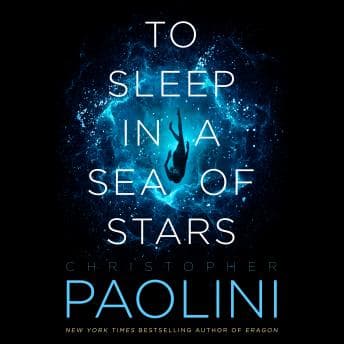

"Sleep is not death. Sleep is not nothing. Sleep is the universe in the space between heartbeats."
That line hit me somewhere around hour 18, packed onto the 7:42 Caltrain, surrounded by fellow zombies clutching their cold brews. I had to pause and just... sit with it. Which is not something I do often at 1.5x speed.
Bottom Line: Worth your commute. All 32 hours of it. This is basically Mass Effect meets Venom, but with actual hard science and a protagonist who thinks like an engineer. The ROI on this audiobook is exceptional if you're in for a long haul.
Commander Shepard's Voice Actor Narrates a Space Opera (Yes, Really)
Let's address the elephant in the room: Jennifer Hale's first audiobook is 32 hours long. That's ambitious. That's borderline insane. And she absolutely crushes it.
If you've played Mass Effect, you know this woman can carry a universe on her shoulders. But video game voice acting is short bursts—intense, punchy, then done. Audiobook narration is a marathon. I wasn't sure she'd translate. Turns out I was worried about nothing.
Her Gregorovich—the ship mind who's basically a digital entity with the personality of a caffeinated philosophy major having a breakdown—is comedic gold. She pitches him just slightly off-kilter, like he's always one bad day from either solving the universe or setting it on fire. Every time he showed up, I'd catch myself smiling on the train like a weirdo.
And her Kira is... quiet. Contemplative. Which sounds boring but isn't. There's this scene early on where Kira first realizes what the alien suit is doing to her body, and Hale's voice gets this mellow, almost dissociative quality. Like Kira's brain is protecting itself from fully processing the horror. That's acting. That's understanding the character.
The Science Actually Holds Up (Mostly)
Paolini clearly did his homework. The physics of the Markov Bubble drives, the biology of the alien Soft Blade, the logistics of generation ships—it's not handwavy "jump to hyperspace" stuff. As someone who spends her days debugging distributed systems, I appreciate when an author respects causality and signal propagation delays.
The worldbuilding is dense. Like, really dense. There were moments where I had to rewind because I'd zoned out during a commute and missed crucial exposition about alien faction politics. This is NOT a 1.75x audiobook. Keep it at normal speed, maybe 1.25x if you're feeling confident. The production includes some subtle music cues that help with scene transitions, and you'll miss them if you're speeding through.
Here's my one gripe: it's wordy. Paolini loves his descriptions. There are passages that could've been trimmed by 30% and lost nothing. Around hour 24, during what felt like the third extended space battle sequence, I caught myself thinking "okay, we GET it, the stakes are high." But then Hale would deliver some gut-punch emotional beat and I'd forgive everything.
Queue It or Skip It?
Perfect for: Long commutes, road trips, that cross-country flight you've been dreading. You need time to sink into this world. I finished it over about 12 commute sessions plus a few late-night insomnia listens.
Skip if: You want background listening while working. The plot requires actual attention. I tried listening while reviewing a PR once and had to rewind 45 minutes because I'd absorbed nothing.
If you bounced off Paolini's Eragon books because they felt YA, give this a shot. It's clearly his "I'm an adult now" novel—there's violence, there's language, there's some sexual content. The themes of bodily autonomy, first contact ethics, and what it means to be human when you're merged with alien technology... they're not exactly light reading. Shadows of London wrestles with similar questions about identity and transformation, though in a very different setting.
The Bonus Content Is Actually Worth It
Stay for the author-narrator interview at the end. Paolini and Hale geeking out about the creative process is genuinely fun. You can hear how much they both care about getting the details right. Plus there's original music throughout the production that I didn't fully appreciate until the second listen.
Final Debug Report
Is it perfect? No. It's about 8 hours longer than it needs to be, and some of the alien faction stuff gets convoluted. But Jennifer Hale's performance elevates everything. She takes what could've been a bloated space opera and makes it feel intimate, personal, lived-in.
I finished this in the middle of an on-call rotation, and honestly? It made the 2 AM pages more bearable. There's something about a story where the protagonist is also exhausted, also pushed beyond her limits, also just trying to hold things together while the universe falls apart around her.
Kira Navárez would've made a good SRE. I stand by that.
Three weeks of commutes. Zero regrets. Now I need Jennifer Hale to narrate everything.