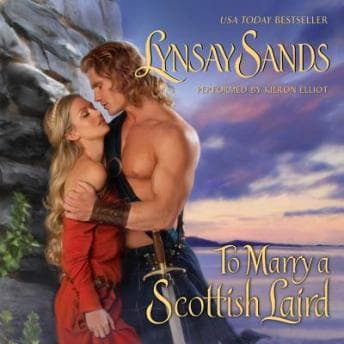

"When he accidentally comes across the lad bathing in the river, Cam discovers that Jo is actually Joan... with the most sinful of curves."
I read that description on a Tuesday night, grading sophomore essays on The Great Gatsby, and I thought: you know what, Marcus? You've earned this. Twenty years of teaching Fitzgerald's green light and you deserve some sinful curves by the lakefront.
So let me be upfront. This is not my usual territory. My podcast listeners — all 47 of them — expect me to talk about Faulkner and Dostoevsky. But here's the thing about audiobooks: they've made me a more honest reader. And honestly? I had a pretty good time with this one.
The Girl-Disguised-as-Boy Trick Is Older Than Shakespeare (And He Knew It Too)
Lynsay Sands is working with one of the oldest devices in Western literature here — the cross-dressing heroine. Viola in Twelfth Night, Rosalind in As You Like It, Portia in Merchant of Venice. Joan disguising herself as a boy to travel safely through the Scottish Highlands is a trope with deep roots, and Sands plays it pretty straight. No subversion, no meta-commentary. She's not trying to reinvent the wheel. She's trying to make it roll smoothly, and for the most part, it does.
The setup works because Joan has genuine motivation — a deathbed promise to her mother, a scroll to deliver to Clan MacKay — and Campbell Sinclair stumbles into her orbit through violence rather than contrivance. He gets stabbed helping her fight off bandits. She nurses him. The bathing scene reveals the disguise. Classic structure, well-paced in the first half.
But here's where I noticed my attention drifting during a faculty meeting (sorry, Principal Martinez — though in fairness, the quarterly budget review was also not exactly peak drama). The second half pivots toward mystery — someone is trying to kill Joan — and the tonal shift feels uneven. The romance loses momentum as the suspense plotline takes over, and the two threads don't quite braid together the way you want them to. It's like a student essay that starts strong on one thesis and then introduces a second argument in paragraph four without connecting them.
My students would hate that analogy. But they'd understand it.
Kieron Elliott's Scottish Brogue Does the Heavy Lifting
Let's talk about the narration, because that's why we're here. Kieron Elliott has a legitimate Scottish accent that gives the Highland setting real texture. When he's voicing Cam, you feel the weight of the character — the weariness of a warrior, the dry humor of a man who's seen too many battles. His Scottish voices are where he's most comfortable, and it shows.
But — and this is a genuine but — Elliott has this habit of inserting long pauses after conjunctions. "And... she turned." "But... he knew." It's like he's treating every "and" as a paragraph break. The narrator understands that pause is punctuation, sure, but these pauses aren't punctuating anything. They're just... sitting there. After a while I started noticing them the way you notice a ticking clock in a quiet room.
His English accent work is also a little wobbly. When Joan speaks — she's not Scottish, she's English — there's a flatness that doesn't quite match the specificity of his Highland voices. It's not bad. It's just noticeably less assured. You can hear the performance versus the instinct.
Still, for a single-narrator historical romance, he's a solid fit. The genre asks for warmth and a certain rhythmic cadence, and Elliott delivers that when he's in his comfort zone.
Who Gets an A, Who Gets a Hall Pass
If you loved Sands' earlier Highland books — particularly the first in this series — temper your expectations a little. Listeners who came in expecting the same humor were disappointed, and I get it. The comedy here is lighter, more situational, less of a driving force. The mystery subplot crowds out some of the banter that apparently made the earlier books pop.
That said, if you're a fan of Scottish historical romance and you want something with clear stakes, a likeable heroine with actual agency, and a hero who's gruff without being insufferable, this is a perfectly pleasant ten hours. I listened to most of it on evening walks along the lakefront with Denise, who kept pulling out one earbud to ask why I was smiling. (I told her it was the sunset. It was the bathing scene.)
Readers who want literary complexity — my people — this isn't your stop. But I'd never tell someone what to enjoy. I spent two decades telling teenagers that Hemingway matters. Some of them went on to read romance novels exclusively. And honestly? They're still reading. That counts.
The Grade on This One
Sands knows her audience and writes to them with confidence. Elliott's narration carries the Scottish setting on its back even when the story wobbles in the middle. It's comfort listening — warm, familiar, safe. Not every audiobook needs to be Middlemarch. I found that same cozy, emotionally satisfying quality in Nightingale: A Novel, though that one packs a considerably harder punch. (Though if it were, I wouldn't have finished it during a budget meeting. I'd have savored every hour.)
The prose deserves to be savored at 1.0x, though I'll admit this one might benefit from 1.15x during the slower stretches. Don't tell my students I said that.