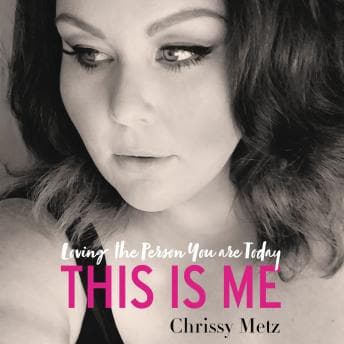

Look, I'll be honest - I almost didn't listen to this. Celebrity memoirs are, let's be charitable, a mixed bag. For every Educated there are about forty books where someone famous tells you they "always knew" they were destined for greatness while conveniently forgetting they had a cousin who was a producer. I had my skepticism loaded and ready.
Chrissy Metz earned the right to disarm me.
The "Bee Mindful" Problem (And Why I Forgave It)
The structure here will either charm you or annoy you, and it did both to me simultaneously. Metz alternates between straight autobiography - childhood, family chaos, the long ugly grind of trying to make it in LA - and these instructional interludes she calls "Bee Mindful" sections. Think self-help prompts dressed up in honey metaphors. "Say Thank You." "The Shrouded Supreme." My English teacher brain wanted to red-pen some of these titles. They read like journal prompts I'd assign freshmen who needed extra credit.
But here's the thing. The autobiographical chapters are so specific, so unflinching about the particular humiliations of growing up broke - the electricity getting cut off, the father who just vanished one day, the stepfather situation that she describes with a precision that makes your stomach tighten - that the self-help sections start to feel earned rather than tacked on. She's not dispensing wisdom from some mountaintop. She's saying, "This is what I figured out while crawling through the mud, and maybe it helps you too."
I was grading a stack of sophomore essays on The Great Gatsby at about 11:30 PM when I hit the chapters about her early years in LA. Barely getting auditions. Running out of money in a way that wasn't romantic or cinematic - just grinding and sad. And I thought about how many of my students are already hearing that their dreams are too big for their zip code. This reminds me of what Hemingway said about courage being grace under pressure, except Metz's version is more like grace under complete financial and emotional collapse. Less elegant, more real.
When The Narrator IS The Story
Here's where the audiobook format genuinely matters. Metz reads her own book, and you can hear exactly when she's approaching something that costs her. There's this moment - the Oprah lunch scene - where she's describing sitting across from Oprah Winfrey, and her voice does this thing where it lifts slightly, like she still can't quite believe it happened. The narrator understands that pause is punctuation. She lets the silences do work.
Her Southern accent surfaces naturally when she's talking about family, about Florida, about the parts of her life before Hollywood sanded down her edges. It's not performed - it just appears, the way anyone's hometown voice creeps back when they're talking about their mother. When she voices her younger self versus her adult self, you can hear the shift - not through some actorly trick, but through the emotional register changing. Younger Chrissy sounds more open, more uncertain. Present-day Chrissy has warmth but also this hardness underneath, like scar tissue that's healed but hasn't disappeared.
At 6 hours and 27 minutes, it's the right length. She doesn't pad. The prose deserves to be savored - not because the sentences are architecturally beautiful the way Toni Morrison's are, but because Metz writes the way people actually think. Run-on feelings. Messy connections. The kind of honesty that doesn't announce itself.
Who This Is Actually For
If you want literary memoir - the careful, sculpted kind where every metaphor is load-bearing - this isn't that. My students would probably connect with this more than I initially expected, actually, because Metz writes without pretension. She's not trying to be a Writer with a capital W. She's trying to be heard. That same impulse — reframing the thing everyone told you was a liability into something you could actually use — is what ADHD Advantage attempts, though with more clinical framing and less emotional gut-punch.
If you've ever felt like your body was the first thing people saw and the last thing you wanted them to notice, this book will hit differently. She talks about weight, about the way the world treats you when you take up space it hasn't allocated for you, and she does it without making it the whole story. It's part of the story. Which is, I think, the point.
Skip this if you can't handle the self-help interludes. They're earnest in a way that might read as corny if you're not in the right headspace. But if you let them land - and I'd recommend a long walk, maybe the lakefront at dusk when the joggers have thinned out - they feel less like advice and more like someone sitting next to you saying, "I know. Me too."
The Grade I'd Actually Give
This isn't Educated. It's not becoming. But it's honest in a way that matters, and Metz narrating her own story elevates it from a book you'd skim in an airport to something worth your actual attention. Worth pausing the faculty meeting for. (Sorry again, Principal Martinez.)









