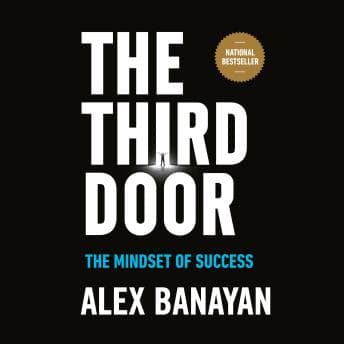

"There's always a Third Door."
That line hit me somewhere around hour two, while I was walking the lakefront on a Saturday morning Denise had claimed for errands. The wind off Lake Michigan was doing that thing where it convinces you spring is a lie, and here's this kid—eighteen years old—telling me about hacking his way onto The Price Is Right to win a sailboat so he could fund his quest to interview the most successful people on the planet. And I thought: my students would eat this alive. Not because it's literary. Because it's audacious in the way only someone too young to know better can be.
Alex Banayan's Third Door is not a book I would've picked up in grad school. It's not Faulkner. It's not even close to the kind of prose I'd normally say deserves to be savored. But here's the thing—I couldn't stop listening. And for a guy who spends his days begging sixteen-year-olds to care about The Great Gatsby, I have to respect any book that makes me feel like a student again.
The Kid Who Chased Larry King Through a Grocery Store
That's not a metaphor. Banayan literally spots Larry King in a grocery store and follows him through the aisles trying to land an interview. It's the kind of scene that shouldn't work—it should feel desperate, maybe even creepy—but Banayan narrates it with such self-aware embarrassment that you're rooting for him anyway. The same energy runs through the Warren Buffett shareholders meeting hack, where he basically social-engineers his way into a room he has no business being in. These aren't polished success stories. They're messy, sweaty, awkward attempts by a college freshman who keeps getting told no and keeps showing up.
This reminds me of what Hemingway said about writing—that you sit at the typewriter and bleed. Banayan's version is you sit outside someone's office door until they either call security or let you in. It's not elegant, but it's honest.
The "Third Door" metaphor itself—the nightclub with three entrances—is simple enough that my freshmen could grasp it in thirty seconds. First Door: wait in line like everyone else. Second Door: VIP access for the already-famous. Third Door: climb through the kitchen window. It's reductive, sure. But the stories Banayan collects to illustrate it—Bill Gates's first software sale, Steven Spielberg's legendary studio break-in—give it weight. That same scrappy, unconventional approach to success runs through the Life of Benjamin Franklin—another story of someone who refused to wait in line. The metaphor earns its keep through specificity, not abstraction.
When the Author Is the Narrator and That's Actually the Point
I used to be skeptical of author-narrated audiobooks. Most writers aren't performers, and listening to someone read their own prose can feel like sitting through a parent reading their kid's college essay at Thanksgiving. But Banayan is the rare exception where the author's voice IS the content. This is a memoir about a kid who talked his way past every gatekeeper in America—you need to hear that kid's voice crack with nervousness, hear the excitement spike when Maya Angelou actually picks up the phone, hear the deflation when months of cold emails lead nowhere.
He's not a trained narrator. There's no theatrical range here, no character voices shifting between Bill Gates and Lady Gaga. But there's something better—genuine emotional texture. When he talks about his failures (and there are plenty), you hear actual vulnerability, not performed humility. The narrator understands that pause is punctuation, and Banayan uses silence well, especially in the moments between rejection and the decision to try again.
At 8 hours 42 minutes, the pacing stays tight. No bloat. No chapters that feel like filler between the celebrity interviews. I listened at my usual 1.0x and never once felt the urge to speed up—though I'll admit this is one of the rare nonfiction books where 1.25x wouldn't lose much. The prose is functional, not lyrical. It's built for momentum, not meditation.
Who Gets an A, and Who Should Take a Different Elective
Let's be real: if you're over forty and you've read ten business books already, parts of this will feel familiar. The hustle-your-way-in advice isn't new. What's new is the delivery—the fact that it's wrapped in a genuine coming-of-age story rather than a lecture from someone who already made it.
If you've got a college-age kid, or a student who keeps asking "but how do I actually START"—this is the book. (I'm adding it to my summer recommendation list, right next to the Fitzgerald they'll pretend to read.) If you loved Shoe Dog by Phil Knight, this is its spiritual successor—younger, scrappier, less polished, but running on the same fuel of irrational persistence.
Skip it if you need deep analysis or systemic thinking about success. This isn't Malcolm Gladwell. It's not trying to be.
Worth Pausing the Faculty Meeting For
I finished this on a Tuesday night while grading sophomore essays about symbolism in Lord of the Flies. One of my students had written "the conch represents leadership" and nothing else. Sixteen words. And I thought about Banayan—eighteen years old, no connections, no credentials—spending seven years chasing down people who had every reason to ignore him. The conch doesn't just represent leadership, kid. You have to pick it up and blow.
My students would actually like this one. That might be the highest compliment I can give a book about success.