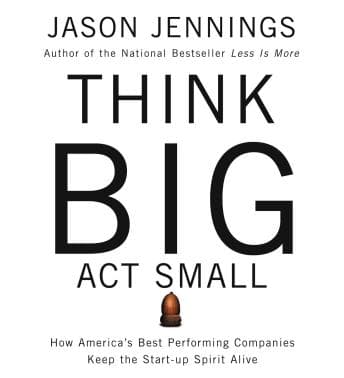

Bottom line: This is a 3 hour and 46 minute book with about 90 minutes of genuine insight. At 2.0x speed, that's a productive commute. At 1.0x? You're testing my patience.
Here's the thing—everyone talks about the Amazons and Apples of the world. The flashy IPOs, the billion-dollar valuations, the founders who become household names. Jennings went the opposite direction. He dug up nine companies most people have never heard of that quietly crushed it for a decade straight. 10% revenue growth, year after year. No magazine covers. No TED talks. Just results.
And honestly? That's the story of every successful small business owner I know. Including my parents.
The Dry Cleaning Business Philosophy
My parents never read a business book in their lives. They ran their Koreatown dry cleaning shop for 30 years using pure instinct and 14-hour days. When Jennings talks about leaders who stay close to the front lines, who know their customers by name, who obsess over the small details—I'm not learning anything new. Kitchen Confidential captures that same front-line obsession in restaurants—Bourdain knew every station, every ingredient, every customer complaint. I'm just hearing someone finally articulate what I watched growing up.
The PETCO and Cabela's case studies are solid. Sonic Drive-In's approach to franchisee relationships is genuinely interesting. But the core message—stay humble, stay hungry, don't let growth turn you into a bureaucratic nightmare—that's not revolutionary. That's just... good business sense that corporate America keeps forgetting. QBQ! The Question Behind the Question makes a similar argument about personal accountability—though it lacks the concrete case studies that make Jennings' work actually useful.
I've seen this fail at three different companies I consulted for. They hit $50 million in revenue and suddenly everyone needs a VP title and a corner office. The hunger dies. Jennings is basically saying: don't do that. Which, yeah. Correct.
When the Author Reads His Own Work
Jennings narrating his own book is a double-edged sword. On one hand, you get the authentic delivery of someone who actually did the research and believes what he's saying. His broadcast journalism background shows—the guy knows how to tell a story clearly.
On the other hand, there's a certain... flatness? It's professional, sure. Clean. But I found myself wishing for a narrator who could inject a bit more energy into the case studies. When you're describing Koch Enterprises' operational philosophy, a little vocal variety goes a long way.
(Jenny would say I'm being harsh. Jenny is right. The narration is fine. It's just not exceptional.)
Production quality is clean—no weird audio issues, no background noise. At under four hours, it respects your time, which is more than I can say for 80% of my Audible library.
The Elephant in the Room
Some listeners have flagged ethical concerns about certain business figures mentioned in the book. I get it. When you're profiling companies for their success, you're inevitably going to include some leaders whose practices don't age well. Jennings wrote this in 2005, and the business landscape—and our expectations of corporate ethics—has shifted.
Does that invalidate the operational insights? Not really. But it's worth knowing going in.
Skip to Chapter 5. Thank Me Later.
The first few chapters are setup. Jennings explaining his methodology, why these nine companies, what makes them different. If you've read any business book in the last decade, you know the drill. The meat is in the individual case studies—how these companies actually implement the "think big, act small" philosophy day to day.
Who should listen: Entrepreneurs who've hit that awkward growth phase where everything feels harder than it should. Mid-level managers trying to figure out why their company lost its soul somewhere between Series A and Series C. Anyone who's watched a great startup become a mediocre corporation.
Who should skip: If you want complex financial frameworks or novel business theories, this isn't it. If you're looking for theatrical, high-energy narration, look elsewhere. And if you already run your business like my parents ran theirs—close to customers, obsessed with details, allergic to corporate bloat—you probably don't need this book. You're already living it.
The Invoice
Solid fundamentals, nothing groundbreaking, respects your time. That's more than most business books can claim. I finished it in one round-trip to a client meeting in Orange County. Worth the drive.