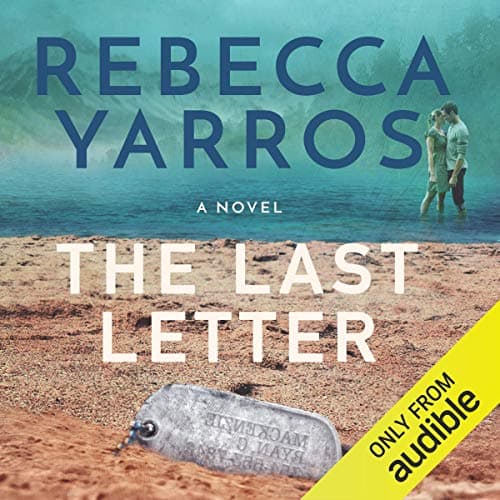

Can we talk about how Rebecca Yarros has zero chill when it comes to emotional devastation? I'm genuinely upset. I started this audiobook thinking I'd get a nice military romance with some feels, maybe tear up once or twice, and instead I got absolutely wrecked for thirteen straight hours. My eyes were puffy for two days. Two days. I had to explain to a coworker that no, nobody died — well, actually, somebody did die, that's kind of the whole premise — and no, I wasn't going through something. I was just listening to a book on my commute like a normal person.
So here's the setup: Beckett receives a last letter from his best friend Ryan, a fellow soldier who didn't make it home. Ryan's final wish is for Beckett to get out of the military and go to Telluride to look after his twin sister Ella and her kids. Ella's been dealt blow after blow — lost her grandmother, her parents, and now her brother — and there's something else lurking beneath the surface that threatens to tear what's left of her family apart. The letter is a gut punch, and the story only escalates from there.
What makes this work as an audiobook specifically is the dual narration by Teddy Hamilton and Jennifer Stark. Having two narrators for a romance with alternating perspectives is one of those things that either elevates the experience or makes you want to throw your earbuds into traffic. Thankfully, this lands firmly in the first camp. Jennifer Stark is the standout here — she gives Ella this exhausted resilience that never tips into melodrama, and her children's voices are surprisingly convincing. Most narrators doing kid voices make me cringe, but Stark pulls it off with enough distinction that the twins feel like real little people rather than caricatures. Hamilton captures Beckett's military stoicism and barely-contained emotion in a way that makes the character feel grounded. There's a roughness to his delivery that suits a man carrying the weight of survivor's guilt.
Now, I should mention that not everyone vibes with these narrators. Some listeners have found them less engaging, and audio preferences are deeply personal. If you're particularly sensitive to narrator voice quality, you might want to sample a few minutes before committing. But for my money, the emotional delivery from both performers is strong enough to justify the dual-narrator format.
The pacing of this book is interesting. Yarros doesn't rush the romance — Beckett and Ella's connection builds gradually under the shadow of grief, responsibility, and a secret that Ella is keeping close. There's a slow-burn quality to their relationship that feels earned rather than manufactured, which is critical because the emotional stakes are sky-high. When the plot twists hit — and they do hit, hard — the foundation Yarros has built makes them land with real force rather than feeling like cheap shock value.
I'll be honest: there are moments where the story veers into territory that could feel manipulative in lesser hands. Yarros is stacking trauma on top of trauma on top of trauma, and there's a point around the midway mark where you might think she's piling it on. But the character work is strong enough to sustain it. Ella isn't just a tragedy recipient — she's stubborn, fiercely independent, and sometimes frustratingly unwilling to accept help. Beckett isn't just a knight in camo — he's wrestling with his own demons and the impossible position of honoring a dead friend's wish while falling for that friend's sister.
The Telluride setting adds something too. Even in audio format, you get a sense of the mountain isolation that mirrors Ella's emotional state — beautiful but unforgiving, remote but not empty. Yarros knows how to use setting as mood without belaboring it.
At thirteen-plus hours, this is a substantial listen, and it earns its runtime. The story moves between present-day Telluride and the military context with enough rhythm that it never drags, though I'd recommend dedicated listening sessions rather than trying to absorb this while half-focused on something else. The emotional content demands your attention — I missed a highway exit because I was too locked into a scene where everything was falling apart for these characters, and I regret nothing.
The ending walks a tightrope between hope and heartbreak that I won't spoil, but I will say it left me sitting in my parked car for a solid ten minutes just... processing. Yarros doesn't hand you a neat bow, but she doesn't leave you in the wreckage either. It's the kind of conclusion that respects everything the characters — and the listener — have been through.
Who Should Listen (And Who Should Skip)
If you love slow-burn military romance that isn't afraid to absolutely destroy you emotionally, this is your book. If stacked-up trauma feels exhausting rather than cathartic to you, or if you need your romances light and breezy, skip this one and save yourself the puffy eyes.
If you've read Yarros's other work like Full Measures or The Things We Leave Unfinished, you know what you're signing up for. Interestingly, Sword Song gave me a similarly unexpected emotional gut-punch — I went in expecting clean adventure and came out genuinely shaken by how much I cared about characters I'd only known for a few hours. If this is your first encounter with her, brace yourself. Bring tissues. Maybe a blanket. Definitely don't start this one in public unless you're comfortable ugly-crying in a coffee shop.