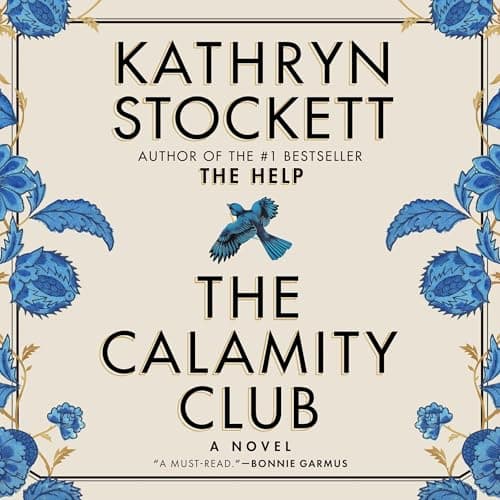

A mother leaves her daughter on Christmas Eve. I can't hand you a timestamp, and I won't make up a line to quote, but that abandonment is the cold stone Kathryn Stockett sets at the bottom of this whole novel. Everything after it, all 28 hours and 44 minutes, keeps circling back to Meg Lefleur. She's eleven years old and counted among the "big girls" at the Lafayette County Orphan Asylum, the ones nobody comes to collect anymore.
I heard most of that first stretch with a peach basket on my hip, out among the trees behind the house in late-August heat, my earbuds in and the playback down at 0.85x the way I like it. (At that speed this book runs well past thirty-three hours. I did the arithmetic standing in the grass and laughed out loud.) My husband used to say you can't hurry a peach and you can't hurry a sentence. I thought about that a lot with this one. Because Stockett is not a hurried writer, and these two narrators never once act like she is.
Eleven Years Old and Already Flint
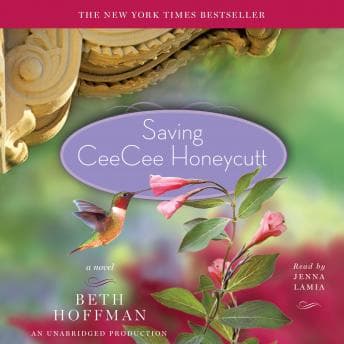
Jenna Lamia has Meg's chapters, and here is what she gets right. She doesn't play the orphan for pity. A lesser reader would've gone breathy and wounded, all big eyes, and the whole book would've curdled into a Depression-era greeting card. Lamia gives Meg warmth, yes, but she also gives her an edge you could strike a match on. This is a child who has decided, firmly, that she will rely on nobody. You hear that decision in how she clips her sentences short. You hear it in the little pause she takes before admitting she wants anything at all. Lamia also narrates another Southern story about a girl learning whom she can lean on, Saving Ceecee Honeycutt, and that one is worth a listen for the same quiet restraint.
I taught a great many eleven-year-olds' grandchildren in my day, and I know that voice. It's the voice of a child who has done her grieving early and filed it away.
January LaVoy Carries the Crowd
Then there's Birdie Calhoun. She's unmarried and outspoken, and she came to Oxford to beg help from a socialite sister whose fine life turns out to be mostly lies. January LaVoy reads Birdie, and she also reads nearly everyone else: Mrs. Tartt, Picadore, and Flossy.
Oh, Flossy.
LaVoy plays her blunt and rough as a corncob, and her timing is so dry that I set the basket down more than once just to laugh properly. I'm not alone in this. Other listeners have said the same, and one admitted she briefly thought the production had hired extra narrators. It hadn't. That's one woman shifting her throat and her tempo. LaVoy has a shelf of Audie Awards for good reason, and this performance shows you why.
The dialect work deserves its own word, too. Both women let the Mississippi vowels stretch to their full length. Neither treats the accent as a costume. In their hands it's a way of breathing, and that matters more than most listeners realize. On the page, Southern speech can look like a cartoon. Spoken by someone who respects it, the same speech has music in it. Lamia's range is no small thing, either. She also narrates Shape of Water, a tale about as far from a Mississippi porch as you can get.
On Coming Back to Stockett
I'll be honest with you, the way I was honest with my students. I came to this book wary. I read The Help when everyone did, and I had my quarrels with it. Some were about who got to tell whose story. Some were about how dialect sat on the page. Stockett is still a white Mississippian writing Mississippi, and I listened with that knowledge sitting right beside me under the trees.
But this is a different book. Its center is women whose freedom hangs by a thread: childless women, motherless girls, and Charlie, whom Birdie meets when Charlie is nearly out of luck. Charlie cooks up a scheme bold enough to give these women some say over their own lives. Stockett is good on hypocrisy, especially the church-hat, garden-party kind that smiles at you while it shuts the door. She's funnier here, too. Looser.
Where she stumbles is in the back half. The dramatic turns keep coming, one on top of another, until I felt a bit like I was watching a summer storm that wouldn't quit. And the loose ends get tied up in a rush in the final pages, which surprised me after so many unhurried hours. A writer who earned thirty hours of my patience should've taken another one to say goodbye. I wasn't the only listener who noticed. Some found the length a pleasure, and one admitted to speeding it up. (I did not. I never do.)
Pull Up a Chair, or Pass the Basket
You should listen if you want a long Southern novel told by two narrators who make dialect sound like living speech. Listen, too, if you like your grief and your comedy in the same pot. Expect to give up some tidiness at the end in exchange for richness in the middle.
You should skip it if a story that keeps piling on complications wears you out. Skip it as well if you need an ending that takes its time. And if childhood abandonment and orphanage hardship sit too close to home, think hard before you start. Stockett doesn't look away from either.
What I Said to the Peach Trees
By the final hours I'd moved inside with a glass of sweet tea, and I didn't want to press stop. It felt like leaving a room full of women I'd come to know by their voices alone: Meg's flint, Birdie's spine, Flossy's sandpaper. That's what a performance like this does. The book has its flaws. The voices don't.