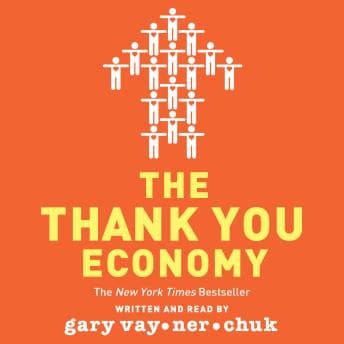

Gary Vee narrating his own book is exactly what you'd expect. Intense. Direct. Like getting business advice shouted at you by that friend who's had three espressos and genuinely believes every word he's saying.
Here's the thing - I've sat through a lot of business audiobooks that could've been blog posts. This one? It's actually got meat on the bones, even if some of that meat is stuff my parents figured out running their dry cleaning shop in Koreatown thirty years ago. Treat customers like humans. Remember their names. Care about their problems. Revolutionary, right?
But Gary's point - and it's a good one - is that social media finally lets you scale that small-business intimacy. The dry cleaner can only remember maybe 200 regulars. A brand on Twitter (this was 2011, remember) can theoretically care about thousands. Whether they actually do is another story.
When Hustle Culture Had a Point
I'll admit I was skeptical going in. Gary Vaynerchuk has become such a meme of entrepreneurial energy that it's easy to dismiss him. But strip away the intensity, and there's solid strategic thinking here. The case studies - Old Spice, Avaya, some smaller businesses - actually demonstrate ROI on relationship-building. Not just vibes. Numbers.
The framework is simple: social media isn't a marketing channel, it's a customer service opportunity. Every complaint is a chance to create a loyalist. Every interaction builds equity. It's the same reciprocity principle I saw in Give and Take, just applied to Twitter instead of face-to-face transactions. My parents did this instinctively with their regulars - free alterations here, a discount there, remembering that Mrs. Kim's daughter was getting married. Gary just put a methodology around it.
At 5 hours 42 minutes, it respects your time more than most business books. I bumped it to 1.5x (couldn't quite handle 2.0x with Gary's already-rapid delivery) and finished it during a long consulting project commute. The pacing works because Gary doesn't pad. He makes his point, gives examples, moves on.
The Narrator Problem (That Isn't Really a Problem)
Some reviewers hate Gary as a narrator. I get it. He's not soothing. He's not varied. He sounds like he's pitching you on something for five straight hours because - well - he is.
But here's my take: that intensity is the message. The whole book is about caring so much it's almost uncomfortable. Having Gary read it in his boardroom-preacher voice actually reinforces the thesis. Would I want him narrating a thriller? God no. For his own manifesto on customer obsession? It works.
The production is clean. No weird audio artifacts. Just Gary, a microphone, and a lot of conviction.
What Holds Up (And What Doesn't)
This book came out in 2011. Some references are dated - Twitter was still novel, Facebook was the dominant platform, Instagram barely existed. The specific tactics need updating. Kind of like how Rich Dad Poor Dad has outdated tax advice but the mindset stuff holds up.
But the core philosophy? Still solid. Maybe more relevant now. I've watched companies spend millions on programmatic ads while ignoring angry customers in their replies. The Thank You Economy's central argument - that authentic engagement beats broadcast marketing - has only gotten more true as consumers get more cynical.
The weakness: if you're already bought into this philosophy, there's not much new here. I've recommended this to startup founders who'd never thought about social as anything but a megaphone. They loved it. For someone who's been doing customer-centric marketing for years? Probably skip it.
Who Gets Value Here
Listen if: You're running a business and still think of social media as a place to post promotional content. This 5-hour audiobook might save you from learning the hard way that customers can smell inauthenticity from a mile away.
Skip if: You're already doing customer-centric marketing. You'll nod along but won't learn much.
The Dry Cleaner's Son's Take
This is what my parents did instinctively. Now it has a TED talk. And honestly? That's not a criticism. Sometimes obvious truths need someone to package them with enough energy that executives actually pay attention.
Gary Vaynerchuk isn't for everyone. His intensity can be exhausting. But worth the listen if you're new to customer-centric thinking. If you're already there, you'll nod along but probably won't learn much. Jenny would say I'm being generous. Jenny might be right.