
When did emotional intelligence become the business buzzword that everyone name-drops but nobody actually operationalizes? I've sat in rooms with C-suite leaders at Fortune 500 companies who can recite Goleman's frameworks backwards but still manage to make their direct reports cry in quarterly reviews. So when Gary Vee drops a book claiming to have cracked the code on soft skills for business success, my BS detector goes to DEFCON 1.
I threw this on during a late Sunday meal-prep session - Jenny was out, I had chicken thighs to marinate, and five hours felt about right for the amount of banchan I was prepping. And look, five hours and seven minutes is actually refreshing for a business book. Gary didn't pad this thing to death. That alone earns some respect from me.
Gary Being Gary, But With the Volume Knob at 7 Instead of 11
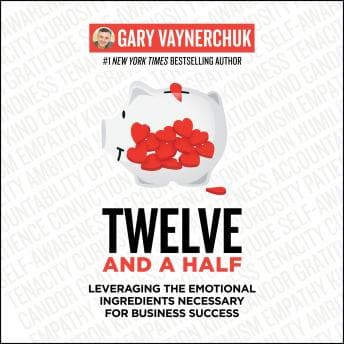
Here's what surprised me: this isn't the hyper-caffeinated Gary Vaynerchuk you've seen screaming about hustle on Instagram Reels. The twelve ingredients he covers - gratitude, self-awareness, accountability, optimism, empathy, kindness, tenacity, curiosity, patience, conviction, humility, and ambition - aren't revolutionary. My mom had all twelve of these running her dry cleaning business without ever reading a single leadership book. This is what my parents did instinctively. Now it has a TED talk.
But here's where Gary actually earns it: the "half." His half is kind candor - the ability to deliver hard truths with kindness simultaneously. He's honest about being bad at it, and that vulnerability lands harder than any of the twelve full ingredients. I've seen this exact weakness sink partnerships at three different companies I've consulted for. The founder who's all conviction, zero empathy when delivering feedback. The manager who's so kind they can't fire the person dragging down the whole team. Gary names the tension and doesn't pretend he's solved it.
The real gem of the audiobook format? Gary goes off-script. Multiple times he stops mid-chapter and just... riffs. Adds context that isn't in the print version. Tells stories that clearly came to him in the moment. One listener literally said they auto-play this in their car instead of music, and I get it - there's an intimacy to Gary narrating his own emotional growth that a professional voice actor couldn't replicate. It's like sitting across from the guy at dinner except he's actually being reflective instead of performing.
The Scenario Framework Is the Real Product
The back half of the book is where the ROI lives. Gary presents real business scenarios - employee wants a raise, co-founder disagrees on direction, customer is furious - and walks through which emotional ingredients you'd combine to handle each one. It's like a mixing board for soft skills. Patience plus conviction when negotiating. Humility plus curiosity when you've screwed up.
This is genuinely useful. I've recommended similar frameworks to startup founders, but most emotional intelligence books stay abstract. "Be more empathetic!" Great, how? Gary's scenario approach at least gives you a decision tree. Not perfect, but it's more actionable than 90% of the EQ content I've consumed.
The key takeaway is worth the listen. The other 7 hours? Well, you're in luck - there are only 5. He actually respects your time here.
Where It Falls Short (Jenny Would Say I'm Being Harsh. Jenny Is Right.)
Gary's examples skew heavily toward his own experience as a CEO of a media company. If you're a mid-level manager at a healthcare company or a solo founder bootstrapping an e-commerce brand, you'll need to do some mental translation. The principles transfer, but the context doesn't always.
Also - and this is my perennial Gary Vee complaint - there's an underlying assumption that sheer emotional awareness plus effort equals success. My parents had all twelve ingredients in spades. They still worked 14-hour days for decades with no exit strategy. Emotional intelligence matters, but it's not the whole equation, and Gary occasionally talks like it is. SuperFreakonomics made a similar mistake in reverse—all data, zero emotional texture—and I found myself equally frustrated by that blind spot.
The narration itself is clean and energetic. No production issues, no weird audio gaps. Gary's natural cadence works well at 1.5x - I actually pulled back from my usual 2.0x because his off-script tangents are worth catching at a pace where you can absorb them.
Who Gets Value and Who Should Keep Scrolling
If you're a Gary Vee skeptic who's only seen the Instagram clips: this might change your mind. It's his most mature, least performative book. If you're already deep into emotional intelligence literature - Goleman, Bradberry, Brené Brown - you won't find new concepts here, but the mixing-board framework is a solid addition to your toolkit. If you want data-driven arguments for why soft skills matter, look elsewhere. Gary argues from lived experience, not research papers.
At 5 hours, the time investment is reasonable. The audio-only tangents make this one of those rare cases where the audiobook is genuinely the superior format. Skip to chapter 5 if you already know Gary's backstory. Thank me later.
The Consulting Engagement Summary
Bottom line: This is Gary Vaynerchuk's most useful book. Not his most entertaining, not his most hype-inducing - his most useful. The emotional ingredient framework gives you a practical lens for leadership decisions, and his honesty about his "half" is the kind of self-awareness most business authors fake. It won't replace actual emotional development work, but at five hours, it's a solid primer that won't waste your Sunday.