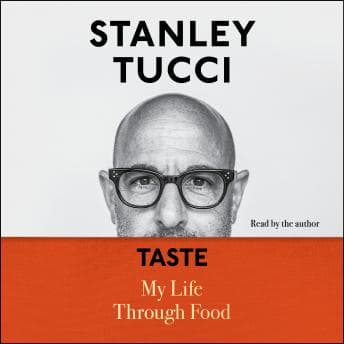

"I pronounce 'prosciutto' correctly, and I need you to know that."
That's not an actual Tucci quote, but it might as well be. Somewhere around hour two, while I was prepping banchan for a Sunday dinner Jenny's parents were coming to, Stanley Tucci described the way his mother handled San Marzano tomatoes - with a reverence that bordered on liturgical - and I had to put down my knife because I was laughing. Not because it was a joke. Because I recognized it. My mom handled kimchi jars with the same gravity. Different cuisine, same religion.
The 6-Hour Business Case for Eating With Your Family
Let me be upfront: this isn't a business book. It's not even adjacent to business. But I'm reviewing it anyway because there's more operational wisdom in Tucci's description of his family's dinner table logistics - who sat where, how courses were timed, the unspoken hierarchy of who got served first - than in half the "organizational culture" books I've slogged through this year.
At 6 hours and 49 minutes, this thing is lean. Tucci moves from his Calabrese grandparents' kitchen in Westchester to filming Big Night (where he and Tony Shalhoub built the timpano for real, on camera, and the anxiety of it practically drips through your earbuds) to falling in love with his second wife over a London dinner, to his cancer treatment and the brutal irony of a food obsessive losing his sense of taste. That last part hit harder than I expected. I was loading the dishwasher and had to just... stop for a minute.
The structure is loose - thematic rather than chronological, more like a really good dinner conversation that wanders but always comes back to something worth hearing. Some chapters are essentially extended recipe meditations. Others are genuine gut punches about grief and mortality dressed up in descriptions of pasta.
Tucci Reading Tucci Is the Whole Point
Bottom line: the audiobook format isn't optional here. It's the product. Tucci's delivery is the difference between reading a recipe and watching someone cook. When he says "ragù," he doesn't just pronounce it correctly - there's a weight to it, a half-second pause before the word that tells you this isn't vocabulary, it's memory. His Italian food terms come out with this specific reverence that made me think of my dad saying "galbi" - like the word itself carries flavor.
He's not doing "voices" or performing characters. This is a man sitting across from you telling stories about his life, and his actor's instinct for timing means the funny beats land clean and the sad ones don't overstay. The section about his first wife Kate's death - he keeps it measured, controlled, and it's devastating precisely because he doesn't milk it. My 2.0x speed actually felt wrong here. I dropped to 1.5x around hour four and left it there.
No music, no sound effects, no production gimmicks. Just a guy with a great voice and better stories. Sometimes that's enough.
What My Parents' Dry Cleaning Business Has in Common With Italian Grandmothers
Here's what got me: Tucci keeps circling back to this idea that food isn't about the food. It's about the labor. The hours. The showing up every single day to feed people who may or may not appreciate what it took. His grandmother's Sunday sauce wasn't a "passion project" - it was a commitment that organized the entire week around it.
This is what my parents did instinctively. Now it has a TED talk. Except Tucci doesn't TED-talk it. He just tells the stories and trusts you to get it. The Tucci family kitchen operated like a small business - procurement, prep, execution, service, cleanup - and nobody called it "entrepreneurship" because they were too busy eating.
The weakest stretches are when he drifts into straight recipe territory without enough story attached. A few chapters in the middle feel like cookbook outtakes rather than memoir. But even those clock in short enough that you're past them before boredom sets in.
Who Gets a Seat at This Table
If you grew up in any immigrant household where dinner was non-negotiable and the kitchen was command central - Korean, Italian, Mexican, whatever - this book is going to feel like a phone call home. If you're looking for actionable business frameworks or productivity hacks, you're in the wrong restaurant. The closest I've come to finding that same trust-the-reader-to-connect-the-dots approach in something more explicitly political is Two Treatises of Civil Government — Locke also just lays out the logic and assumes you're an adult, though he does it with considerably less ragù.
Jenny would say I'm being harsh. Jenny is right. But I'll say this: I finished every minute of it, which puts Tucci in a very small club. And I may have texted my mom afterward to ask for her japchae recipe. We don't talk about that either.
The key takeaway is worth the listen. The other 7 hours? Actually, all 6 hours and 49 minutes earn their place. Finally, a book that respects your time.








![Steve Jobs [unabridged audiobook] audiobook cover](/_next/image?url=https%3A%2F%2Fcovers.audiobooks.com%2Fimages%2Fcovers%2Ffull%2F9788499923406.jpg&w=1920&q=75)