
"How many traumas can a little six year old child reasonably endure?"
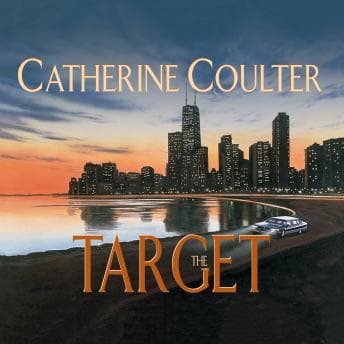
That question - pulled from another listener's review - kept rattling around my head somewhere around hour six, while I was sautéing onions for a dal that was getting way more attention than it deserved. Because here's the thing: Catherine Coulter asks us to accept a lot when it comes to Emma, the mute girl at the center of this story. And my psychology brain was doing that thing where it can't stop cataloging what's plausible versus what's just... convenient plot machinery.
The Mute Child and the Man Running From Himself
Let's start with what hooked me. Ramsey Hunt - a judge fleeing his own unwanted celebrity - finds an unconscious, abused child in the Colorado Rockies. She can't speak. He doesn't know who she is. Strangers immediately try to kill them both. The setup is genuinely strong, and I found myself asking: why does Ramsey really retreat to the mountains? Coulter frames it as escape from notoriety, but the protagonist exhibits classic avoidant coping mechanisms - the isolation, the refusal to engage, the almost pathological need for control over his environment. That's interesting. That's psychologically coherent.
But then Molly Santera shows up, assumes Ramsey kidnapped her daughter, and within what feels like fifteen minutes of narrative time, she's trusting him completely. Psychologically, this doesn't track. A mother whose child has been through severe abuse, who tracks her daughter to a remote cabin with a strange man - that suspicion should have legs. It should linger. Instead, Coulter burns through it so fast the romantic tension barely has oxygen to breathe before we're off to Chicago.
The research actually shows that trust formation after trauma follows specific patterns, and Molly's arc just... skips steps. She goes from "you might be a monster" to "let's flee across the country together" with the emotional equivalent of a shrug.
Emma Deserves Better Psychology
This is a fascinating case study in how fiction handles childhood trauma - and mostly gets it wrong. Emma's mutism is presented as a dramatic device rather than a clinical reality. Selective mutism in children is complex, rooted in anxiety, and doesn't just resolve because the plot needs a revelation. The way her silence functions here is more gothic than psychological - the silent child as mystery, the voice returning as catharsis.
And the traumas just keep stacking. Abuse. Pursuit by armed strangers. Displacement. More danger. My therapist would have thoughts about this character, and none of them would be charitable toward the author's choices. At some point, you have to decide whether you're writing about a child or using a child as a plot engine. Coulter leans heavily toward the latter, and it left me uncomfortable in a way I don't think was intended.
What makes this character compelling - at least in concept - is that Emma holds the key to the mystery without being able to articulate it. That's a genuinely clever structural choice. The problem is execution.
Sharon Williams Carries More Than She Should
Sharon Williams narrates this as a solo performer, and she's doing solid work with uneven material. Her pacing is good - she doesn't drag, which at ten hours is a real gift. The suspense sequences move. When Ramsey and Molly are being pursued, Williams keeps the tension taut without overselling it.
I don't have specifics on her character differentiation, and honestly, with a cast this size - Ramsey, Molly, Emma, plus FBI agents Savich and Sherlock from previous books - a single narrator is carrying a heavy load. The Savich and Sherlock scenes felt like fan service for series readers (this is book three in the FBI Thriller series), and Williams handles the tonal shift between romantic suspense and procedural investigation without it feeling jarring. That's not nothing.
But here's my complaint: the audiobook doesn't give Williams much to work with emotionally. The writing stays surface-level with its character interiority, so the performance can only go so deep.
Who's Going to Love This (and Who Should Keep Jogging)
If you're a Coulter completist working through the FBI series, this is apparently where things start improving. Listeners who've read the whole arc say it gets better from here, so consider this a necessary stepping stone. If you like romantic suspense with a mystery engine and you're not going to overthink the child psychology - genuinely, you might enjoy this more than I did.
But if unrealistic character motivations bother you, if you need your trauma portrayed with some fidelity to how humans actually process it, you're going to hit the same walls I did. The mystery's resolution is satisfying enough. The romance is rushed but functional. The child at the center deserved a more careful hand.
I finished the dal. I finished the book. One turned out better than the other.
Case Closed, Notes Incomplete
Coulter understands pacing and she understands how to construct a chase. What she doesn't quite understand here is the interior life of a traumatized child, or the pace at which broken adults learn to trust each other. Sharon Williams does her best to paper over those gaps, and she mostly succeeds. It's a competent thriller wrapped around a psychological premise it doesn't fully earn. Dirt landed in that same frustrating territory for me — strong bones, shaky follow-through on the human stuff. Worth your time on a long drive if you're already invested in the series. Worth a raised eyebrow if you're not.