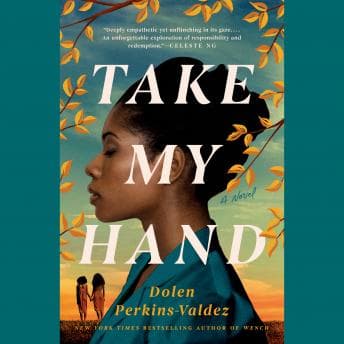
There's a moment early in this audiobook where Civil Townsend walks into that one-room cabin and sees those two little girls - eleven and thirteen - and realizes what she's been sent there to do. I had to pull over. Actually pull over. Not because I was crying (okay, maybe a little), but because I needed to process what I was hearing.
As someone who's actually worked in healthcare for fifteen years, I've seen institutional failures. I've seen the gap between what medicine is supposed to do and what it actually does to vulnerable people. But hearing this story - based on real events from the 1970s, mind you - hit different. Because it's not ancient history. It's my mother's generation. And honestly? Some of these attitudes haven't gone away as much as we'd like to believe.
When Medicine Becomes Violence
Dolen Perkins-Valdez does something remarkable here. She takes a horrifying piece of American history - the forced sterilization of Black children in Alabama - and makes it personal without ever letting it become exploitative. Civil Townsend is young, idealistic, fresh out of nursing school. She wants to help her community. She believes in the system.
And then the system shows her exactly what it thinks of the people she's trying to serve.
The medical details are accurate. Finally. Someone who actually did their research. That's a rarity in fiction - Cast tried to tackle systemic oppression too, though it leaned more allegorical than grounded. The way Civil navigates the clinic, the hierarchy, the paperwork that becomes complicity - it felt real in a way that made my stomach turn. I've filled out forms that felt wrong. I've questioned orders that seemed off. Most of us in healthcare have had that moment where you realize you're part of something bigger than you understood.
But Civil does something about it. She blows the whistle. And the book doesn't pretend that's a simple heroic choice with a clean ending.
Lauren J. Daggett Carries the Weight
Look, I've heard some criticism that Daggett's narration isn't emotional enough. I disagree. Strongly.
Here's the thing about trauma - real trauma, the kind I see in the ER at 3 AM - it doesn't always come with dramatic sobbing. Sometimes it's quiet. Sometimes it's numb. Daggett reads Civil with a kind of controlled intensity that feels authentic to me. She's a nurse. We compartmentalize. We have to.
When Daggett voices India and Erica, those little girls, there's this heartbreaking innocence that makes what happens to them even more devastating. She doesn't oversell it. She doesn't need to. The story is already doing the heavy lifting.
The dual timeline - 1973 and present day - works beautifully in audio. Daggett shifts Civil's voice subtly between young idealist and older woman carrying decades of guilt. It's not a dramatic change, just a weariness that creeps in. Real.
The Slow Burn That Paid Off
I'll be honest - there are parts in the second half that drag a little. The present-day sections, where Civil is grappling with whether to speak publicly about what happened, could've been tighter. I found myself zoning out during a few of the longer reflective passages.
But here's the thing. This isn't a thriller. It's not supposed to race. The pacing mirrors Civil's own journey - the slow realization, the gradual building of courage, the weight of choosing to remember what would be easier to forget.
My commute is 45 minutes. This book took me about two weeks of post-shift listening. And honestly? That felt right. I needed time to sit with each section. Carlos asked why I was crying in the car. I blamed allergies. He didn't believe me.
Who Should Listen - And Who Should Brace Themselves
If you work in healthcare, especially if you're a person of color navigating predominantly white institutions, this book will hit you in places you didn't know were still tender. The scenes of Civil trying to advocate for her patients while being dismissed, minimized, talked over - I've lived versions of that. If you're interested in the history of medical racism in America, this is essential listening. Not comfortable. Not easy. But necessary.
Skip this one if you're sensitive to content involving children being harmed, medical abuse, or forced sterilization. The book doesn't sensationalize, but it also doesn't look away. The content warnings are there for a reason.
Clocking Out With This One
I finished this audiobook at 6 AM, sitting in my driveway, engine off, the sunrise coming up over the mountains. I didn't want to go inside yet. I needed another minute with Civil and those girls.
Because history repeats what we don't remember. That line from the description isn't just marketing copy. It's the whole point.
This is not a comfortable listen. But it's an important one. Lost World gave me that same feeling - stories that don't let you look away from uncomfortable truths. And Lauren J. Daggett delivers it with the kind of steady, empathetic presence that lets the story breathe without drowning in its own tragedy.
My mom would love this. (She still thinks I should've been a doctor, but she'd appreciate the nursing representation.) Perfect for that post-shift decompression when you need something meaningful to counterbalance whatever chaos you just walked out of.