
"Sometimes a scythe works better than a hammer."
That line from the description sold me before I even hit play. I was up late cleaning my Sig - Linda had already gone to bed, Ranger was sprawled out on the office floor - and I needed something to fill the quiet. At five and a half hours, this felt like a good late-night commitment. Quick op. Get in, get out.
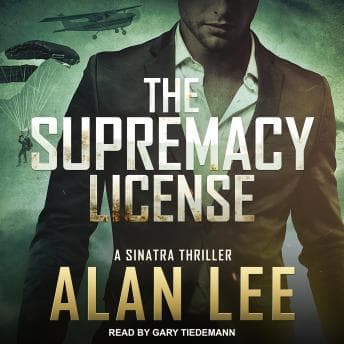
Let me cut to the chase: The Supremacy License is a fast, punchy black ops thriller that knows exactly what it wants to be and doesn't waste your time pretending otherwise. It's not trying to be le Carré. It's not trying to win a Pulitzer. It's a federal marshal named Sinatra - real name Manny Martinez - getting pulled into a domestic black ops team to take down an international terrorist called El Gato who's holed up in a mountain chateau on American soil but beyond legal jurisdiction. That premise alone had me leaning forward.
When the Mission Brief Actually Makes Sense
Here's what Alan Lee gets right that a lot of thriller writers botch: the operational logic tracks. The whole setup - a target who's technically untouchable through normal legal channels, requiring an off-the-books team to handle it - that's not Hollywood fantasy. I've seen this scenario play out in real life, or close enough to it that the premise didn't make me roll my eyes. The political dynamics around the op, the way jurisdictional nightmares between DEA and FBI create these impossible gaps where someone like El Gato can just... exist... that felt authentic.
The personal connection between Sinatra and El Gato adds a wrinkle I wasn't expecting from a book this lean. It's not just a "go get the bad guy" mission. There's history there, and Lee parcels it out in a way that kept me guessing whether Sinatra was walking into a trap he half-wanted to spring.
Where it lost me a little: at this length, character development is necessarily compressed. The team members around Sinatra feel more like chess pieces than people. You get their function, not their soul. In a longer book that'd be a problem. Here, the pace is aggressive enough that I didn't dwell on it - but I noticed.
Tiedemann Takes a Minute to Lock In
Gary Tiedemann's narration is interesting. And I mean that honestly - I had to sit with it. The first twenty minutes or so, I couldn't quite settle into his rhythm. Something about his cadence felt slightly off from the tone I was expecting. I almost bumped it up to 1.5x, which for me at 1.25x is a warning sign.
But then something clicked. By the time the op starts taking shape and the team dynamics come into play, Tiedemann finds his groove. He handles the voice differentiation well - you can tell when Sinatra's talking versus his teammates versus the brass giving orders. It's not showy voice acting. He doesn't do cartoon accents. What he does is shift register and tone just enough that you track who's speaking without having to rewind. The mark of a narrator doing it right is when you forget there's only one person behind the mic. By hour two, I forgot.
That slow start is worth noting though. If you're the type who gives an audiobook fifteen minutes before deciding, push through. The narration earns its place.
The Five-Hour Question
At 5 hours 35 minutes, this is a lean operation. No fat. No meandering subplots about Sinatra's ex-wife's garden or whatever padding some thriller writers throw in to hit a page count. The downside of that economy is you don't get the breathing room that makes characters feel lived-in. The upside is it moves like a bullet.
For a book this short, though, credit value is a consideration. You're paying full price for roughly half the runtime of most thrillers in this space. It's a series opener - first in the Sinatra Thriller line - so you're also getting setup alongside the standalone plot. That's fine. It works as both. But if you're counting your Audible credits carefully, the runtime matters.
Ranger slept through the whole thing, which either means it wasn't loud enough or he was comfortable. I'll call that a qualified endorsement.
Worth Your Time? Here's the Debrief
The Supremacy License is a solid, no-nonsense thriller that delivers exactly what it promises: a black ops team, an impossible target, and enough personal stakes to keep it from being purely mechanical. The author clearly did their homework on the operational side, the narrator grows into the material after a rocky start, and the whole thing moves fast enough that the thin characterization doesn't sink it. If you're looking for something to burn through on a long drive or a flight - the kind of book where you don't need to take notes - this gets the job done. Not the best thriller I've heard this year, but a clean, efficient one. Sometimes that's enough. Though I'll admit, when I want a story that actually takes its time and makes you feel something, I keep circling back to Before We Were Yours — different genre entirely, but it reminded me that the books willing to slow down and earn their characters are the ones that stay with you.