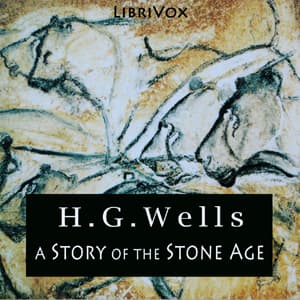

I was grading sophomore essays on Lord of the Flies - the ones where they all claim Piggy is 'relatable' without explaining why - when I decided I needed something completely different in my ears. Something ancient. Something that would make the petty drama of high school feel appropriately small. H.G. Wells writing about the Stone Age? Perfect.
Here's the thing about Wells that my students don't get when I try to teach The Time Machine: the man wasn't just writing science fiction. He was writing about us. About humanity stripped down to its bones. And this little novella - barely over two hours - does exactly that.
Wells Before the Machines
Most people know Wells for his Martians and invisible men. But Story of the Stone Age is Wells doing something sneakier. He's taking everything away - technology, civilization, language as we know it - and asking what's left. The answer, predictably and beautifully, is love and violence. Jealousy and courage. The stuff my students write bad poetry about, except Wells does it with cave people and it somehow works.
The prose here is vintage Wells. Dense, almost biblical in places, with that Victorian habit of telling you exactly what to feel. My students would hate this. I love it. There's a patience to the language that modern fiction has largely abandoned - sentences that unfold slowly, descriptions that linger. This is why we still read the classics, honestly. Not because they're 'important' but because they trusted readers to sit with an idea for more than thirty seconds.
The Voice in My Head
James Christopher narrates this, and I'll be honest - I couldn't find much about him online beyond these audiobook credits. But based on this performance? The man understands that pause is punctuation. His pacing lets Wells's prose breathe, which is exactly what it needs. You can't rush a sentence like 'This story is of a time beyond the memory of man' - and Christopher doesn't try to.
Now, some folks have mentioned his delivery can feel a bit flat in stretches. And yeah, I get that. There are moments where a little more vocal variety might've helped, particularly during the action sequences. But here's my counterargument: this isn't a thriller. It's closer to mythology. And mythology benefits from a certain... steadiness. A campfire storyteller cadence.
The British accent might throw some listeners - I've seen that complaint floating around - but honestly? For Wells? It feels right. This is Edwardian literature being read as Edwardian literature. If you want American energy, maybe look elsewhere.
What Wells Is Really Saying
Let's talk about what makes this more than just a prehistoric adventure story. Wells is doing anthropology through fiction here - imagining early human society with all its brutality and tenderness. The love story at the center (and yes, there's a love story, because of course there is) becomes a way of examining what drives us at our most fundamental level.
This reminds me of what Hemingway said about writing - that the dignity of movement of an iceberg is due to only one-eighth of it being above water. Wells gives us cave people, but underneath he's writing about every jealous lover, every territorial conflict, every moment of human courage that's ever existed. The setting is prehistoric. The emotions are eternal.
At just over two hours, it's practically a palette cleanser. I listened to the whole thing during one long lakefront walk with Denise. She was doing her own podcast thing - true crime, we have very different tastes - and I was wandering through the Pleistocene. Perfect Saturday morning, honestly.
Who Should Listen (And Who Should Skip)
Look, this isn't going to convert anyone who thinks classics are dusty and boring. If you need constant plot momentum, you'll struggle. But if you've ever loved Jean Auel's Clan of the Cave Bear and wondered what a more literary, more philosophical take on prehistory might sound like - this is your answer. That same blend of ancient setting and timeless emotion shows up in Timeless: A Drizzt Novel, though Salvatore trades cave bears for dark elves. Wells was doing speculative anthropology before that was even a genre.
The production quality is clean and crisp. No complaints there. No bonus content that I could find, but for a two-hour classic, I'm not sure what you'd add anyway.
My recommendation: listen at 1.0x. (Yes, I know, I'm ancient for this take.) The prose deserves to be savored. Wells chose those words carefully, and Christopher delivers them with appropriate weight. Speed it up and you'll miss the rhythm entirely.
Final Grade
If you loved The Time Machine or The Island of Doctor Moreau, this is their spiritual ancestor - Wells before he discovered science fiction, writing about science before science existed. It's strange and beautiful and exactly the kind of thing I'll probably assign to my AP students just to watch them squirm.
They'll thank me later. Maybe.