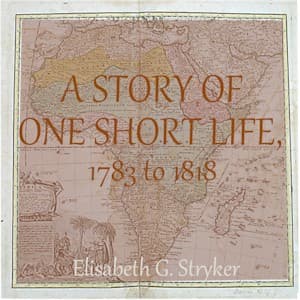

What does it take to change the world before you hit thirty-five?
I was up late last night, couldn't sleep—happens more than I'd like since I came home from my last deployment. Ranger was snoring at my feet, and I figured a short audiobook might settle my brain. At just over an hour, this seemed like the right fit. And honestly? Samuel J. Mills accomplished more in his brief life than most people manage in eighty years.
A Life That Reads Like a Mission Brief
Here's the debrief: Mills basically invented American foreign missions. Born in 1783, dead by 1818, and in between he helped establish the first missionary society in the United States, launched what became the American Bible Society, and—here's the kicker—helped found Liberia. The man died on a ship coming back from Africa, having literally helped create a country. At thirty-five. That kind of compressed achievement, a whole legacy packed into a handful of years, reminded me of Winston Churchill, though Churchill at least got more decades to see his work through.
Now, I'm not a particularly religious man. Spent too many nights in places where prayer seemed like it bounced off the ceiling. But I respect mission-driven people. Mills had a clear objective and he executed. No hesitation, no second-guessing. The kind of focused determination I saw in the best officers I served with—and rarely in the ones who made general.
Stryker's biography doesn't waste your time. At sixty-eight minutes, it's essentially an executive summary of a remarkable life. You get the key beats: his early religious awakening, the famous "Haystack Prayer Meeting" (which sounds like something out of a novel but apparently actually happened), his organizational genius in building institutions from nothing, and finally that fatal voyage to West Africa.
The LibriVox Question
Let me be direct—this is a LibriVox recording. If you've listened to these before, you know what you're getting. Larry Wilson reads clearly and competently. No dramatic flourishes, no distinct character voices (though frankly, in a biography like this, you don't need them). It's a volunteer reading a public domain text.
Is it going to win any Audie Awards? No. Does it get the job done? Affirmative.
The audio quality is what I'd call "serviceable." Clean enough that you're not straining to hear, basic enough that you won't mistake it for a professional studio production. For a free audiobook about an obscure historical figure, I've heard far worse. I've also heard better, but not at this price point.
What's Actually Here—And What's Missing
Stryker wrote this in a particular era with particular assumptions. The prose has that 19th-century biographical style—admiring, sometimes bordering on hagiographic. Mills is presented as almost supernaturally driven, which... maybe he was. Hard to argue with results.
What I would've liked more of: the logistics. How did a young man from Connecticut actually organize these massive institutions? What were the political obstacles? The funding challenges? Mills was clearly a skilled operator, but the biography skims over the how in favor of the what. That's my military brain talking—I want to understand the tactics, not just the victories.
The Liberia section particularly interested me. Here's a young American in the early 1800s, helping establish a colony for freed slaves in Africa. The historical implications are enormous and complicated. But at this length, we only get the surface. (Ranger perked up when I muttered something about wanting more detail—he's used to me arguing with audiobooks.)
Who Should Deploy With This One
If you're interested in early American religious history, this is worth your hour. If you're curious about the origins of the modern missionary movement or the founding of Liberia, it's a decent starting point—emphasis on starting. You'll want to dig deeper afterward.
If you need production values, theatrical narration, or deep historical analysis? Look elsewhere. This is a primary source document, essentially, read aloud. Treat it accordingly.
For me, at 2 AM with insomnia and a loyal dog, it was exactly right. Brief, informative, and about a man who didn't let a short life stop him from leaving a mark on history.
Debrief
Worth your time? It's free, it's short, and it tells you about someone you probably never heard of who shaped institutions that still exist today. The production is basic but functional. Wilson's reading is clear if unexciting.
At sixty-eight minutes, the commitment is minimal. The return on investment is genuine historical knowledge about a man whose fingerprints are all over American religious and humanitarian history. Mills didn't get to see what his work became. He died on that ship, thirty-five years old, mission incomplete but foundations laid. There's something about unfinished stories that stays with you—In Pieces had that same quality of a life examined in fragments, though Sally Field at least got to tell her own version.
Sometimes the short lives are the ones worth studying. Ranger approved this one—he slept through the whole thing, which from him is a compliment.







![Steve Jobs [unabridged audiobook] audiobook cover](/_next/image?url=https%3A%2F%2Fcovers.audiobooks.com%2Fimages%2Fcovers%2Ffull%2F9788499923406.jpg&w=1920&q=75)