
What happens when a Cambridge chemist from the 1800s tries to explain why people spent centuries trying to turn lead into gold - and actually makes you sympathize with them?
I wasn't planning to listen to this. I'd been doom-scrolling my library at 5:45 AM waiting for the Caltrain, running on four hours of sleep after a particularly nasty deadlock issue in production, and my usual sci-fi queue felt like too much cognitive load. A 5-hour history of alchemy? Sure. Low commitment. Worst case, I'd nap through it.
I did not nap through it.
The Original A/B Testers Were Alchemists, Actually
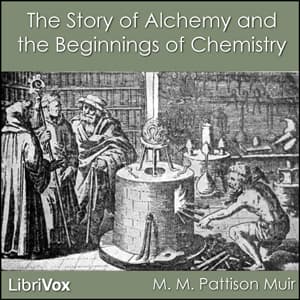
So here's the thing about M. M. Pattison Muir - he was writing this in 1902, and you can feel the Victorian prose style in every sentence. Peter Yearsley's narration doesn't try to modernize it or apologize for it. He just... reads it straight, with this measured, almost professorial British delivery that somehow makes the archaic language feel like a feature, not a bug. It's like pair programming with a very patient senior dev who happens to be from 1890.
What surprised me is how Muir frames the alchemists not as mystical cranks but as proto-scientists running experiments with bad mental models. He walks through their logic - the sulfur-mercury theory of metals, the pursuit of the philosopher's stone, the whole transmutation obsession - and you start to see it as iterative hypothesis testing with terrible observability tooling. These people were essentially debugging nature without stack traces. The book traces how each failure narrowed the search space until actual chemistry emerged from the wreckage.
Muir spends real time on specific alchemists and their reasoning, particularly the Arabic scholars who preserved and extended Greek ideas about elements. He's genuinely respectful of the intellectual tradition even while showing exactly where it went wrong. And then there's this fascinating section on phlogiston theory - the idea that combustion released a substance rather than consuming one - where you can almost watch the scientific method bootstrap itself into existence as chemists argued about why their measurements didn't add up.
5 Hours of Someone's Great-Great-Grandfather Explaining Chemistry
Let me be honest about what this is: it's a LibriVox recording of a public domain text from the early 20th century. The production is clean but minimal - single narrator, no effects, no music. Peter Yearsley's reading is clear and well-paced, with good enunciation of the chemical and historical terms that would trip up a lesser narrator. He handles the Latin and Arabic-derived terminology without stumbling, which is no small thing given how much of it there is.
But - and this is the catch - the source material is Victorian academic writing. Sentences are long. The structure is discursive. Muir will digress into a philosophical aside about the nature of scientific progress, circle back, digress again. At 1.5x this was manageable. I'd honestly recommend 1.25x here, which is rare for me. The prose is dense enough that speeding through it means losing the thread, and losing the thread in a book that's already building on unfamiliar historical context is a compounding problem.
The ROI on this audiobook is honestly pretty good if you're the right listener. It's free (LibriVox), it's short, and you'll come away with a genuinely better understanding of why chemistry took so long to separate from mysticism. But if you're looking for a modern pop-science treatment with snappy anecdotes and narrative arcs - this is not that. This is the primary source that those pop-science authors would cite.
Who Should Queue This (And Who Should Hard Pass)
Perfect for: the engineer or science nerd who's ever been curious about the history behind the periodic table but wants something more substantive than a Wikipedia rabbit hole. Also genuinely good if you're into history of ideas or philosophy of science - Muir's running commentary on how wrong theories can still advance knowledge is the best part of the book. That same thread - how minds build frameworks to explain what they can't yet measure - runs through Meditations on First Philosophy too, though Descartes is considerably more self-assured about his conclusions than any alchemist had a right to be.
Skip for: anyone who needs narrative momentum to stay engaged. This is a lecture, not a story. If business books that could've been blog posts annoy you, Victorian academic prose might actually cause physical pain. Also skip if you need high production values - this is a volunteer reading of a free text, and it sounds like exactly that.
I finished this in 3 commutes, and I'm genuinely glad I stumbled into it. There's something weirdly comforting about listening to a 120-year-old explanation of atomic theory and realizing we've been iterating on broken mental models since literally forever. Some things in engineering never change.
Commit Message: "Worth the clone, not worth the fork"
This is basically a really good university lecture series but for your earbuds - free, educational, and exactly as dry as that implies. It won't change your life, but it'll make you smarter about something you probably never thought to investigate. And at 5 hours, the commitment cost is basically nothing. I'd stream it, enjoy it, and move on.