
Okay, look. I usually like my fantasy protagonists to be optimized. Efficient. You kill my family? I kill your empire. Simple input/output. I want competence porn, basically.
So I almost returned this book in Chapter 2. Not because it was bad, but because Thia, the main character, is suffering from major system latency. She's depressed. And not the "tragically beautiful single tear" kind of depression you usually get in YA. I'm talking the "can't get out of bed, brain fog, zero executive function" kind.
It was frustrating. I'm on the Caltrain, caffeine in hand, ready for a rebellion, and Thia is struggling to put on clothes. I wanted to shake her. But then I realized—that's the point. It's a feature, not a bug.
When the System Goes Offline
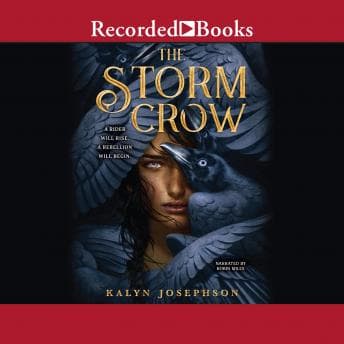
The premise is solid: The kingdom of Rhodaire relies on magical elemental crows. They're basically the infrastructure layer—agriculture, battle, weather control. Then the Illucian empire invades and wipes out the rookeries. Total system outage.
Thia's reaction to this isn't immediate revenge. It's trauma.
Honestly, listening to this after a brutal on-call rotation where I barely slept for three days hit weirdly hard. Josephson writes depression like a memory leak that slowly eats up all your RAM until you crash. It slows the plot down—a lot. If you're looking for fast-paced action, you're going to bounce off this. I had to crank the speed up to 1.75x just to keep my own brain from buffering during the slower internal monologues.
But the magic system? The crows? Super cool. It's basically Pokémon meets cloud architecture. American Gods has a similarly creative take on making abstract concepts tangible through mythology. (Don't tell Kevin I made that comparison, he'll lecture me on Nintendo lore for an hour.)
Robin Miles Is the Root User
Here's the only reason I stuck with it during the slow parts: Robin Miles.
I couldn't find much about her setup, but the woman is a machine. She has this warm, grounded delivery that makes even the teenage angst feel weighty rather than whiny. She does distinct voices for the different cultures—Illucians sound sharp and militaristic, Rhodaires sound softer.
She handles the emotional heavy lifting without making it melodramatic. When Thia is spiraling, Miles drops her pitch and slows the cadence just enough to make you feel that heaviness in your chest. It's impressive. Miles brings that same gravitas to Caste, where the weight of the subject matter demands a narrator who can handle emotional complexity without overdoing it. If I had to listen to a less skilled narrator whine about being sad for 10 hours, I would've switched to a podcast about Kubernetes. Miles made me care.
Worth Your Commute?
If you want a power fantasy where the hero optimizes their way to victory instantly? Skip it. But if you're okay with a story that treats mental health as a real obstacle—like actual hardware damage rather than just a software glitch—it's worth it. The "hatching the egg" plot line eventually kicks in and gives us the dopamine hit of a project finally compiling correctly.
Just do yourself a favor: listen at 1.5x speed minimum. The pacing is a slow burn, and unless you're trying to fall asleep (which, fair), you'll want the boost.