
"The war isn't over. It's just... different now."
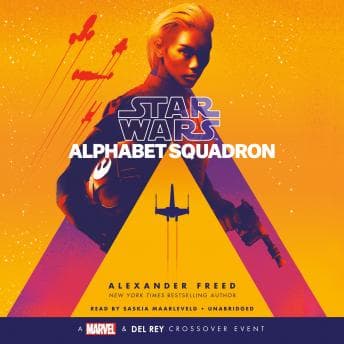
That line hit me somewhere around hour three, while I was supposed to be debugging my procedural terrain generator. (Spoiler: I did not debug my procedural terrain generator.) Because Alphabet Squadron gets something that most Star Wars stories miss entirely—the war doesn't end when the Death Star explodes. The Empire doesn't just evaporate. And the people who fought? They're still carrying all that weight.
This Is Not Your Father's X-Wing Novel
Look, I grew up on Stackpole and Allston. Rogue Squadron was my jam. So when I heard "new starfighter squadron series," my brain immediately went to cocky pilots, impossible odds, and quippy banter during dogfights. Alphabet Squadron is... not that. Alexander Freed wrote something closer to a character study that happens to have TIE fighters in it.
Yrica Quell is a former Imperial pilot. Not a reluctant one who always secretly disagreed with the Empire—an actual true believer who defected because she saw the writing on the wall. The book doesn't let her off easy for that. Neither does her new squadron. There's this constant tension where you're never quite sure if she's genuinely reformed or just really good at telling people what they want to hear. It's uncomfortable in the best way.
The rest of Alphabet Squadron—Wyl, Chass, Nath, Kairos—each fly a different ship class (hence the name), and each carry their own damage. Freed gives them distinct psychological profiles that actually inform their piloting styles. The hot-headed one flies aggressively. The traumatized one takes unnecessary risks. It's Sanderson-level internal consistency, just applied to space combat instead of magic systems.
Saskia Maarleveld Carries This Thing
Maarleveld's narration is doing serious heavy lifting here. She voices a wide array of characters—humans, aliens, droids—and keeps them distinct without going full cartoon. Her Quell is particularly good: controlled, professional, with just enough cracks showing to hint at the mess underneath.
Fair warning though—this is a stripped-down Star Wars audiobook. Minimal sound effects. No John Williams swelling during the dogfights. If you're coming from the full-production Thrawn audiobooks, the relative silence might feel weird at first. I actually liked it? The quieter production matches the book's more introspective tone. But your mileage may vary.
The Pacing Problem (And Why I Don't Care)
Okay, real talk: this is a setup book. You can feel Freed laying groundwork for a trilogy. Shadow Wing—the elite Imperial squadron our heroes are hunting—doesn't get properly confronted until late in the story. Some of the middle sections are more therapy session than space battle.
I've seen people bounce off this hard. "I didn't find the plot particularly interesting" is a fair criticism if you came here for constant action. But as someone who's run enough D&D campaigns to know that character motivation matters more than encounter design, the slower burn worked for me. When the action does hit, it hits harder because you actually care who lives and dies.
The squadron dynamics here? The way each pilot's trauma interacts with the others? That's the real progression system, and it's satisfying. (If you want actual magic systems with that level of internal consistency, A Dance with Dragons delivers in spades.)
Who Gets To Be A Hero After The Victory Party
What got me was the book's central question: what happens to soldiers when the war they defined themselves by ends? The New Republic is winning. The Empire is collapsing. And these five pilots have to figure out who they are when "rebel" stops being an identity. The Midnight Library asks a similar question about identity, just with infinite parallel lives instead of galactic politics.
My D&D group would love this. It's basically a party of morally complicated characters with conflicting backstories forced to work together. Except instead of a dungeon, it's the galactic remnants of a fascist regime.
The Cockpit Check
This needs focused listening. I tried it during thesis work and kept having to rewind because I missed character beats while staring at code. Save it for walks, long drives, or those nights when you're definitely going to bed at a reasonable hour. (You won't. It's fine.)
Who should strap in: Fans who want Star Wars to grow up a little. People who care more about why characters fight than how cool the explosions look. Anyone who's ever wondered what happens to the party after the campaign ends.
Who should eject: If you want Top Gun in space, look elsewhere. If info-dumps about characters' psychological states make you antsy, this isn't for you. (But you're wrong.)
Now if you'll excuse me, I have two more books in this trilogy and a thesis that isn't going to ignore itself.