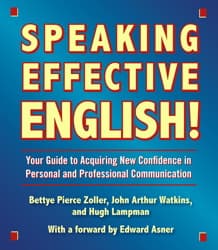

I spent the first twenty minutes of this audiobook mentally cataloging every speech habit I've picked up that probably makes my students tune out during lectures. The nervous throat-clearing. The way I say "essentially" approximately forty-seven times per class. The research actually shows that vocal patterns are contagious—we unconsciously mirror the speech habits of people we spend time with. So here I am, jogging through Cambridge at 6 AM, suddenly hyper-aware that I've been ending sentences with upward inflections like I'm asking permission to exist.
This is what Speaking Effective English does to you. It makes you paranoid about your own voice.
The "Top 10 Vocal Sins" Made Me Feel Personally Attacked
Look, I have a PhD. I've presented at conferences. I've defended a dissertation in front of people who wanted me to fail. And yet—when Bettye Pierce Zoller started listing the cardinal sins of speech, I found myself mentally checking boxes like I was taking a personality quiz in a magazine. Upspeak? Guilty. Filler words? So guilty. That thing where you trail off at the end of sentences because you're already thinking about your next point? My therapist would have thoughts about this, but yes, absolutely guilty.
What makes this program compelling is that it's structured like a coaching session rather than a lecture. Three voice coaches from the ZWL Speech Center in Dallas take turns addressing different aspects of speech—first impressions, accent modification, public speaking anxiety. At under two hours, it's a crash course. The brevity works both for and against it. You're not getting deep dives into any single topic, but you're also not getting the bloat that plagues most self-help audiobooks.
Zoller narrates with exactly the kind of clear, measured delivery you'd expect from a voice coach. It's a bit like having your posture corrected by someone with perfect posture—slightly intimidating, but you understand why they're qualified to do it.
The Psychology of Why This Works (And Doesn't)
Here's where my research brain kicks in. The program operates on the assumption that speech habits are behavioral patterns that can be unlearned and replaced. This is... partially true. Cognitive behavioral approaches to communication do show results, particularly for things like public speaking anxiety and conscious verbal tics.
But accent modification? That's thornier territory. The program addresses "minimizing accents and dialects" as if this is a neutral good, and I found myself asking: why does someone need to sound less like themselves to be taken seriously? My parents still have accents after forty years in New Jersey. They're perfectly comprehensible. The issue isn't their speech—it's listener bias.
I'm not saying the program is wrong to address this. Pragmatically, code-switching is a survival skill. But psychologically, it doesn't track as a pure self-improvement exercise. It's also an accommodation to prejudice. The program doesn't acknowledge this complexity, which feels like a missed opportunity.
Character wrestles with similar tensions—how much of who we are is fixed, and how much is performance for an audience that may not deserve the effort.The Voicemail Section Is Accidentally Hilarious
There's a section on voicemail etiquette that includes do's and don'ts for leaving professional messages. In 2024, this feels like a time capsule. When was the last time you actually left a voicemail instead of texting? I found myself grinning through my morning jog, imagining explaining to my undergrads that people used to record audio messages and wait for callbacks.
That said, the underlying principles—clarity, brevity, stating your purpose upfront—apply to any communication medium. Email, Slack, even those terrible video messages people send now. The technology changes; the psychology of first impressions doesn't.
Who Should Queue This Up (And Who Should Skip)
If you're preparing for job interviews, this is genuinely useful. The interview strategies section covers practical ground: how to modulate your voice to project confidence, how to avoid verbal tics that signal nervousness, how to pace yourself when adrenaline makes you want to speed through answers. I've sat on hiring committees. These things matter more than we like to admit. Public speaking anxiety sufferers will also find value here—the stage fright section draws on standard desensitization techniques, but hearing them delivered in a calm, coaching voice hits differently than reading them on a page.
Skip this if you're looking for deep work on communication patterns. Two hours can only cover so much. Think of it as a diagnostic tool that identifies problems rather than a comprehensive treatment plan.
The Professor's Notes
The program exhibits classic self-help structure: identify problem, provide framework, offer exercises. It's competent. It's practical. It won't change your life, but it might change how you approach your next presentation or interview.
The anxiety management piece reminded me of Stress Less, Accomplish More, which takes a more physiologically grounded approach to the same performance-under-pressure problem—and actually sits with the discomfort rather than rebranding it as a habit to swap out.What it lacks is nuance about why we speak the way we do. Speech patterns aren't just habits—they're identity markers, cultural artifacts, psychological tells. Changing them isn't always desirable, and the program's relentlessly positive framing ("reap the rewards of success!") glosses over the complexity.
But for two hours of focused listening during a morning jog? It made me think. It made me self-conscious. And it made me practice saying "essentially" less, which my students will probably appreciate.