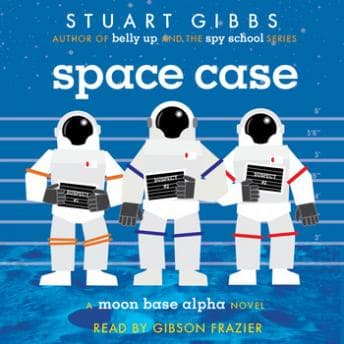

Look, I have a complaint. Why didn't anyone tell me Stuart Gibbs was writing middle grade locked-room mysteries SET ON THE MOON? I've been over here grinding through my thesis on procedural generation when I could've been listening to a twelve-year-old solve murders in low gravity. My priorities have been completely wrong.
I picked this up because my D&D group has a couple kids who tag along sometimes, and I'm always hunting for stuff we can all enjoy without the parents giving me the side-eye. Space Case delivered in ways I genuinely didn't expect from a book marketed at the under-thirteen crowd.
The Lunar Habitat as Dungeon Crawl
Here's what Gibbs nails: Moon Base Alpha feels like a real place with real constraints. The base is tiny. Claustrophobically tiny. And Dash—our protagonist—is stuck inside it because kids aren't allowed on the lunar surface. Every room matters. Every airlock is a potential plot point. Every character is a suspect because there's literally nowhere else for them to be.
This is Sanderson-level world-building, just... for kids. Gibbs clearly did his homework on what a functional moon base would actually need—the recycled air, the cramped quarters, the limited resources. When Dr. Holtz turns up dead from an "improperly affixed helmet," you immediately start cataloging who had access to what. The magic system here is physics, and it's *chef's kiss*.
The mystery itself is genuinely clever. I won't spoil it, but the solution makes sense within the established rules of the setting. That's harder than it sounds. Most mysteries cheat somewhere—Space Case doesn't.
Gibson Frazier Gets the Assignment
Frazier's narration is exactly what this story needs. He doesn't go full cartoon with the voices—instead, he uses subtle shifts in tone and pacing to differentiate the lunarnauts. Dash sounds appropriately frustrated and curious. The adults sound like adults who are stressed and hiding things. The other kid on the base—who's basically checked out into VR games—has this flat, disconnected quality that tells you everything about his character without anyone having to explain it.
It's not a performance that'll win awards for vocal gymnastics, but that's not what this book needs. The mystery is the star. Frazier supports it without getting in the way, and his pacing keeps the six-and-a-half hours moving.
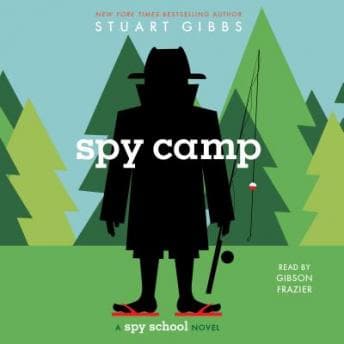
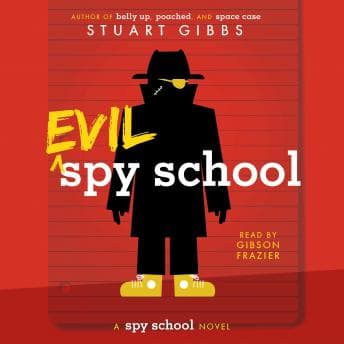
That restraint is also why his work on Evil Spy School and Spy Camp has been sitting higher on my listen-next pile than my advisor would approve.
Who's Rolling Initiative on This One
If you've got kids in the 8-12 range, this is basically a perfect family listen. My test audience (friend's daughter, extremely opinionated, zero patience for boring stuff) apparently wanted to finish it in one sitting. That tracks. The chapters are short, the cliffhangers are well-placed, and Dash is a protagonist kids can actually root for without adults wanting to throw the book across the room.
But here's the thing—I enjoyed it too. Not in a "this is fine, I'm being patient" way. In a "huh, that's actually a clever plot twist" way. Gibbs respects his young readers enough to give them a real mystery with real stakes, and that respect translates to entertainment for adults who aren't too proud to enjoy middle grade fiction.
If you need grimdark or morally gray antiheroes, obviously skip this. If you think mysteries for kids are automatically dumbed down, you're wrong, but you'll probably bounce off it anyway. If you're the kind of person who reads The Stormlight Archive AND still has a soft spot for Artemis Fowl? You're the target audience.
Thesis Procrastination: Justified
I listened to this across a couple of coding sessions when I was supposed to be working on my procedural generation framework. (Dr. Patel, if you're reading this—I was taking a mental health break. Very important.) The pacing is perfect for background-but-not-really-background listening. You can code during the slower setup chapters and then realize you've stopped typing because Dash just found something important.
Six and a half hours is a comfortable length. Not a massive commitment, not so short you feel cheated. For a middle grade mystery, it's right in the sweet spot.
This is the kind of book I wish I'd had when I was ten, reading whatever fantasy the library had in the back corner. Smart, respectful of its audience, and genuinely fun. Stuart Gibbs clearly knows what he's doing—there's a reason this kicked off a whole series.
My D&D group is getting a recommendation. The kids will love it. The adults will pretend they're just listening along for supervision purposes. We'll all know the truth.