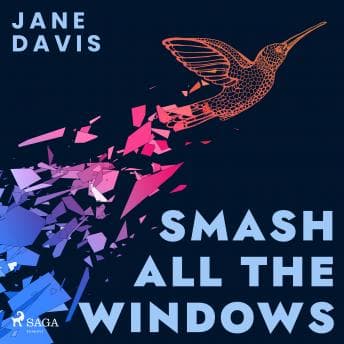

This book blindsided me.
I picked it up expecting a thriller — the description mentions a disaster, a cover-up, a rookie law student cracking the case. And sure, those elements are there. But Smash All the Windows isn't really about solving anything. It's about what happens to the people left standing after the explosion. After the inquiry. After the verdict gets overturned thirteen years later. And that — the aftermath nobody writes about — is where Jane Davis plants her flag and refuses to move.
Fifty-Eight People Who Never Came Home
The premise hits close. A disaster in London kills fifty-eight people on an ordinary August morning. The families spend over a decade fighting a legal system that failed them, and when a young law student finally uncovers evidence that blows the original findings apart, you'd think that's the climax. Victory. Justice. Roll credits.
But Davis does something smarter and more painful. Last Thing He Told Me pulled a similar move on me — sets up what looks like a straightforward mystery and then quietly pivots to something much harder to shake. She asks: what do you do when the fight that's consumed your entire identity suddenly ends? When the rage that kept you upright for thirteen years has nowhere to go? I've watched guys come home from deployment and fall apart not because of what happened over there, but because the mission was over and they didn't know who they were without it. That's this book. The families have organized their grief into purpose — committees, campaigns, media appearances — and when the purpose evaporates, they're left staring at the wreckage of their actual lives. Marriages hollowed out. Kids who grew up as strangers. Health destroyed.
Davis rotates through multiple perspectives — the bereaved mother who's become a public figure, the husband who lost everything chasing accountability, the artist processing trauma through his work. Each voice carries its own specific weight. The artist character particularly stuck with me. His installations become this weird, beautiful counterpoint to the legal proceedings — messy and human where the courts are clinical and procedural. Davis clearly did her homework on both the legal process and the way creative expression metabolizes grief. It doesn't feel like a novelist guessing at either subject.
Emily Pennant-Rea Behind the Mic
Here's where I have to be honest — I couldn't find much specific intel on Pennant-Rea's performance going in, and my research came up light on detailed narrator critiques. What I can tell you is this: at 10 hours and change, this is a slow-burn character study with a lot of interior emotional weight, and that's a tough assignment for a solo narrator. The book demands someone who can differentiate a large cast of grieving people without turning them into caricatures. The pacing needs to breathe.
I listened at my usual 1.25x and it held up fine — the prose is literary but not so dense that you lose things at speed. There were no audio quality issues that jumped out at me, no distracting production problems. Pennant-Rea handles the British setting naturally, which matters when you're spending ten hours in London. I'd call it a competent, steady performance that serves the material without pulling focus. Not a narrator who'll make you seek out everything she's done, but not one who'll make you reach for the stop button either.
Where the Boots Meet the Ground
I finished this one late on a Tuesday, sitting on the back porch with Ranger half-asleep on my feet and a bourbon I'd forgotten about going warm in my hand. I'd started it during a drive to a client site in San Antonio and figured I'd switch to something else when I got home. Didn't happen.
What kept me locked in was how Davis handles the uncomfortable truth that justice doesn't fix anything. The legal victory is real but hollow. People who've spent thirteen years defined by their loss don't just snap back to normal. I've seen this play out in real life — not with civilian disasters, but with soldiers who survive something terrible and then spend years fighting the VA or the chain of command for recognition, and when they finally get it, the recognition doesn't actually heal anything. It just removes the distraction of the fight.
The book's weakness — and it's a real one — is that with so many perspectives, some characters get significantly more depth than others. A few felt sketched rather than fully built. And the pacing in the middle section sags. There's a stretch where the emotional beats start to feel repetitive, cycling through grief responses that blur together before Davis pulls things back into focus for the final act.
But that final act earns it. The title makes sense by the end in a way I didn't expect.
Who Should Deploy With This One
If you want pure thriller — chase scenes, ticking clocks, body counts — look elsewhere. This is a quiet, angry book about ordinary people surviving extraordinary loss, and it moves at the speed of grief, not the speed of a plot. Anyone who's lived through bureaucratic injustice, or watched someone they love disappear into a cause, will feel this one in their chest.
Skip it if bad military or disaster details bother you less than slow pacing. This requires patience. But it pays off.
Ranger slept through the last two hours. I didn't.