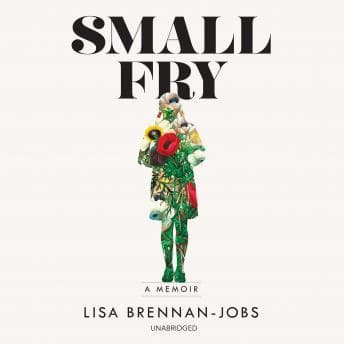

Steve Jobs named a computer after her, then spent years denying she was his daughter.
I was grading a stack of sophomore essays on The Great Gatsby—the ones where they all discover that the green light is a symbol, bless their hearts—when I started this audiobook. By hour three, I'd forgotten about Nick Carraway entirely. Lisa Brennan-Jobs had me thinking about fathers and daughters, about what it means to be seen by someone who refuses to see you, and about how the most brilliant people can be the cruelest in the most ordinary ways.
The Inheritance Nobody Wants
This is not the Steve Jobs biography you've read. It's not about innovation or genius or changing the world. It's about a little girl who wanted her father to eat breakfast with her. Who wanted him to acknowledge that she existed. The Apple Lisa computer—named after her, then denied, then admitted decades later—becomes this perfect metaphor for their entire relationship. He'd give her something extraordinary, then snatch away the meaning of it.
Brennan-Jobs writes with the precision of someone who has spent years trying to understand rather than blame. She's not settling scores here. She's doing something harder—she's trying to tell the truth about loving someone who hurt her. My students would recognize this. They write about their complicated parents all the time, though usually with less craft and more capital letters.
The California she describes feels like a character itself. The farm where she was born. The mansions she later inhabited. The way Silicon Valley transformed around her childhood like a time-lapse video of weeds becoming skyscrapers. There's a Didion quality to her prose—that same cool observation of California dreaming and California failing.
Eileen Stevens and the Tightrope Walk
Here's where I have to be honest about a tension in this audiobook. Eileen Stevens is an Earphones Award winner for good reason. Her pacing is impeccable—she understands that pause is punctuation, that silence can carry as much weight as words. The dialogue differentiation works beautifully; you always know who's speaking.
But.
Some listeners have called her voice "too perky," and I understand what they mean even if I don't fully agree. There are moments in this memoir—moments of real emotional devastation—where Stevens maintains a warmth that might feel slightly at odds with the material. It's like she's protecting us from the full weight of what Lisa experienced. Or maybe protecting Lisa herself.
I think this is actually a deliberate choice. The book itself has that quality—Brennan-Jobs writes about painful things with a kind of wry distance, a survivor's humor. Stevens matches that tone. But if you're expecting a narrator who will let you wallow in the tragedy, you might find yourself wanting something darker.
For me, it worked. The warmth made the cold moments colder by contrast.
What Hemingway Would Have Cut
This reminds me of what Hemingway said about writing—that you can omit things if you know them well enough, and the reader will feel their presence anyway. Brennan-Jobs knows what to leave out. She doesn't tell us how to feel about Steve Jobs. She shows us a man who could be generous and then casually devastating in the same conversation. Who could take his daughter to expensive dinners and then refuse to turn on the heat in his mansion because he was philosophically opposed to it.
The prose deserves to be savored. At twelve hours, this isn't a quick listen, but I never felt the urge to speed it up. (Yes, I'm the 1.0x speed guy. The author chose those words.) There's a density to the writing that rewards attention—sentences you want to replay, observations that sneak up on you.
I finished it walking the lakefront with Denise on a Sunday morning, and I didn't talk for about ten minutes afterward. She knows that silence. It means a book got to me.
The Memoir That Teaches Memoir
If you loved The Glass Castle or Educated, this belongs on your list—but it's quieter, more internal. Thank You for My Service works in that same vein—unflinching memoir that resists easy answers. This is what the genre can do when a writer refuses to simplify their own story.
My students would probably find it slow. They want plot, conflict, resolution. This book offers something more difficult: the ongoing work of understanding a parent who couldn't love you the way you needed. There's no catharsis here, no deathbed reconciliation that fixes everything. Just a daughter trying to make sense of a father who changed the world but couldn't figure out how to be present for one small girl named after a computer.
Who should listen: Anyone who's wrestled with a complicated parent, anyone who wants memoir that trusts you to draw your own conclusions. Who should skip: If you're looking for Steve Jobs the visionary, or if you need your memoirs to move at thriller pace, this will frustrate you.
Worth pausing the faculty meeting for. Worth pausing everything for.







![Steve Jobs [unabridged audiobook] audiobook cover](/_next/image?url=https%3A%2F%2Fcovers.audiobooks.com%2Fimages%2Fcovers%2Ffull%2F9788499923406.jpg&w=1920&q=75)